Grade 1
Grade 1 writing curriculum following CA State Standards with 30 sessions covering narrative, informational, and creative writing with comprehensive grammar instruction.
Three Writing Types
Explore narrative stories with characters and events, informational pieces with facts and definitions, and creative opinion writing.
Grammar Essentials
Practice nouns, verbs, adjectives, pronouns, sentence types, capitalization, and punctuation through interactive lessons and writing exercises.
Revision & Publishing
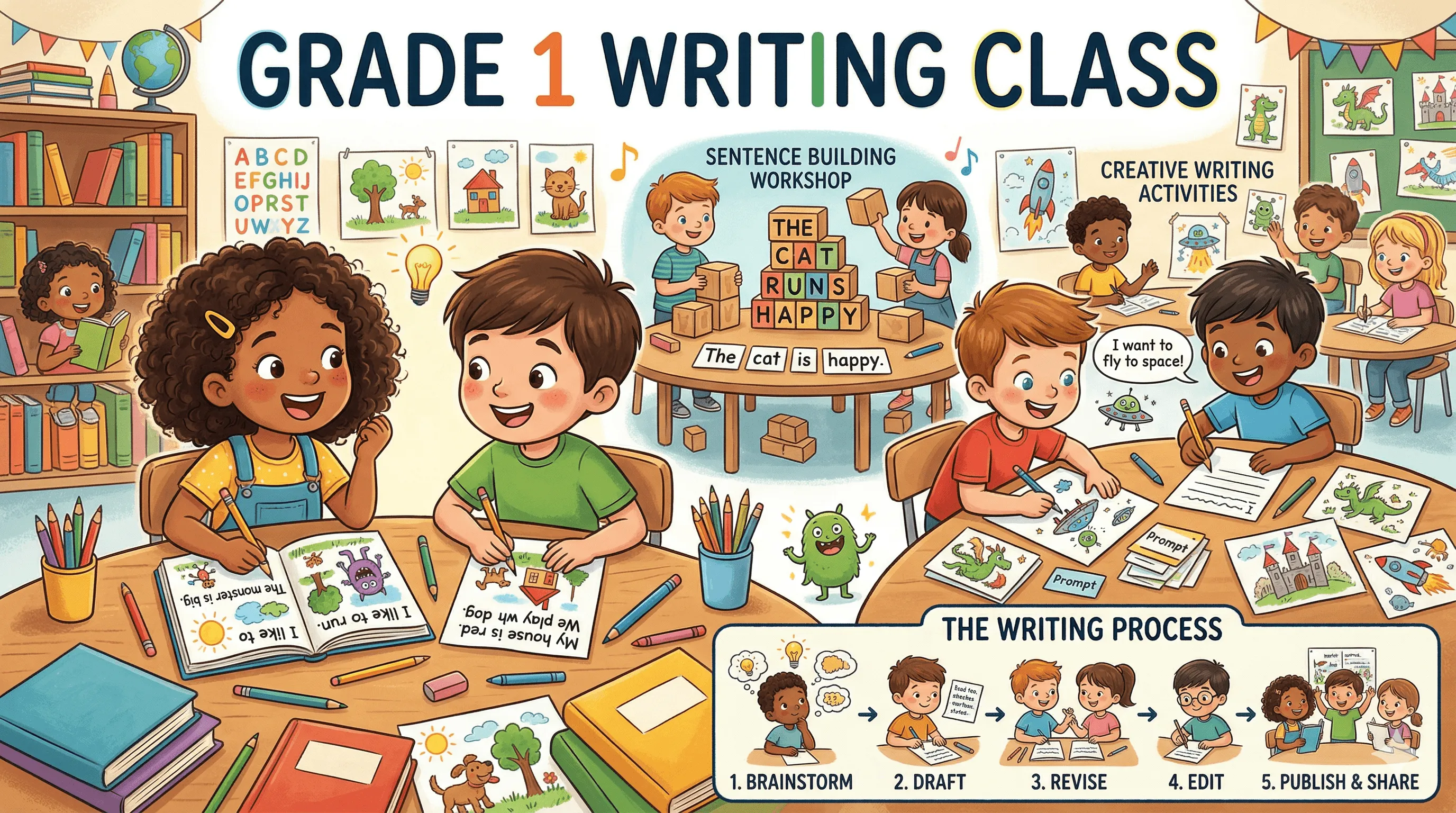
Learn the writing process from brainstorming to final draft, including peer feedback, self-editing, and presenting polished work.
Course Preview
Go Beyond The Norm
- State Standard driven— Strictly follow CA State Standards and writing process with differentiated instruction based on specific needs and preferences
- Combining and bridging the gaps of research-based teaching materials
- Each session focuses on a set of specific learning objectives that matches CA State Standards and student developmental needs
- We believe in using a holistic approach to teach language arts, and each session will cover specific grammar, spelling, research and writing skills
- By attending the total of 30 sessions in each grade level, our students will master all skillsets required by CA State Standards
Class Structure
- We only assign class to teachers who have the most teaching experience and knowledge in specific subject and grade level
- Each class has no more than 3 students
- Class will be delivered through Zoom meeting, and homework will be provided for each session
- For G1 and above classes, feedback will be provided for all homework assignments and writing assignments
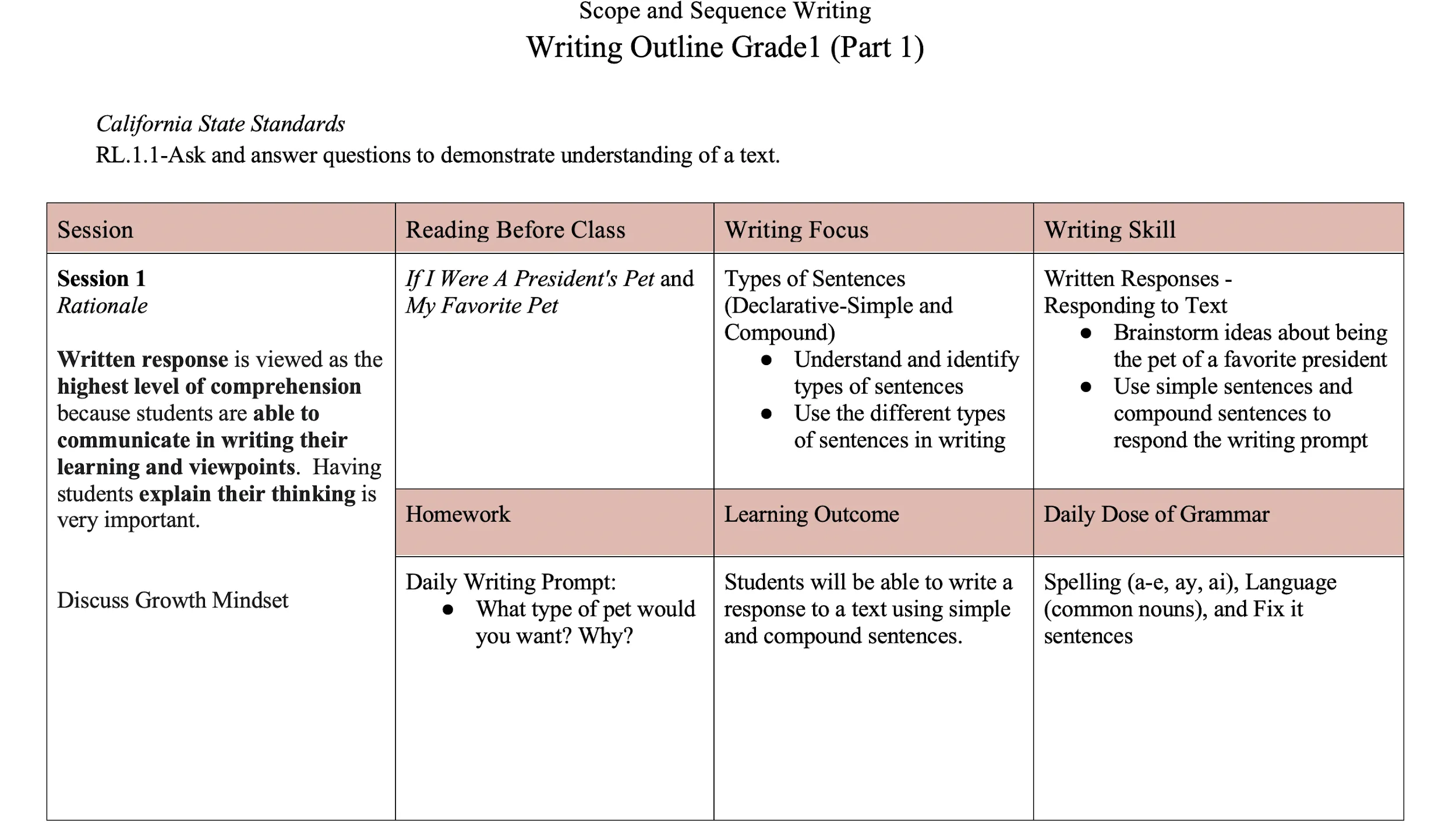
Readings Before Class:
- Stories are required to be read before class
- Books are chosen to align with the skills that are listed in the standard
- Reading level of the books (lexile based on grade level)
- 33 story books
- 24 fiction
- 5 non-fiction
- 4 realistic fiction
Writing Skills:
- Written responses (paragraph writing)
- Simple and compound sentences
- Narrative paragraph
- Prompt writing
- Narrative writing
- Fairy Tales
- Compare and contrast stories
- Fiction writing
- Nonfiction writing
- Realistic fiction writing
Writing Focus:
- Mini Lessons
- Types of sentences (Declarative-Simple and Compound)
- What is a paragraph?
- Topic sentence
- Ending sentence
- Understanding narrative paragraphs
- Picture prompts (character, setting and events)
- Understanding characteristics of fairy tales
- Combining choppy sentences
- Avoiding double subjects
- Compare and contrast
- Understanding characteristics of fiction stories
- Organization of ideas
- Story elements
- Main idea/topic
- Understanding characteristics of non-fiction stories
- Text features (table of contents, subtitle, captions)
- Understanding characteristics of realistic fiction stories
Daily Does Grammar:
- Spelling
- Language
- Fix it sentences
Highlights:
- Each session includes a writing focus and daily dose of grammar to target a set of specific learning objectives and writing skill set
- Strictly follows the writing process (prewrite, draft, revise, edit, publish) for writing assignments
- Students will produce 5 different genre stories throughout the class (Narrative, Fairy Tale, Fiction, Non-Fiction, Realistic Fiction)
- Most sessions focus on the necessary skills for writing stories
- Feedback for writing assignment will be provided each week for quality outcomes
- Writing celebration will be included at the end of the program to promote students’ motivation and passion for writing
- Theories of educational psychology will be integrated in each session to instill the value and importance of being a good writer