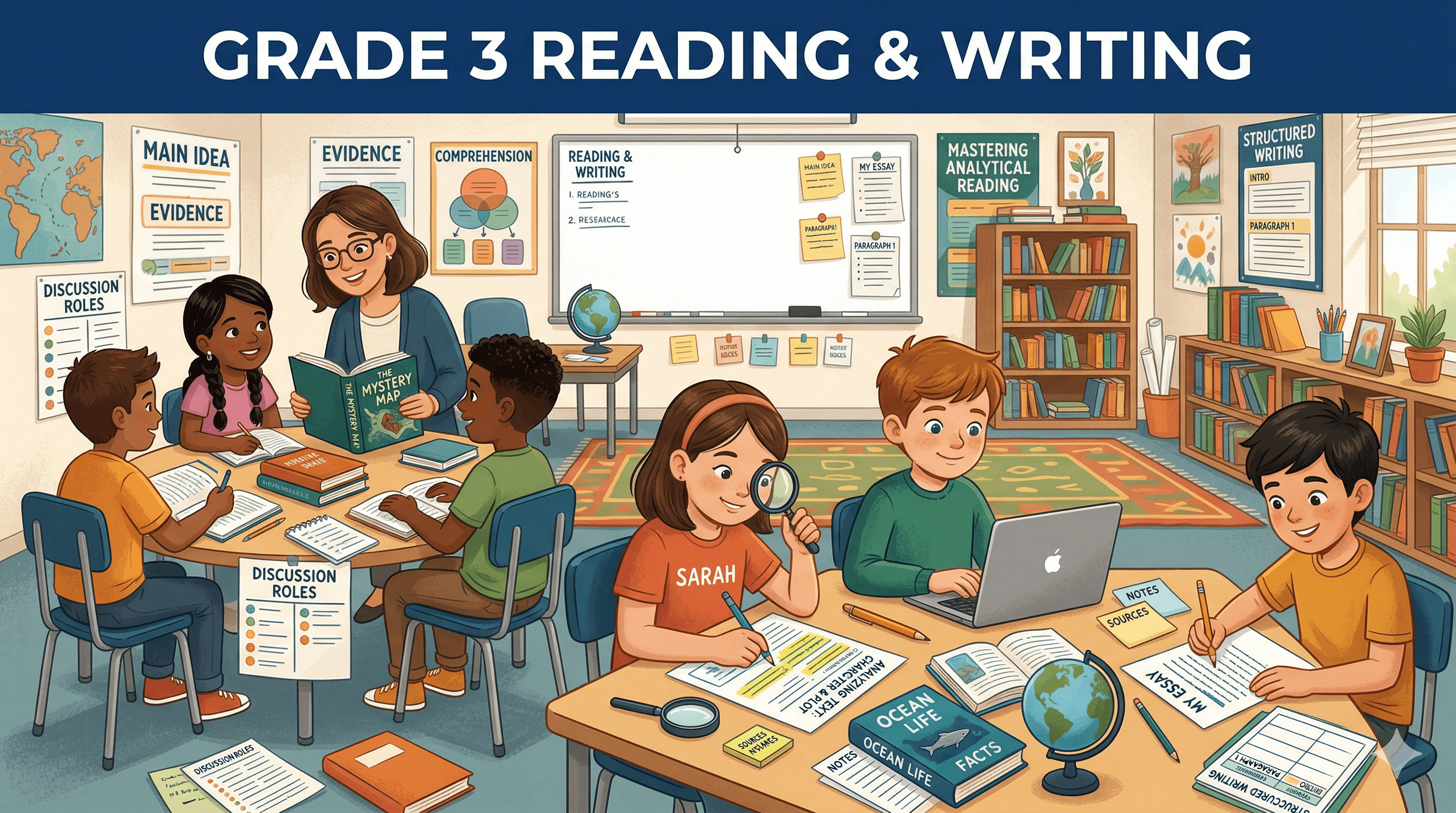
Grade 3
Grade 3 writing curriculum following CA State Standards with 30 sessions covering narrative, informational, and creative writing with comprehensive grammar instruction.
Multi-Paragraph Writing
Develop well-organized narratives with character development, informational essays with multiple paragraphs, and opinion pieces with supporting evidence.
Complex Grammar
Use varied sentence structures, coordinating and subordinating conjunctions, perfect verb tenses, and abstract nouns to enhance writing clarity.
Research & Citing
Conduct basic research, take notes from sources, organize information logically, and include simple citations in informational writing.
Go Beyond The Norm
- State Standard driven— Strictly follow CA State Standards and writing process with differentiated instruction based on specific needs and preferences
- Combining and bridging the gaps of research-based teaching materials
- Each session focuses on a set of specific learning objectives that matches CA State Standards and student developmental needs
- We believe in using a holistic approach to teach language arts, and each session will cover specific grammar, spelling, research and writing skills
- By attending the total of 30 sessions in each grade level, our students will master all skillsets required by CA State Standards
Class Structure
- We only assign class to teachers who have the most teaching experience and knowledge in specific subject and grade level
- Each class has no more than 3 students
- Class will be delivered through Zoom meeting, and homework will be provided for each session
- For G1 and above classes, feedback will be provided for all homework assignments and writing assignments
Readings Before Class:
- Stories are required to be read before class
- Books are chosen to align with the skills that are listed in the standard
- Reading level of the books (lexile based on grade level)
- 29 story books
- 10 fiction
- 10 non-fiction
- 9 Biographies
Writing Skills:
- Opinion Writing (prewriting, graphic organizers, brainstorming, drafting, editing)
- Research Project (choose a topic, gather details, beginning, middle, end, edit, revise, final draft, presentation)
- Narrative Nonfiction (brainstorm, choose a topic, prewrite, outline, write paragraphs, revise, publish)
- Biographies (research, write, revise, edit, presentation)
Writing Focus:
- Mini Lessons
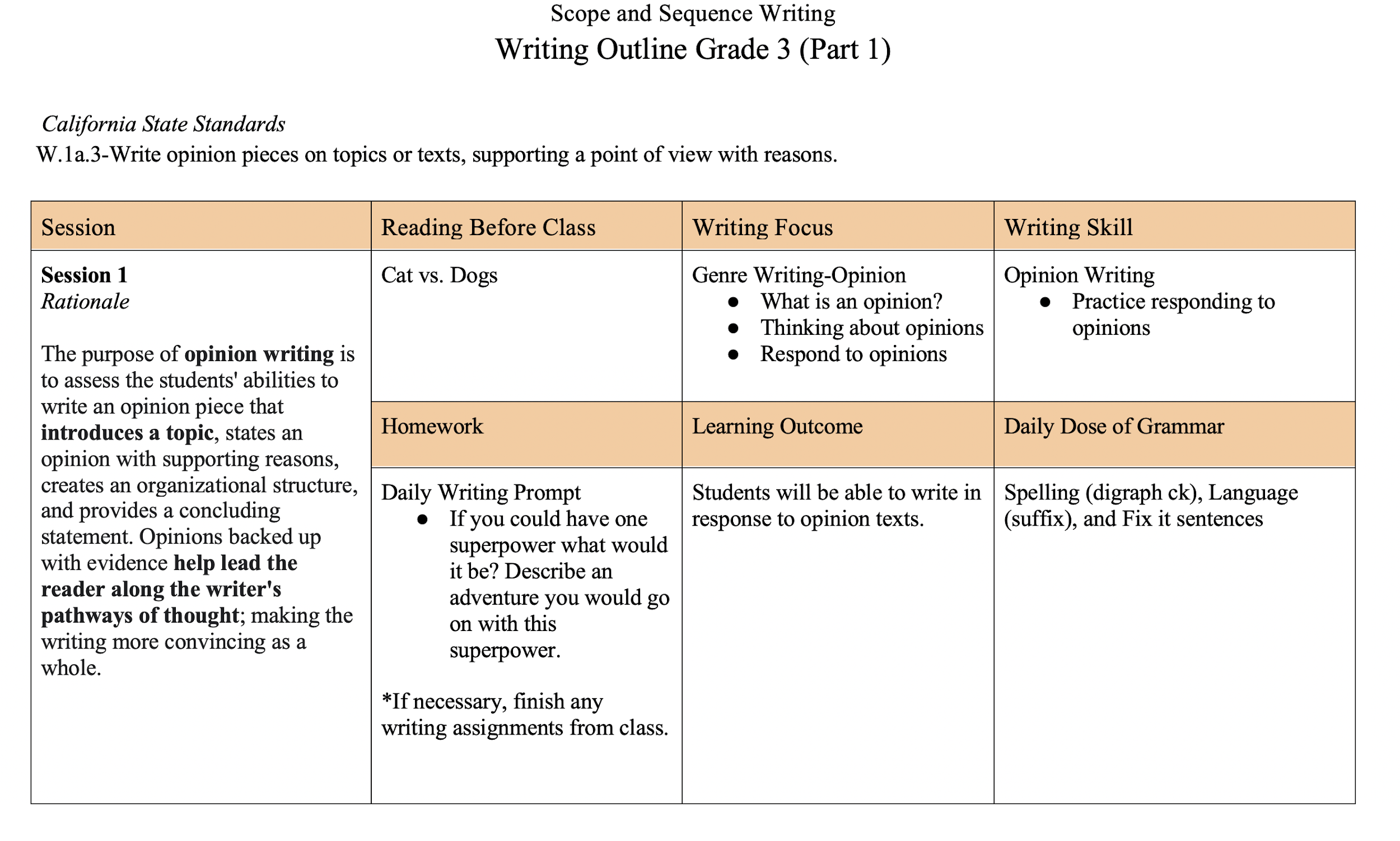
- Genre Writing - Opinion
- Responding to opinion essays
- Selecting and developing an opinion topic
- Identify Important Details
- Linking Words
- Middle and Ending paragraphs
- Subject-verb agreement
- Introductory words
- Editing Marks
- Reading short reports
- Exploring writing topics
- Focus Statements
- Include important information
- Adding a personal touch
- Surprising facts
- Reorder details
- Writing a showing paragraph
- Creating Outlines
- Topic sentence and key details
- Revising the draft
- Identify characteristics of a biography
- Choosing good sources
- Citing within the text
- Using quotes
- Editing skills and editing marks
- Google slides - organizing and introduction
- Google slides - pictures
- Google slides - videos
- Google slides - presentation and organization
Daily Does Grammar:
- Spelling
- Language
- Fix it sentences
Highlights:
- Each session includes a writing focus and daily dose of grammar to target a set of specific learning objectives and writing skill set
- Strictly follows the writing process (prewrite, draft, revise, edit, publish) for writing assignments
- Students will produce 4 different genre stories throughout the class (Opinion, Research Project, Narrative Non-fiction, Biography)
- Most sessions focus on the necessary skills for writing stories
- Feedback for writing assignment will be provided each week for quality outcomes
- Writing celebration will be included at the end of the program to promote students’ motivation and passion for writing
- Theories of educational psychology will be integrated in each session to instill the value and importance of being a good writer
Example Of Outline——Writing Grade3, Part1, Session1