
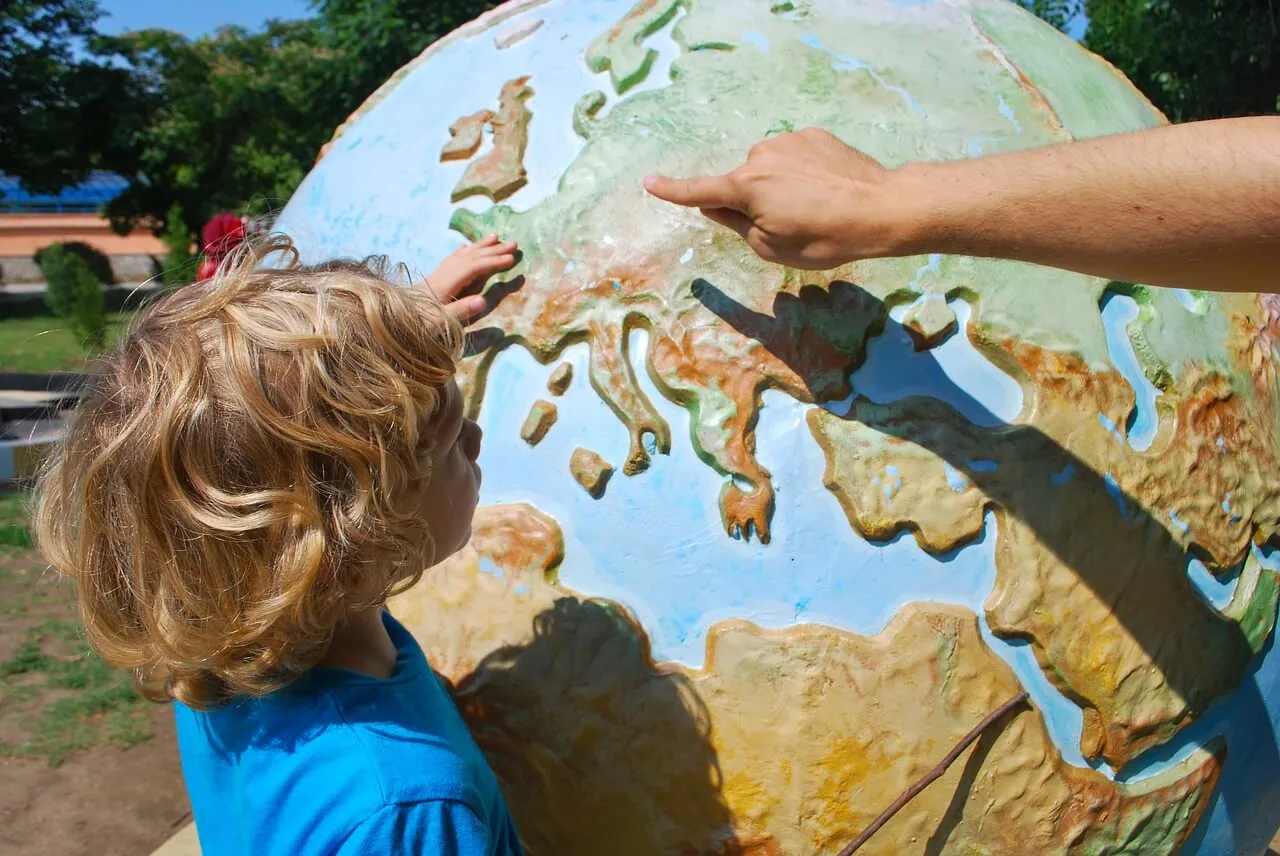
Why Your Kids Need to Study Geography?
By Kmind
Geography is a skill that is almost nonexistent in today’s public schools. Due to the focus on reading and math, social studies are often overlooked. Most of us are able to get town, country, or world maps with just a few clicks on our phones or computers. This seems simple by convenient, so why should kids learn geography?
At its most basic, geography is the study of places, according to GeogSpace, an initiative of the Australian Geography Teachers Association. Geography looks at the physical and human characteristics of a place, and “their interconnections and interdependencies, and their variation across space. [It is the link between the physical and the human that is the unique strength of geography and which helps students to make sense of the world around them.]”
Why is Geography a Crucial Area of Learning?
-
Geography helps children to know where they are and know what is there, giving them a sense of location.
-
Geography develops children’s understanding of the environment, the natural world, modified landscapes, and the social environment.
-
Geography enables children to understand the spatial layout and organization of the world around them and recognize the spatial distributions, patterns, and relationships in the environment.
-
Geography helps children to recognize how changes to places and the environment happen and affect us, both as a result of natural processes and human activity.
-
Geography helps children to recognize and value our interdependence with other people in their own area and in the wider world and to appreciate the diversity evident in the world among peoples and environments.
-
Geography provides opportunities that nurture children’s vital interpersonal skills such as empathy, collaboration, and argumentation. --- Children can explore emotional responses to some places (such as a sense of awe and wonder that can accompany learning about some of the Earth’s features).
-
As their awareness of the world grows, children use their geographic skills to feel a connection with people they have never met and places they have never been. Essentially, geography brings the world alive to students.
When Can Your Kids Start Learning Geography?
Geography learning in the early years begins at home with the family. According to psychologist Jean Piaget, children develop their sense of space and place at a young age. Informal geography can be taught to children as early as ages two and three.
The 5 Themes of Geography
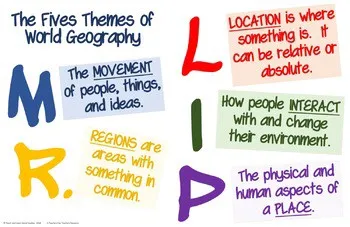
The five themes of geography are location, place, human-environment interaction, movement, and region. These were defined in 1984 by the National Council for Geographic Education and the Association of American Geographers to facilitate and organize the teaching of geography in the K-12 classroom. While the five themes have since been supplanted by the National Geography Standards, they still provide an effective means of organizing geography instruction.
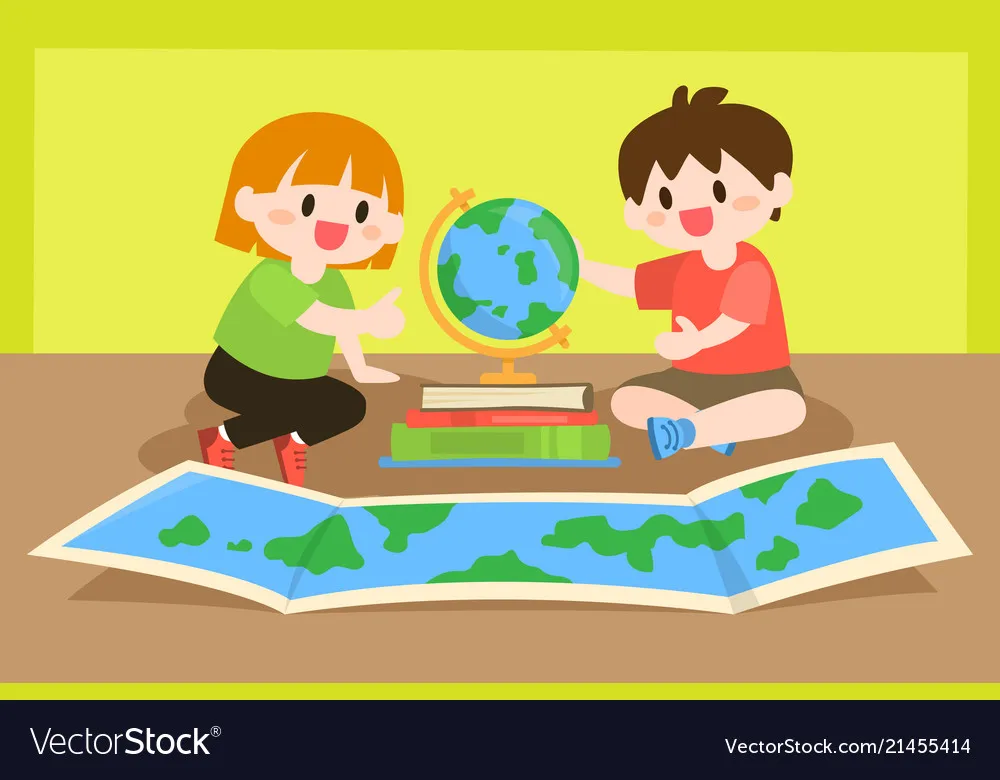
How to Teach Geography in Daily Life
Caregivers can begin by using directional terms (next to, left, right, above, below, between, beyond, near, far) in everyday language. For instance, saying things like, “put your shoes next to the door,” or “at this stop sign we are going to turn left,” prepare children for reading directions on a map.
Another relevant activity would be to talk about the weather and proper clothing to wear for different conditions. Dressing paper dolls for the different seasons would reinforce the connections between humans, the environment, and the passage of time.
Five- to six-year-olds should play hide-and-seek, explore the terrain of the park, map the route from home to school, and build models (the bigger the better). Somatic activities set the stage for spatial learning.
By age seven or eight, children should be making and reading panoramic maps, building Lego villages, reading grid lines, and creating imaginary worlds.
Nine- and ten-year-olds can make relief models, read scale and topographic maps, and participate in field trips with mapping activities.
The Family Geography Challenge
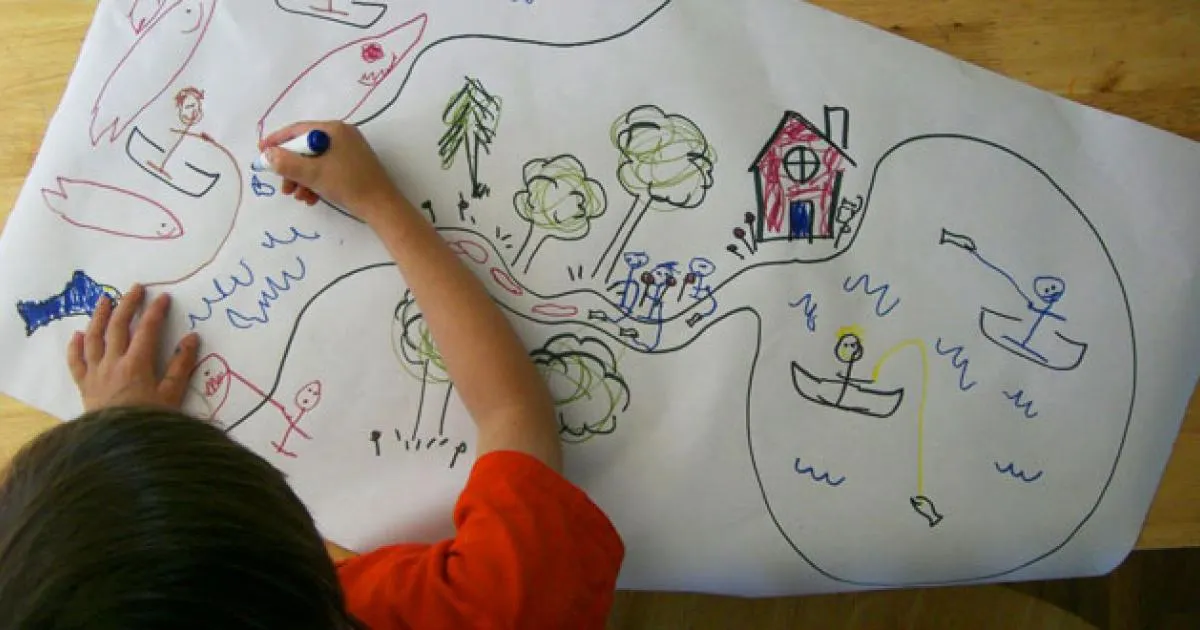
The Michigan Geographic Alliance developed the Family Geography Challenge, which encourages parents, once a week, to find places that are mentioned in the news on maps and discuss the characteristics of those regions with their children. Based on the “five themes of geography”, teachers and parents can ask children questions such as:
▶ Where is this city in the news located?
▶ What is it like to live in this place?
▶ How has the environment affected the way humans live in this place?
▶ How have humans affected the environment?
▶ What is changing in this place, and how is it changing?
▶ What region of the world is this city located in?
Outdoor Exploration
Young children learn geographic skills primarily through play, rather than formal instruction. Playing with toy trucks and cars on the carpet or in the sandbox, moving furniture around in a dollhouse, and building designs with blocks develop perceptions and skills that can apply to more abstract concepts in later years.
Exploring the outdoors is an essential method of introducing geography to children. You can take your child on a tour of the park and try to draw a map showing the features of the landscape that they have observed on their own. You can also demonstrate the use of a compass and how to orient a street map. Children can use pegs and string to help create a grid on the lawn and then place themselves in different locations based on parental statements (“Place yourself in row 4, column E”). There are many geography activities that are made more memorable by being outdoors.
****
Reference
- 5 Geography Skills Every Child Should Know. (2017, July 17). Mommy Is My Teacher. https://www.mommyismyteacher.com/blog/2017/3/11/5-geography-skills-every-child-should-know
- 6 Fun Ways to Teach Geography to Kids at Home. (n.d.). WE HAVE KIDS. https://wehavekids.com/education/6-Fun-Ways-to-Teach-Geography-to-Kids-at-Home
- A Quick Overview of the 5 Themes of Geography. (2019, July 13). ThoughtCo. https://www.thoughtco.com/five-themes-of-geography-1435624
- Importance Of Teaching Children Geography. (2016, November 30). Childventures. https://childventures.ca/2016/11/30/importance-teaching-children-geography/
- Leask, M. (2021, June 5). Why Your Child Needs to Study Geography. Year-Round Homeschooling. https://www.yearroundhomeschooling.com/geography-important-part-childs-education/
- Neely, K. (2021, October 25). Thinking on Education: Why Do We Need to Teach Geography? Studies Weekly. https://www.studiesweekly.com/geography/
Explore Our Courses
Discover courses designed to help your child thrive

Science Research Project
Develop scientific inquiry and research skills through hands-on projects, helping 3rd to 12th graders learn the scientific method, experimental design, and data analysis.

Public Speaking and Debate
Master public speaking and competitive debate through structured training in argumentation, rhetoric, and persuasive communication for grades 3-12.
STEAM
Explore Science, Technology, Engineering, Arts, and Mathematics through engaging hands-on projects that spark curiosity and develop critical thinking skills.