
Why Water Play is Good and Fun Water Activities
By Kmind
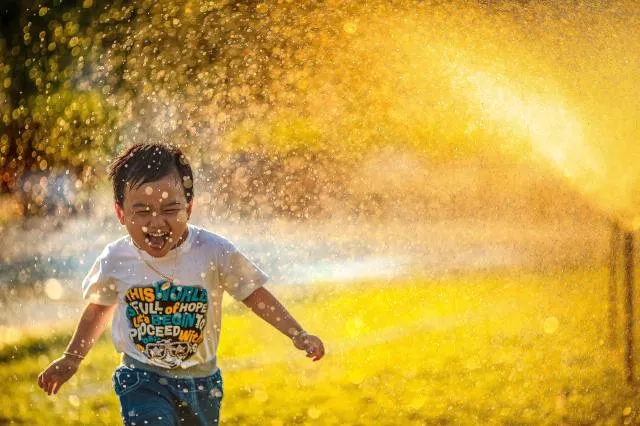
With the weather heating up, now is the perfect time to get outside and explore, and there’s nothing more fun than spending time splashing around and playing in the water on a hot day!
Not only does playing in the water make your child feel cool and fun, but you may be surprised to learn that water play has many amazing benefits for child development. Making it one of the most popular activities in early childhood education.
5 Benefits of Water Play
[Jean Piaget]‘s theory of cognitive development suggests that children move through four different stages of learning. His theory focuses not only on understanding how children acquire knowledge but also on understanding the nature of intelligence. Piaget’s stages are:
-
Sensorimotor stage: Birth to 2 years
-
Preoperational stage: Ages 2 to 7
-
Concrete operational stage: Ages 7 to 11
-
Formal operational stage: Ages 12 and up
At every stage, water play can help children develop and benefit.
Water Play Develops Hand-eye Coordination
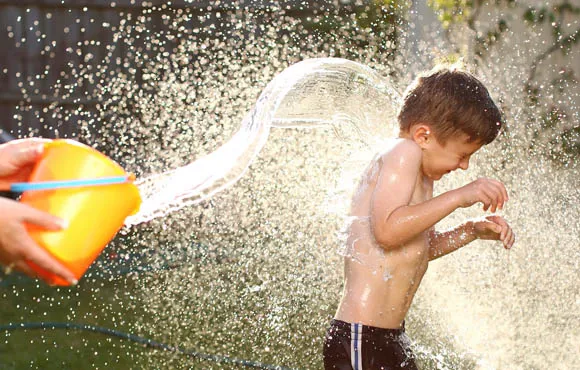
Playing with water is a wonderful activity for developing children’s hand-eye coordination as they learn to pour, squeeze, stir, and even paint with water. For example, by pouring water from one bucket to another, or learning how to control the direction and size of a splash, children are improving their accuracy and sense of control.
Water Play Improves Concentration and Focus
Do you ever find your child completely immersed in an experience? When children are involved in water play, they tend to lose themselves in the activity and can spend a long time exploring and playing. This encourages concentration, and any activity that holds your child’s attention for an extended period of time helps to improve their attention span and ability to concentrate later.
This is a particular benefit for formal learning. Being able to focus in the classroom will be an important skill when your child is ready to start school.
Water Play Develops Motor Skills and Sensory Exploration
Water play activities help develop and strengthen children’s gross and fine motor skills. Children improve their gross motor skills, coordination, and physical fitness by lifting, pouring, carrying, running, and splashing, while actions such as squeezing help develop the small muscles in children’s hands.
Water play also provides many opportunities for children to explore their senses and experience different sensory experiences. Adding materials such as sand, ice, soap, or slime to the water allows children to place their hands in different textures (sandy, sticky, slippery, and slimy) as well as experience different temperatures (warm, cool, cold.)
Water Play Can Develop Social and Communication Skills
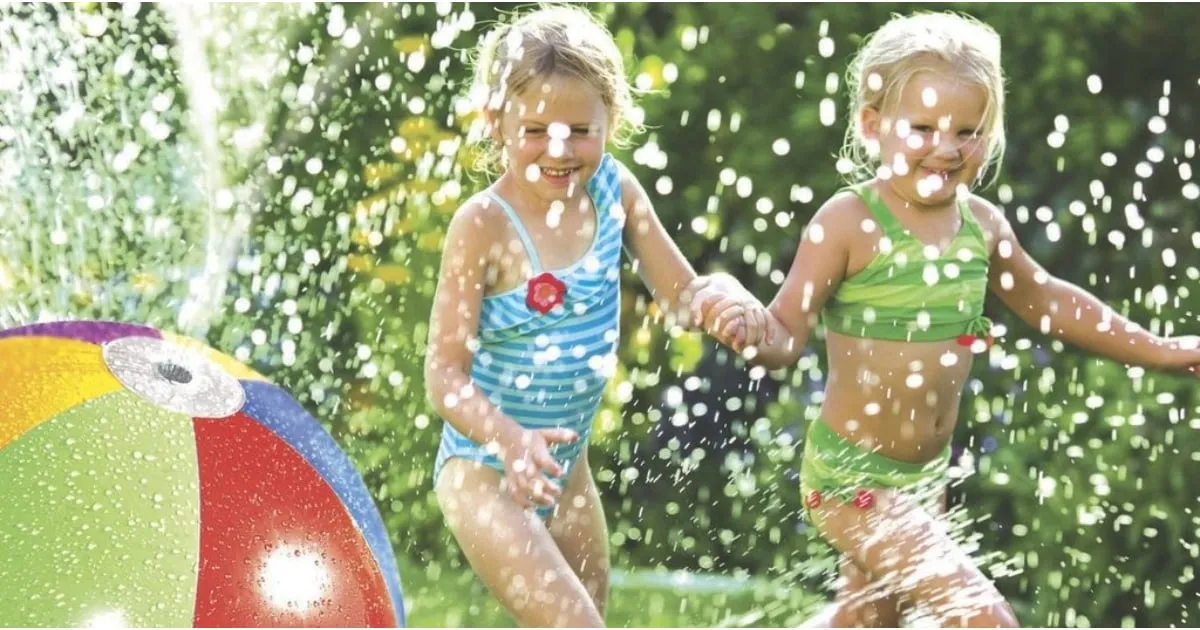
Water play may be an individual activity, but children find it particularly exciting to participate in water play as a group. When water play becomes a group activity, it encourages children to engage in social and cooperative play. It is not uncommon to observe kindergarteners turning their water play activities into shared experiences with a common goal. For example, children might embark on the task of filling a large basin with water from a pump or building a moat in a sandpit, or taking turns jumping into the water to see who can make the biggest splash. In these play experiences, each child has a role to play and contributes to the ultimate goal.
Through this type of play, children have the opportunity to see what happens when materials and ideas are shared.
Water Play Introduce Math and Science Concepts
Water is the perfect medium to demonstrate math and science concepts such as volume and weight. How much water do you think this bucket will hold? Can we measure it? What do you think would happen if we threw this heavy object into the bucket?
As children manipulate water play materials, they build scientific inquiry and problem-solving skills as they begin to understand why and how things happen. For example, a child may notice that one object sinks in the water while another floats, which prompts them to add more objects to the water to see what happens. As they continue to investigate which objects sink and float, children will soon discover that heavier objects sink and lighter objects float, whether they are large or small.
Playing with water can also be used to develop literacy and numeracy skills, such as counting how many buckets of water it takes to fill a tub or writing and drawing with water and a paintbrush.
Fun Water Activity Ideas
Some examples of materials you can incorporate in water play are:
-
Cups and containers of different sizes
-
Spades and buckets
-
Toys and objects that will sink or float
-
Funnels, bottles, or eye droppers that can be used to transfer water between containers
-
Natural materials such as sand, flowers, leaves, and pebbles
-
Squeeze bottles
-
Paint brushes
-
Sieves or containers with holes
Sink or Float?
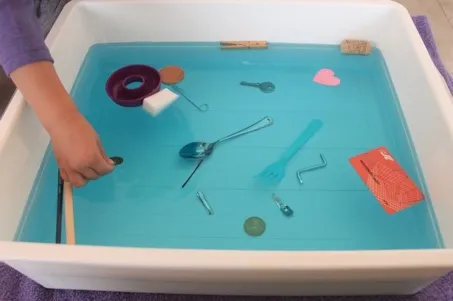
Fill your bin with water and collect a variety of items from around the house or the backyard. Ask your child to hypothesize, or make a guess, about which items will sink and which will float, then test their theories! Things to try: rocks, sheets of paper, paperclips, toy cars, plastic blocks…
Color Lab!
Use food coloring to color one cup each of red, yellow, and blue water. Show your colorful kiddo how to mix red and blue to make purple, red and yellow to make orange, green and blue to make light blue, green and red to make yellow. Then let them experiment, pouring and mixing their own custom colors.
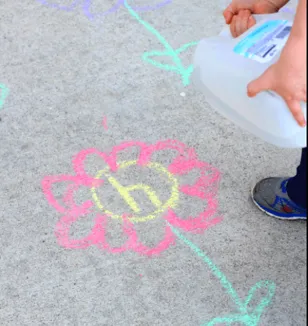 Water the Alphabet Flowers
Grab the sidewalk chalk and plant a garden of colorful alphabet flowers. Then fill a watering can and “water” the flowers, calling out the letters along the way.
The Water Cycle Bag
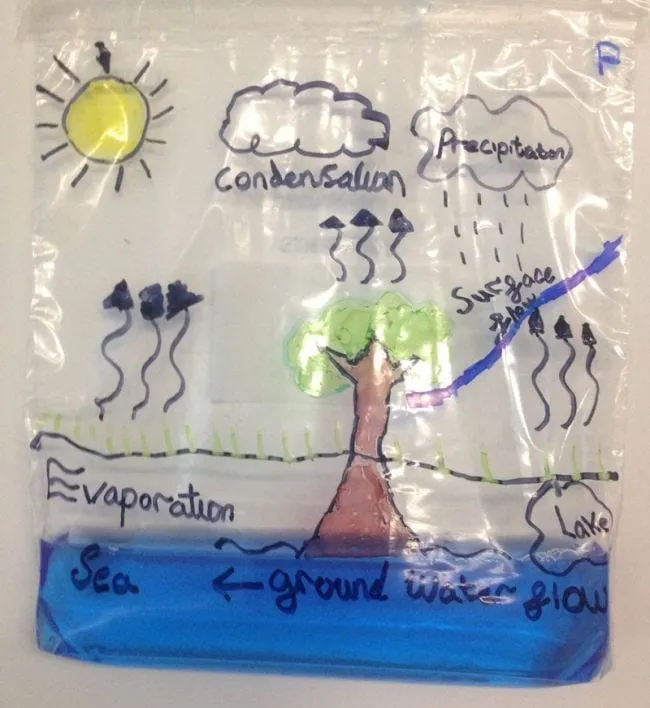
A sealed plastic bag is the perfect environment for recreating the water cycle. Hang it in a sunny window and watch evaporation, condensation, and precipitation in action.
Excavate Treasures from Ice
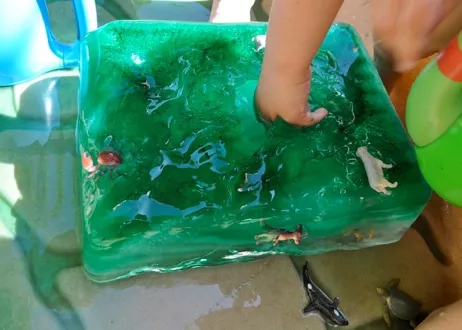 Freeze some of your small toys, plastic bugs, and other small treasures in large ice cube molds or bowls. Once frozen, get some (safe) digging tools and a spray bottle to start the excavation process. Ideal for older children to get cool and burn time. But need to be careful not to let children hurt their fingers and do not drink the colored water
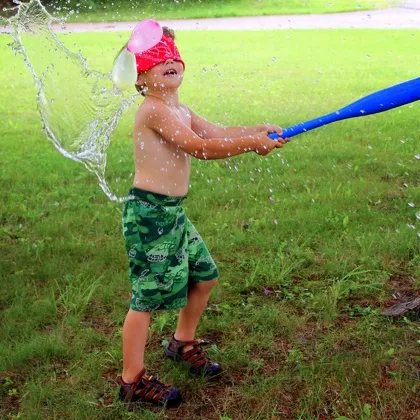 Water Piñata
Fill water balloons of varying sizes and tie them to a string. Blindfold the kids and have them take turns swinging a plastic bat or fallen branch at the balloons until they all explode.
Ping-Pong Pool
Throw an inflatable inner tube into the pool. Try to toss small balls into the center of the ring.
Spray Bottle Tag
Armed with a set of inexpensive spray bottles, let the kiddies have at each other for a water battle royale. You’re out when your shirt is wet, and the clothes don’t lie! Variation: All kids wear white T-shirts. Add two different food colors to the water to create two teams. Last color standing, wins.
Toe Diving
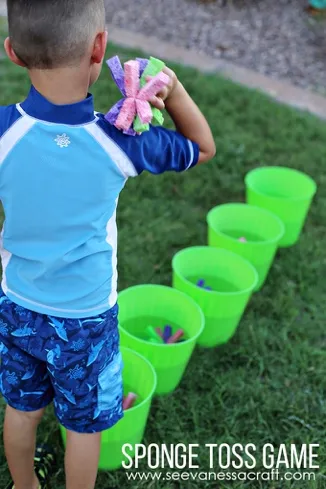 Fill a kiddie pool with water and toss in some diving rings or small pool toys. Say “Go!” and everyone has to fish out as many toys as possible…using only their toes!
Sponge Toss!
Assign each child a sponge color, then drop them into a bowl of water and show them how to squeeze them dry. Practice dropping and squeezing, then add another (large) bin or bowl full of water and see if your child can toss their sponge in.
Reference
- Hamid, K. (2018, May 14). The Psychological Theories Behind Learning Through Play. Pentagon Play. https://www.pentagonplay.co.uk/news-and-info/psychology-learning-through-play
- Science Concepts Young Children Learn Through Water Play. (2012). Dimensions of Early Childhood, 40, 3—12.
- Staake, J. (2021, January 28). 33 Splash-tastic Water Activities for Summertime Fun and Learning. We Are Teachers. https://www.weareteachers.com/water-activities/
- Water Play and Your Child’s Growing Brain. (2012). VPM.Org. https://vpm.org/articles/3664/water-play-and-your-childs-growing-brain
- What Is Piaget’s Theory of Cognitive Development? (2022, May 2). Verywell Mind. https://www.verywellmind.com/piagets-stages-of-cognitive-development-2795457
- Young Children Learn A Lot When They Play. (2021). Pediatric Patient Education. https://doi.org/10.1542/peo_document346
Explore Our Courses
Discover courses designed to help your child thrive
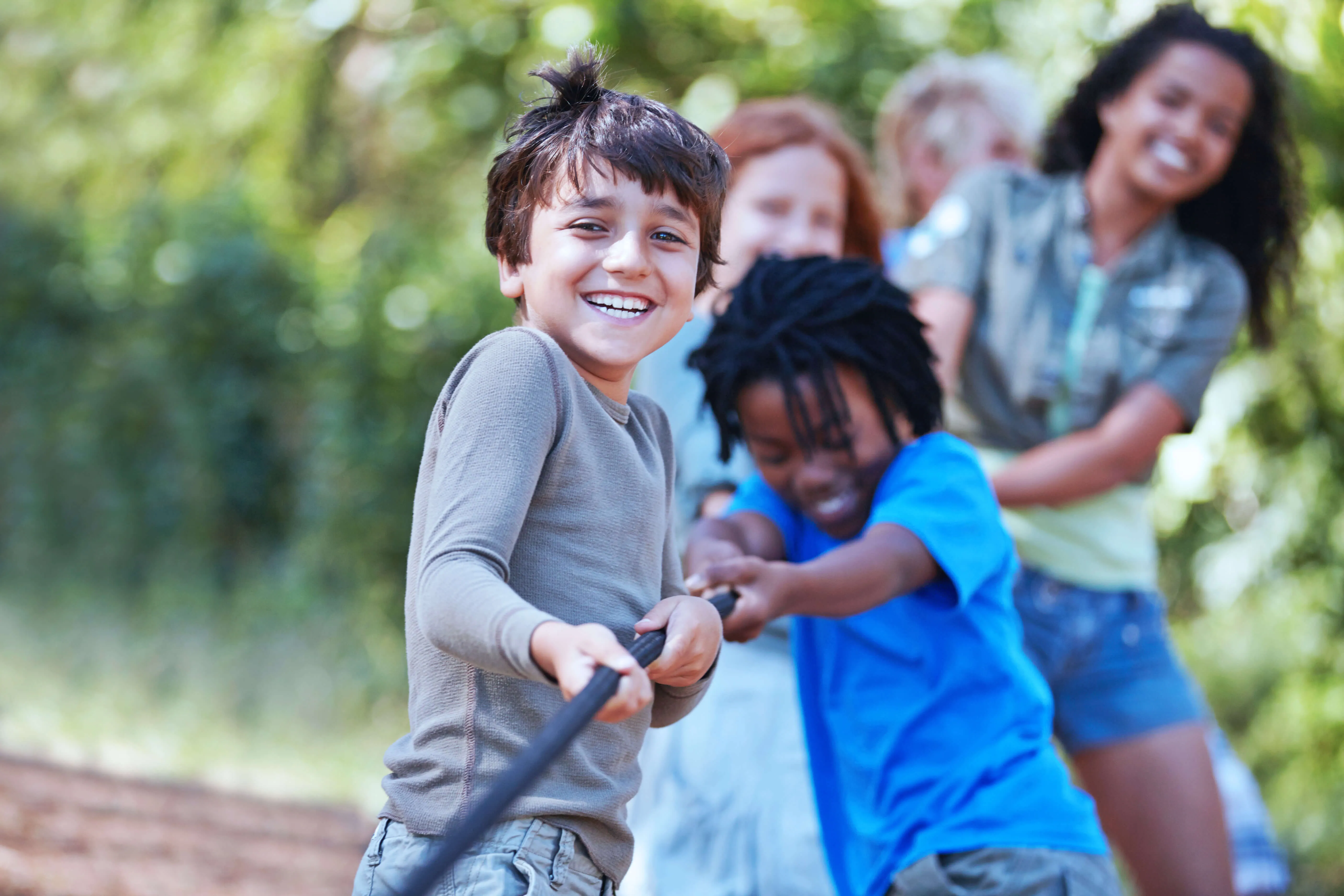
Social Emotional Learning
Develop essential life skills including self-awareness, emotional regulation, empathy, and relationship building through evidence-based SEL curriculum.
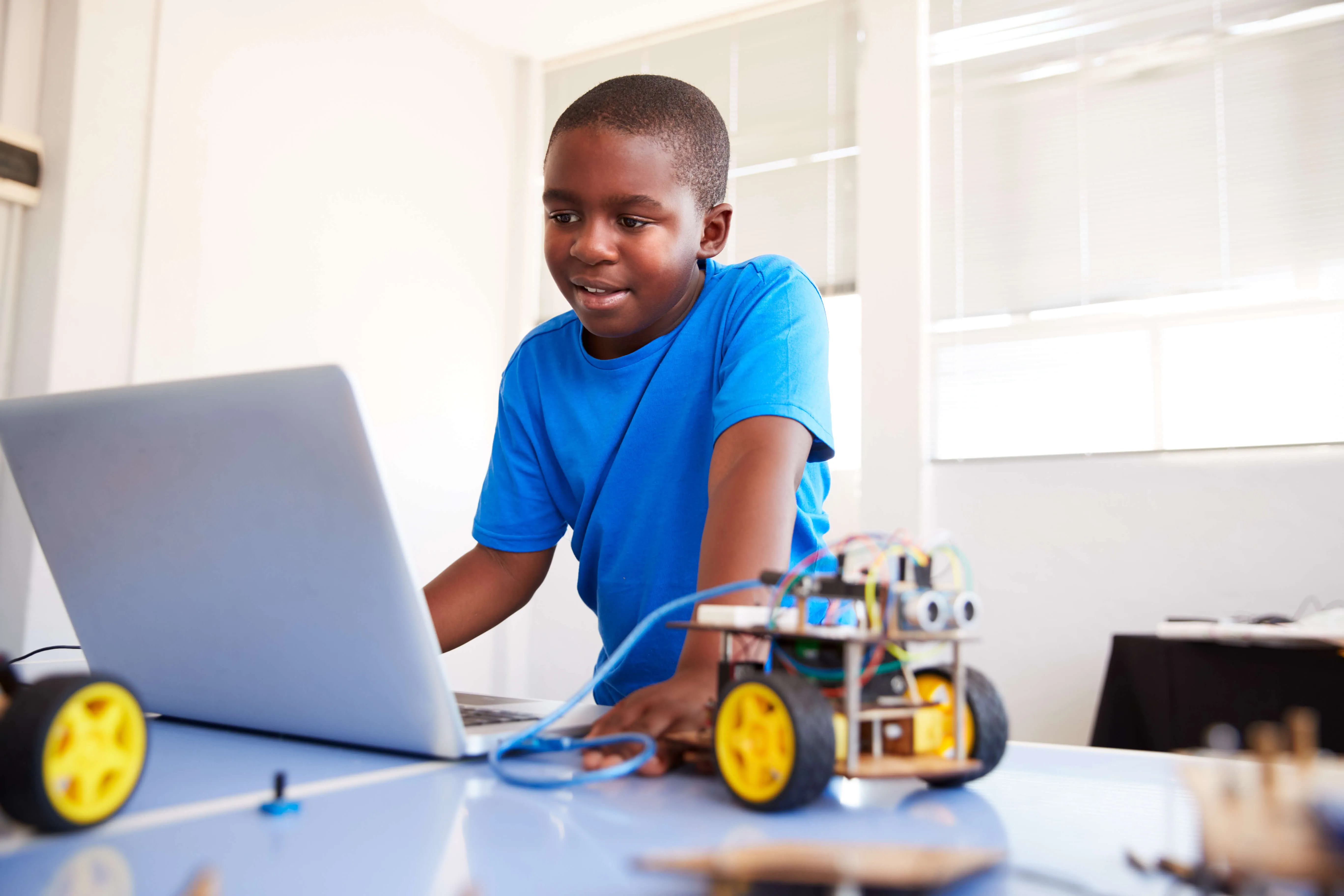
STEAM
Explore Science, Technology, Engineering, Arts, and Mathematics through engaging hands-on projects that spark curiosity and develop critical thinking skills.
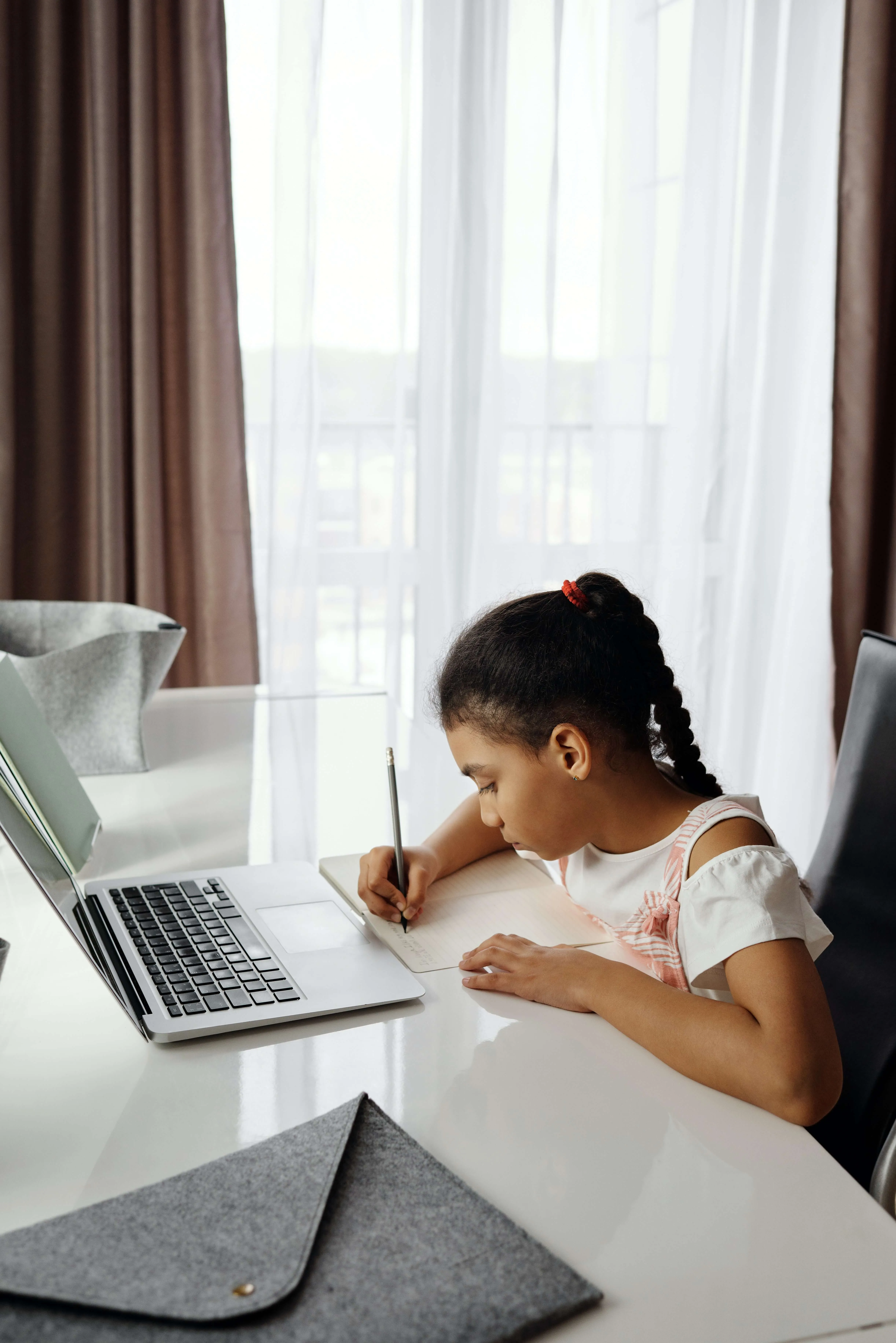
Writing Class
Master the art of written expression through structured writing workshops, helping 1st to 6th graders develop storytelling, essay writing, and creative composition skills.