
Why is color so important in early development?
By Kmind
Stan, a psychologist from Munich, Germany, spent three years studying the effects of color on children’s intelligence. He had the children learn and play in different colored environments. It was shown that children in “pretty” rooms (such as light blue, yellow, yellow-green and orange) had an IQ 12 points higher than normal and became sharp and creative. Children in “unattractive” rooms (e.g., black and brown) had lower IQs and appeared sluggish in comparison.
There are so many studies conducted clearly demonstrate the benefits of colors where the development of the brain, creativity, productivity and learning are concerned. The effects of color on human beings can be varied; causing excitement, lending calm, giving inspiration, raising anxiety or tension or giving peace are some of these effects. These effects can be observed more distinctly in children.
How Color Affects Different Age Children?
The psychological and physical characteristics of children are different at different ages. Generally speaking, 1-3 years old is the period when children gradually become aware of their surroundings and become interested in new things. From 3 to 6 years old, children become more flexible, their attention span and memory gradually increase, and their imagination, imitation, and independence begin to grow. From 6 to 12 years old, children’s ability to choose, identify, and logically develop. The ability to choose, identify and logically improve, and have their own views and opinions about external things. They have their own views and opinions about the outside world and can form a more holistic understanding.
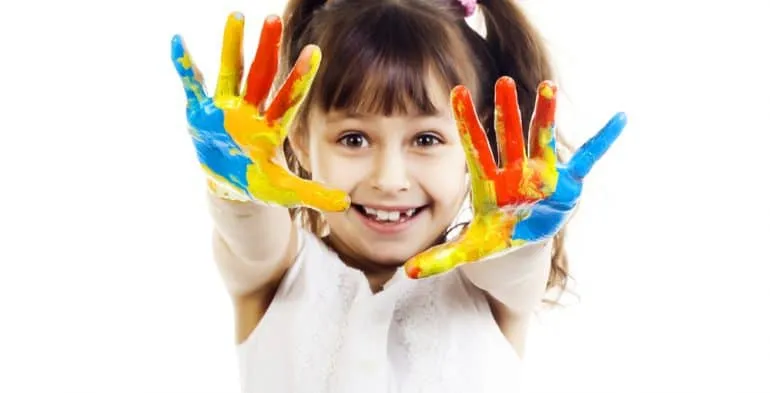
Infant and toddler period (0 ~ 3 years old) children, mothers and fathers should do more developmental and guidance education, in the home environment color design should also be lively and rich, avoid deep and dark hues, with colorful colors to inspire the child’s imagination and creativity, the children’s toys on the market are very bright colors, the colors used are basically solid colors, this is because the infant and toddler stage, with bright Color allows baby to better form awareness of the surrounding environment, so parents should expose their children to more highly saturated colors
When children are a little older (3 to 6 years old), they can be less flamboyant in color, because they will be more interested in the outdoor nature. For the teenage years
(7~12 years old) children call for independence and desire for understanding, the key to the design of the home environment is a bookish atmosphere and the establishment of private space, the choice of colors try to consult the children, let the children make their own decisions, at the same time can can use a color different color scale to distinguish, can improve color cognitive ability.
What Parents Need to Know about Colors
Research has found that people from infancy on the perception of color, and deeply affected by the color environment, color can not only stimulate children’s visual nerve, but also related to the development of children’s intelligence, emotional stability, the formation of personality So, how should parents use color to make their children smarter and healthier?
Children know the shape of objects before they know how to identify the color, for young children, the stimulation of color is more important than the shape, so when children are small, parents should try to show their children some bright colors, wear bright clothes, do not dominate, or forced children, must like a certain color, in this case may be conducive to better development of children.
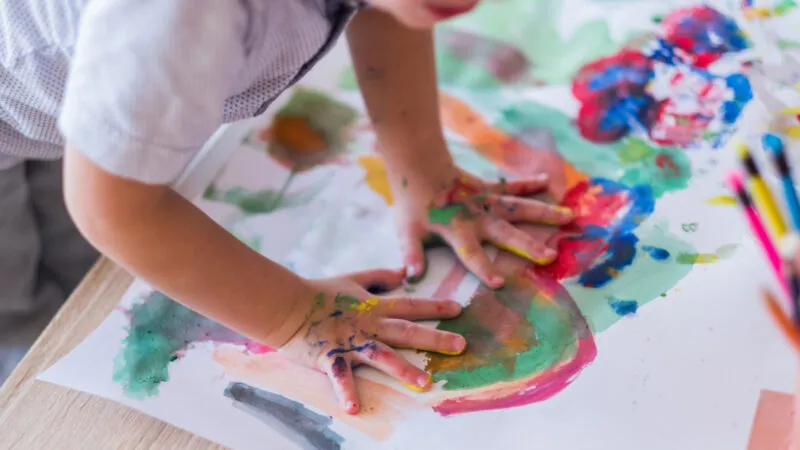
Kindergartens and children’s rooms like to use pink when decorating, the reason is that pink gives people a sense of gentleness and comfort. However, studies have shown that pink wavelengths are very close to ultraviolet wavelengths. Children who live in a pink environment for a long time will have reduced vision, reduced hearing, accelerated pulse rate, and physical and mental fatigue. Therefore, the color scheme for children should be based on children’s visual and psychological factors, and look for colors that are compatible with children’s physical and mental development. Saturation and brightness should be limited, but also pay attention to colorfulness, to give children to shape a comfortable, bright, coordinated color environment.
Warm colors stimulate people’s spirits, make them think more positively, react quickly and increase their energy. Cold colors have the special function of calming the emotions. Therefore, it is important for children to have a colorful world that is suitable for their physical and mental development.
For children who are not very temperamental, decorate the room with cool colors (e.g. green) to stabilize their moods. If your child is less active, set warm colors to energize him/her.
In general, children’s bedrooms should be mainly cool shades of gray so they can sleep easily, while activity rooms and dining areas should be mainly warm colors, which can increase children’s energy and appetite. In a child’s learning environment, it is best not to use colors that are too blended to distract the child.
Yellow
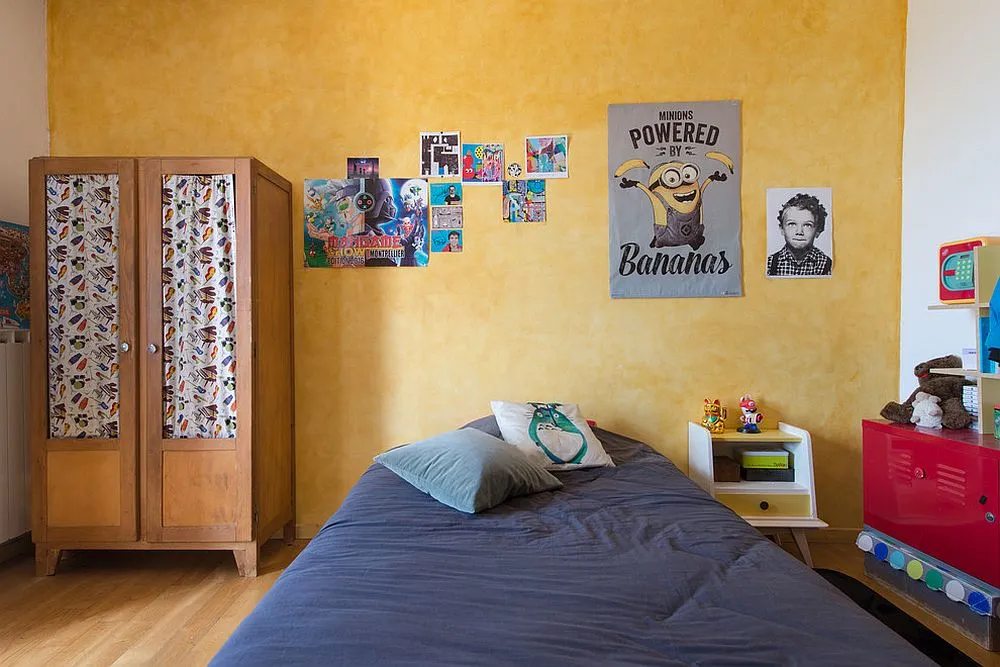
Yellow is the most joyful color on the color scale. It represents wisdom and kindness. It radiates warmth, joy, enthusiasm, fun and inspiration.
Blue
Blue evokes feelings of contentment, spaciousness and comfort due to being the color of the sky and ocean as well. As the shade of blue approaches black with the addition of black it may become depressive and melancholic. Blue is a color that is widely recommended for use in children’s rooms.
Red
Active and unrestrained color, children’s bedrooms are best to avoid it. The impact of the color is too great and can easily lead to nervousness in children. However, red can be used in clothing, children very much like to wear bright colors.
Green
Psychologically represents health, and it has a calming effect on the nervous system. Green is reminiscent of peace, calm and quiet. Since the lens of the eye focuses on green on the retina, green is the most relaxing color.
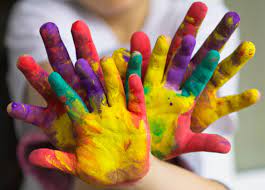
When children are young, parents should also take them outside to see the world. Looking at the blue sky, white clouds and colorful flowers so that children can be exposed to colorful colors from an early age can give children good stimulation, promote their brain development and make them smarter.
Reference:
Buechner, V. L., Maier, M. A., Lichtenfeld, S., & Schwarz, S. (2014). Red - Take a Closer Look. PLoS ONE, 9(9), e108111. https://doi.org/10.1371/journal.pone.0108111
Lewis, R. G. (2020). Color Psychology: Profit From The Psychology of Color: Discover the Meaning and Effects of Color (Psychoprofits). Nielsen.
Melkman, R., Koriat, A., & Pardo, K. (1976). Preference for Color and Form in Preschoolers as Related to Color and Form Differentiation. Child Development, 47(4), 1045. https://doi.org/10.2307/1128441
Skoler, T. (2020, September 17). Color Matters and Child Development. Psychology Today. https://www.psychologytoday.com/us/blog/smart-baby/202009/color-matters-and-child-development
Why is colour so important in early development? (2018, January 17). QA Education Magazine. https://www.qaeducation.co.uk/article/colour-important
Explore Our Courses
Discover courses designed to help your child thrive

Writing Class
Master the art of written expression through structured writing workshops, helping 1st to 6th graders develop storytelling, essay writing, and creative composition skills.

Leadership Development
Cultivate leadership qualities through communication training, teamwork exercises, and ethical decision-making practice for students K-12.
Reading and Writing
Develop comprehensive literacy skills through engaging reading comprehension and creative writing activities designed for Kindergarten to 6th grade students.