
What are sight words?
By Kmind
Sight words are a common term in reading and have a variety of meanings. In a narrow sense, Sight words are words like come, does or who that do not fit the spelling rules or six syllables. These words have to be memorized because decoding them is really difficult. We teach students to remember them as a whole, by sight, so they can recognize them immediately (within three seconds) and read them without using decoding skills.
Some schools call sight words high-frequency words. Although many high-frequency words are also sight words, there is a difference between the two.
Sight words are words that do not fit standard phonological patterns and must be memorized by looking at them, without any attempt to sound them out. High-frequency words are the most common words in written language. While some conform to standard phonetic patterns, some do not. For instructional purposes, most teachers treat them the same way.
Sight Words Games
Flashcards
You can print flashcards to use for the assigned sight word list or purchase sets of flashcards recommended for different grade levels.
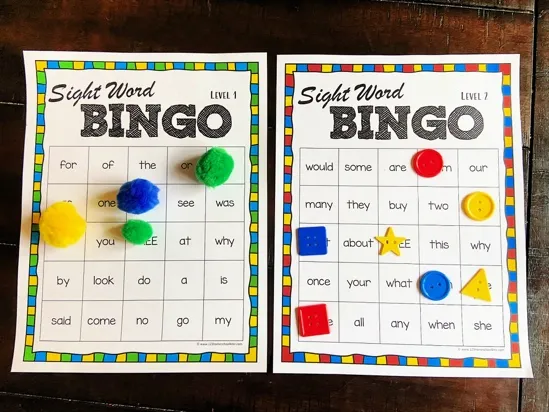
Sight Words Bingo
Sight word bingo takes the traditional bingo game and replaces the numbers with words to motivate children to read sight words so they can play (and win!) this game. Kids love playing Sight Word Bingo, and it’s a great way to provide repetition opportunities in a large group.
Sight Words Snakes & Ladders
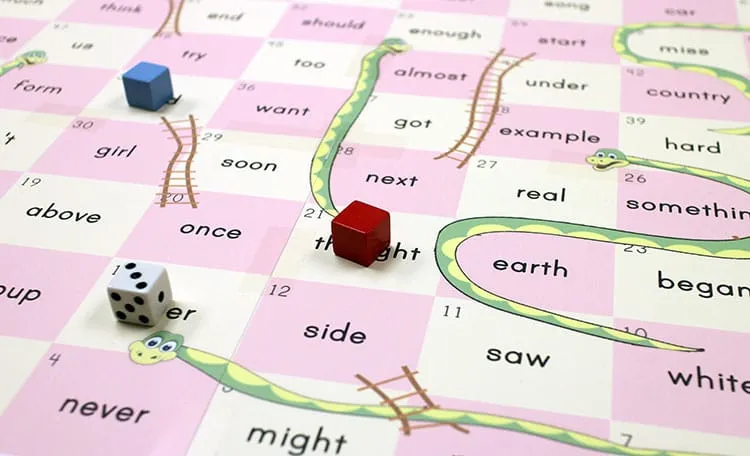
Play the game as you would regularly play Snakes & Ladders. But when the player moves their game piece to a new spot, they must read each word along their path in order to progress. If they are unable to read one of the words, then they stop on that word until their next turn.
Sight Words Hangman
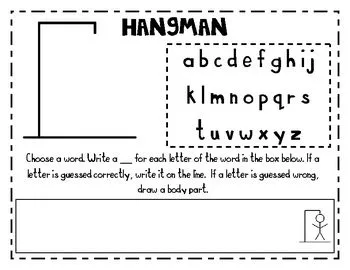 In Sight Words Hangman, children will play a sight words variation of the classic game of Hangman. A child will draw from a stack of flash cards and must read each word out loud to collect cards. But for every mistake, another body piece gets added to the Hangman!
You can play this game with your child, or two to four children can play each other, competing to see who can read the most words before the game ends.
Sight Words Pathways
Arrange the cards, face up, to make a “path” on the floor. They should be close enough together that a child can easily step from one to the next. Don’t make it a straight line — be creative!
A child stands at the beginning of the path and reads the word on the first card out loud. If she cannot read the word correctly in less than 10 seconds, go through our sight words correction procedure to review and reinforce the correct pronunciation.
Sight Words Boom!
Sight Words Boom! is a vocabulary-themed game for one or more players. Children will collect cards by correctly reading the sight words printed on them. But watch out for the BOOM cards! Draw a BOOM card, and you lose all the cards you collected and have to start over.
Sight Word Lists
Most sight word lists are comprised of words found on the Revised Dolch List of Basic Sight Words and Fry’s Instant Sight Words, so you may also hear them referred to as Dolch or Fry words.
Both the Dolch and Fry word lists were developed based on the most frequently-occurring words in the English language. The Dolch list is made up of 220 words and contains no nouns unless they can be used as another part of speech. (Dolch created a separate list of 95 nouns.) And the Fry list contains 1,000 words and includes all parts of speech.
Dolch sight words are based on high-frequency words that students in kindergarten through second grade typically would be reading. They are listed by age group, whereas the first 300 Fry words are listed by order of frequency. They are broken down into groups of 100 because Fry advocated focusing on a few words at a time until a student memorized the entire list.
You can choose either one based on your needs, and we include them both in the attached materials.
Reference: sightwords.com
k12reader.com
verywellfamily.com
Explore Our Courses
Discover courses designed to help your child thrive
Math
Build strong mathematical foundations through hands-on problem-solving and conceptual understanding, helping Pre-K to 2nd graders develop number sense and critical thinking skills.

Writing Class
Master the art of written expression through structured writing workshops, helping 1st to 6th graders develop storytelling, essay writing, and creative composition skills.
Reading and Writing
Develop comprehensive literacy skills through engaging reading comprehension and creative writing activities designed for Kindergarten to 6th grade students.