
What are Cognitive Skills?
By Kmind
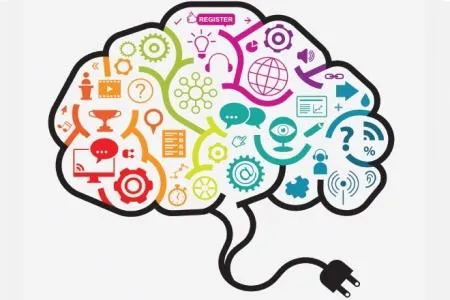
Cognitive skills are brain-based skills that we need to perform any task from the simplest to the most complex. They have more to do with the mechanisms of how we learn, remember, solve problems and pay attention than with any actual knowledge. For example, answering the phone involves perception (hearing the ring), decision-making (answering or not answering), motor skills (holding up the receiver), language skills (speaking and understanding language), and social skills (interpreting tone of voice and interacting appropriately with another person).
Cognitive skills are often divided into nine different categories. Each of these cognitive skills reflects an other method that your brain uses to interpret and use information effectively:
-
Sustained Attention
-
Selective Attention
-
Divided Attention
-
Long-Term Memory
-
Working Memory
-
Logic and Reasoning
-
Auditory Processing
-
Visual Processing
-
Processing Speed
Why are Cognitive Skills Important?
Cognitive skills are extremely important to develop early in life because they help your brain think, read, learn, reason, pay attention and remember. These skills enable process incoming information and assign it to the appropriate areas of the brain. Improving and mastering these skills is the ability to understand and successfully complete tasks, resulting in a better and easier experience in school.
In addition, as children continue to learn and improve their abilities, these skills will come in handy in their professional and personal lives.
Stages of Cognitive Development
The renowned psychologist Jean Piaget, the leading researcher in the field of cognitive development, suggested that children actually think differently than adults and that childhood and adolescence should be seen as unique periods of growth and development.
Piaget’s theory identifies four stages:
(1) The sensorimotor stage: The first stage of development lasts from birth to approximately age 2. At this point in development, children know the world primarily through their senses and motor movements.
(2) The preoperational stage: The second stage of development lasts from the ages of 2 to 7 and is characterized by the development of language and the emergence of symbolic play.
(3) The concrete operational stage: The third stage of cognitive development lasts from the age of 7 to approximately age 11. At this point, logical thought emerges but children still struggle with abstract and theoretical thinking.
(4) The formal operational stage: In the fourth and final stage of cognitive development, lasting from age 12 and into adulthood, children become much more adept at abstract thought and deductive reasoning.
Cognitive Developmental Milestones
From 2 to 3 Years
At two years of age, children are becoming increasingly independent. Since they are now able to explore the world better, a great deal of learning during this stage is the result of their own experiences.
Most two-year-olds are able to:
-
Identify their own reflection in the mirror by name
-
Imitate more complex adult actions (playing house, pretending to do laundry, etc.)
-
Match objects with their uses
-
Name objects in a picture book
-
Respond to simple directions from parents and caregivers
-
Sort objects by category (i.e., animals, flowers, trees, etc.)
-
Stack rings on a peg from largest to smallest
From 3 to 4 Years
Children become increasingly capable of analyzing the world around them in more complex ways. As they observe things, they begin to sort and categorize them into different categories, often referred to as schemas.
Since children are becoming much more active in the learning process, they also begin to pose questions about the world around them. “Why?” becomes a very common question around this age.
At the age of three, most kids are able to:
-
Ask “why” questions to gain information
-
Demonstrate awareness of the past and present
-
Learn by observing and listening to instructions
-
Maintain a longer attention span of around 5 to 15 minutes
-
Organize objects by size and shape
-
Seek answers to questions
-
Understand how to group and match object according to color
From 4 to 5 Years
As they near school age, children become better at using words, imitating adult actions, counting, and other basic activities that are important for school preparedness.
Most four-year-olds are able to:
-
Create pictures that they often name and describe
-
 Count to five
 -
Draw the shape of a person
-
Name and identify many colors
-
Rhyme
-
Tell where they live
From 5 to 6 Years
In terms of cognition, you’d be surprised at how quickly your child absorbs new information. Five-year-olds are like sponges, constantly learning. While your child still enjoys playing imaginary games, they can better distinguish between imaginary games and real life.
Most five-year-olds are able to:
-
Can already use the computer with some expertise, especially to navigate the mouse and browse the internet
-
Can follow simple direction
-
Loves to argue and reason
-
Interested in cause and effect
-
Develops simple problem-solving ability
-
Asks endless questions
From 6 to 7 Years
Kids at this age have the ability to understand more complex situations; however, they will tend to still see things as completely “wrong” or “right”; there are no gray areas. It is important that parents and members of the household model the right behavior to avoid confusion.
Most five-year-olds are able to:
-
Enjoy planning and building.
-
Start to understand the value of money.
-
Have an increased problem-solving ability.
-
Have a longer attention span.
-
Can begin to understand time and the days of the week.
How to Help Your Child’s Cognitive Development?
Identify Noises
Have your child identify the sounds he hears throughout the day (for example, birds singing, car horns, running water, or the sound of the dishwasher). He will begin to understand how sounds relate to objects in his everyday environment.
Practice Counting
Look for opportunities to practice counting throughout the day. Count the number of shoes in your child’s closet when he gets dressed, or count the number of slides on the playground when you go to the park. You may soon find that you’re counting everything
Offer Choices
When you can, offer choices for your child.” Do you want to wear blue socks or white socks?” Or “Do you want a sandwich or rice for lunch?” This will help him feel more independent and learn to make confident decisions that will affect his day.
Asking Questions
Another way to help your child learn to think for himself is to ask him questions.” When we clean the living room, which toy should we pick up first? Or “Why do we have to walk slowly down the stairs?” Asking him questions helps him learn how to solve problems and better understand how his environment works.
Sing-a-longs
Sing songs with your child and encourage him to sing along with you. Play his favorite songs and music in the house and car regularly and he may eventually start singing along by himself. This activity helps promote memory and word identification.
Practice the Alphabet
Help your child identify letters by singing along with the “alphabet song,” reading books about the alphabet, and playing with alphabet puzzles.
Here’s an example of a simple game that can help your child learn the alphabet:
-
Cut out individual squares of each letter written in bright colors.
-
Mix them up and stick them on various surfaces around the house.
-
Work through the alphabet with your child, encouraging him to find the next letter in the house and stick it on the wall in order.
-
When you’re done, stick the alphabet on the wall in order until you’re ready to play the game again.
Offer a Variety of Games
Play a variety of games with your child to encourage problem solving and creativity. If your child is younger, the two of you can build with blocks and play “Peek-a-Boo.” As he gets older, you can engage him in board games, puzzles and play “Hide and Seek.”
Reference:
sharpbrains.com
isaz.org
verywellfamily.com
Piaget J (author), Duckworth E (translator). Genetic Epistemology. Am Behav Sci. 1970;13(3):459-480. doi:10.1177/000276427001300320
Larcher V. Children are not small adults: Significance of biological and cognitive development in medical practice. Handbook Philos Med. 2015. doi:10.1007/978-94-017-8706-2_16-1
Explore Our Courses
Discover courses designed to help your child thrive

Leadership Development
Cultivate leadership qualities through communication training, teamwork exercises, and ethical decision-making practice for students K-12.

Public Speaking and Debate
Master public speaking and competitive debate through structured training in argumentation, rhetoric, and persuasive communication for grades 3-12.
Math
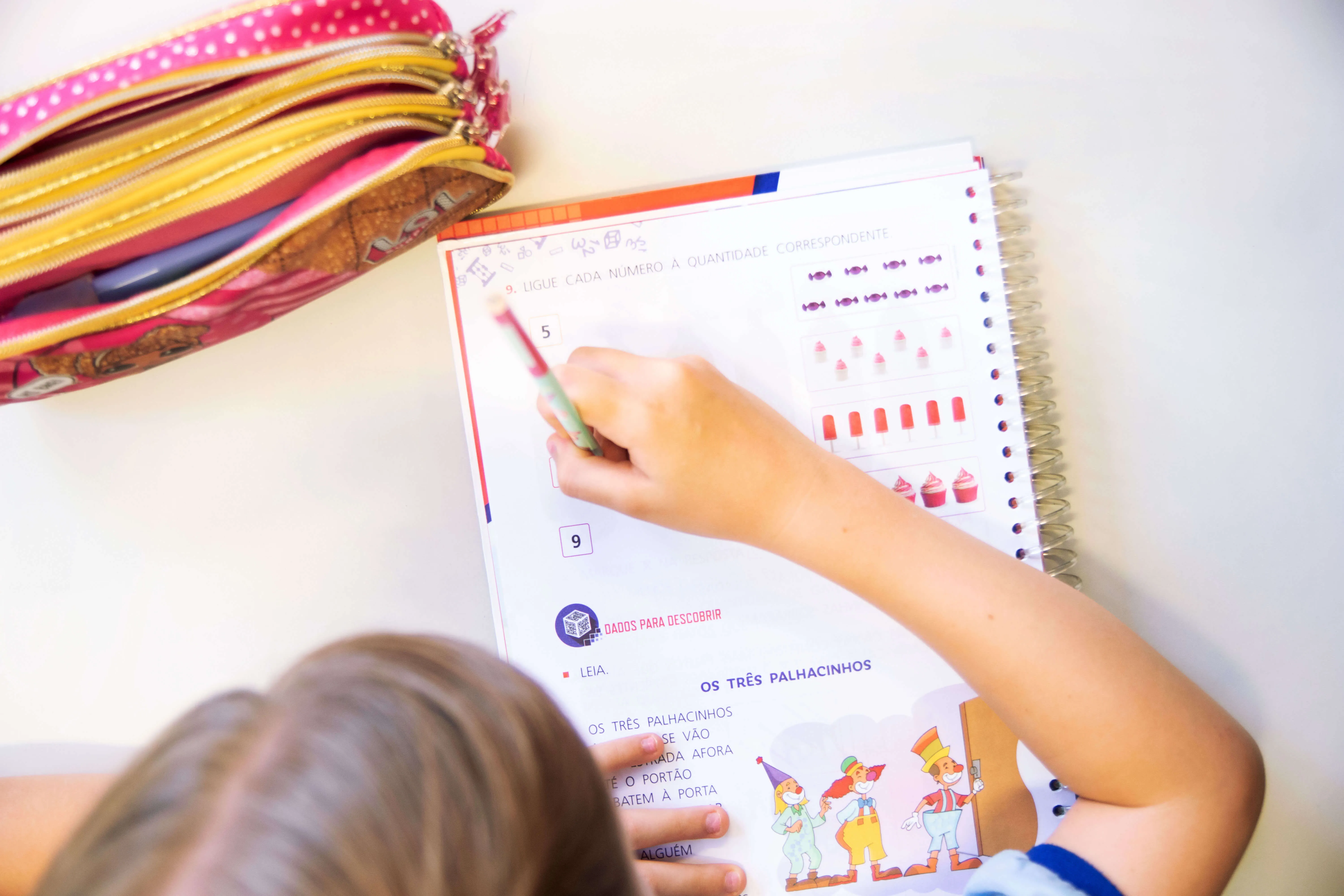
Build strong mathematical foundations through hands-on problem-solving and conceptual understanding, helping Pre-K to 2nd graders develop number sense and critical thinking skills.