
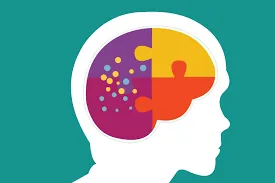
Ways to Boost Your Child's Attention
By Kmind
In last week’s article, [Attention Types and How to Boost Your Child Attention], we introduced four types of attention and the factors that influence them. Today we will continue our in-depth introduction to selective attention and its importance.
The difference between passive and active attention
The brain receives a variety of stimuli that are regulated by attention. The stimuli that attention processes are divided into passive and active attention. Sometimes a child is focusing on a specific stimulus, such as listening to a teacher and still has a momentary loss of attention due to loud noise. The original focus is active attention, while the distraction is passive attention.
Passive attention
With passive attention, we are referring to stimuli that catch the child’s attention because they stand out from the environment. This can be a noise heard in class, a meal smelled while doing homework, or feeling too hot or too cold while reading. Although children are not paying attention to these stimuli, they are still noticing them.
Active Attention
By active attention, we mean stimuli that voluntarily reach the child’s attention. These are stimuli that the child’s attention receives because the child is focusing on them, just as you are focusing on reading this article right now. Active attention involves the effort of receiving a specific stimulus and requires mental energy and the ability to filter out the stimulus (Selective attention).
Selective Attention
Selective attention is the process of directing our awareness to relevant stimuli while ignoring irrelevant stimuli in the environment.
Both pioneer psychologists Broadbent’s (1958) and Triesman’s (1964) models of attention are bottleneck models because they predict that we cannot consciously attend to all sensory inputs simultaneously.
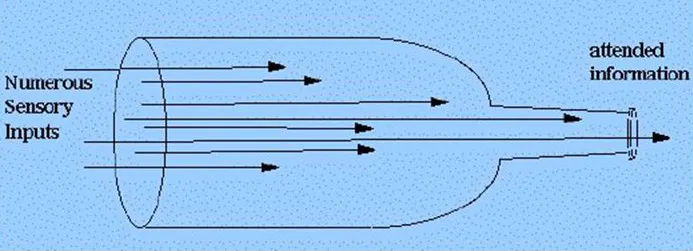
This is an important process because there is a limit to the amount of information that can be processed in a given amount of time, and selective attention allows us to tune out the irrelevant details and focus on what is important.
Attention Development
The development of attention is:
Age
3Y
4Y
5-6Y
7-8Y
9-10Y
11-12Y
Attention Stabilization Time
3-5min
10min
15min
20min
25min
30min
The length of the attention span is different for each person and is related to the quality of psychological factors, as well as to environmental factors and educational patterns. After the age of 12, the child basically belongs to the normal adult state.
How To Pay Attention
Last week’s article covered some general methods for improving attention. This week we will present some detailed attention training methods with printable training worksheets (Ask the class assistant for training worksheets):
Visual Agility Training
The purpose of the training is to develop visual agility, discrimination and concentration. Using the eyes to perform discriminate between tasks.
Training: finding different numbers or characters in a character list or a number sequence, or finding specific patterns of numbers in a number sequence. (For example: circle all 8338 from the number line.)
Visual Concentration Training
The goal of the training is to distinguish between numbers, words, or pictures in a state of high visual concentration.
Training: Identify specified numbers, characters, or patterns in an unordered table. (For example: Circle all the watermelons in the picture.)
Visual Tracking Training
The goal of the training is to develop the child’s visual agility, concentration and visual stability. Using the eyes to accomplish the task of discrimination.
Training: Maze, copy the shape, visual tracking, etc. (For example: Fill in the numbers in parentheses that are connected to the letters.)
Schulte Tables
Schulte tables are tables with randomly arranged characters. Usually, numbers or letters are used to check and develop the speed of their visual search in a specific order. These tables were originally developed by the [German psychotherapist Walter Schulte] as a psychodiagnostic test for studying the properties of attention. Later they began to be used as exercises for training peripheral visual perception, which is useful for developing the speed-reading skill. In addition, these tables are used in psychology (there are various methods) in studying the effectiveness and efficiency of people and their ability to hold and switch attention.
The exercise is as follows:
1. Keep the child’s eyes 12-14 inches away from the table, with the view naturally placed in the center of the table.
2. Start searching for all the numbers in order, using peripheral vision.
3. Such training is done up to ten times per day. After each training, take a short rest for the eyes to avoid excessive fatigue.
Attention Training Games:
Word Thinking
The rules of the game: When the parent reads a word, the child raises his right hand when he hears a fruit, and raises his left hand when he hears an electrical appliance.
For example: Apple, desk, basketball, schoolbag, grape, air conditioner, TV, bicycle, washing machine, refrigerator, banana, pear, pineapple, cup, pen, cell phone, computer, airplane, fan, lamp, badminton, lighter, mango.
Distraction Game
The child puts a ping pong ball on the paddle and walks around the table in a circle, needing to keep the ball from falling. You are messing around but cannot touch the child’s body. You can clap your hands and stomp your feet or yell and scream. The child must resist distractions and has to remain calm and focused to complete the game.
Counter-command
The parent says the command, and the child does the opposite according to the command. For example, if you say, “Step forward,” your child does a step backward. You say “stand”, and your child sits down. Parents and children can take turns saying commands.
Cup Guess Game
Take 3 opaque plastic cups, turn them upside down, and put a coin under one. Have the child stare at the cup with the coin in it while the parent changes the position of the 3 cups at random, and then have the child point out the cup with the coin in it.
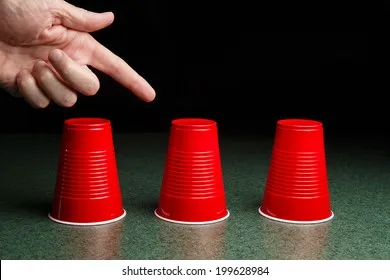
As the ability improves, parents can increase the number of cups and coins to increase the difficulty.
****
Reference
- 10 Games to Boost Attention & Focus. (2021, February 2). Heart-Mind Online. https://heartmindonline.org/resources/10-games-to-boost-attention-focus
- Castle, P., & Buckler, S. (2009). How to be a Successful Teacher: Strategies for Personal and Professional Development (First ed.). SAGE Publications Ltd.
- Cole, L. (2021, April 15). Types of Attention: Explore How Your Mind Focuses | MentalUP. MentalUP.Co. https://www.mentalup.co/blog/types-of-attention
- Kishore, K. (2021, August 3). Types Of Attention. Harappa. https://harappa.education/harappa-diaries/types-of-attention-in-psychology/
- Mcleod, S. (2018). Theories of Selective Attention | Simply Psychology. Simply Psychology. https://www.simplypsychology.org/attention-models.html
- Psychology Today. (2021). Attention. https://www.psychologytoday.com/us/basics/attention
- Schulte table - speed reading training. (2018). Schulte Table. https://schultetable.ru/en/
- The Care.com UK Team. (2021, June 30). 10 Tips for Getting Kids to Pay Attention. Care.Com Resources. https://www.care.com/c/en-gb/10-tips-for-getting-kids-to-pay-attention/
- What Attention Means in Psychology. (2021, February 10). Verywell Mind. https://www.verywellmind.com/what-is-attention-2795009
- ****
Explore Our Courses
Discover courses designed to help your child thrive
STEAM
Explore Science, Technology, Engineering, Arts, and Mathematics through engaging hands-on projects that spark curiosity and develop critical thinking skills.
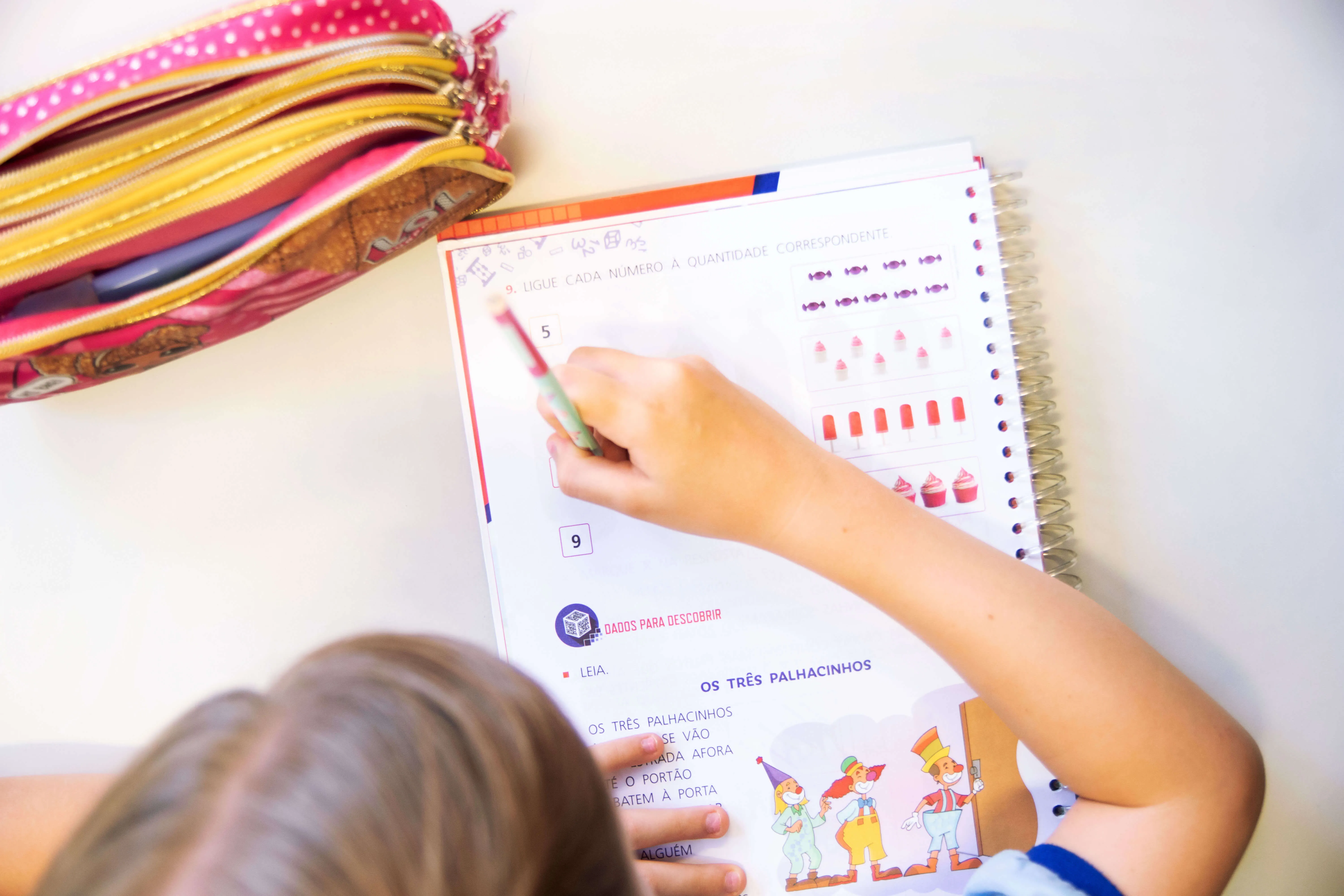
Math
Build strong mathematical foundations through hands-on problem-solving and conceptual understanding, helping Pre-K to 2nd graders develop number sense and critical thinking skills.
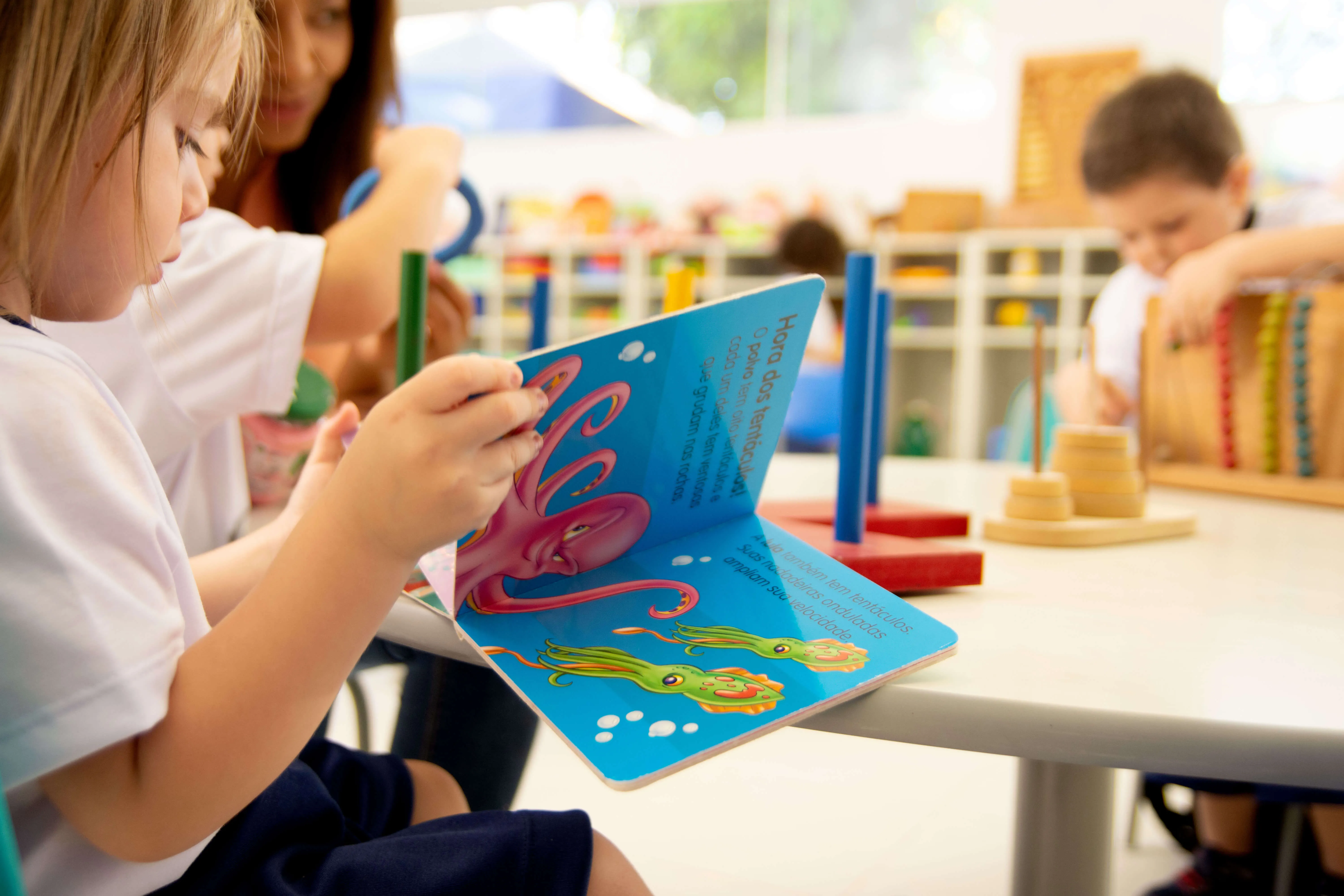
Phonics
Build a strong reading foundation through systematic phonics instruction, helping Pre-K to 1st graders master letter sounds, blending, and decoding skills.