
Tips to Teach Your Kids Time Management Skills
By Kmind
Teaching young kids time management skills is not easy, and while you know we as adult sometimes struggle with this skill as well. So why not start the teaching journey with a fun game at the beginning.
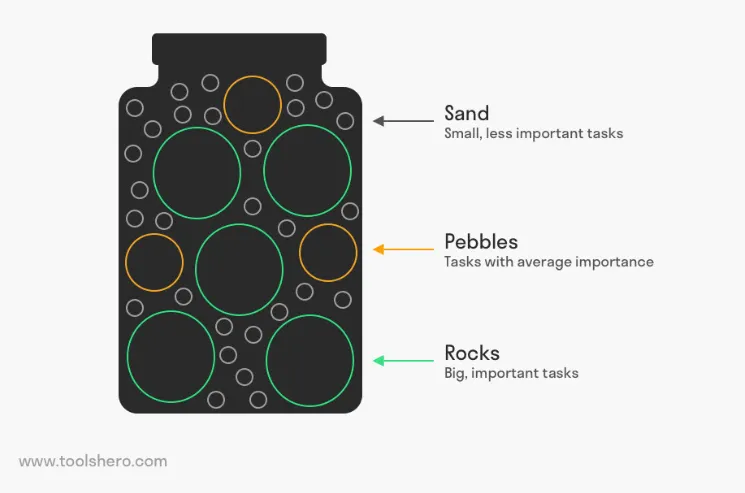
Imagine an empty pickle jar, some rocks, some pebbles, and some sand on the table in front of you.
-
The jar represents your time.
-
The rocks represent important tasks.
-
The pebbles are the less important tasks.
-
The grains of sand are the unimportant tasks that pop up throughout your day, such as sending a text message, checking email, or answering a phone call.
Now, knowing that you are limited to the amount of time you can fit into a pickle jar, which things would you put in first? If you dumped in all the sand, added the pebbles, and then tried to squeeze in the rocks last - you wouldn’t have enough room for the rocks. But if you add the largest item (the rock) first, then add the pebbles, then pour the sand in, you’ll find you have enough room for the basics.
That is The Pickle Jar Theory: You must do the most important tasks first; otherwise, you’ll never get around to them.
Be it finding socks or finishing science projects, many parents take it as a given that children are simply time-challenged, and there’s little to be done about getting them to complete a task within a set schedule. But recent studies suggest that moms and dads would do well to approach time management as important and teachable as reading and writing.
What is Time Management?
Time management is a thinking skill that helps children prioritize tasks and complete them promptly. It involves accurately judging the amount of time needed to complete a task and knowing how to stick to the plan. An example of a good time management skill is when a child decides to finish their homework and chores immediately after school so they have time to watch TV in the evening.
Benefits of Time Management
-
Teach children discipline and responsibility
-
Teaches them to divide their time by task
-
Helps prioritize tasks
-
Improves their analytical skills
-
Enables them to multi-task in a short period of time
-
Reduces work stress
Tips To Teach Time Management to Kids
Time Management Matrix
The following Time Management Matrix is reportedly based on ideas from President Dwight D. Eisenhower and made popular by author Stephen Covey, who wrote about it in his New York Times bestseller, [The 7 Habits of Highly Effective People]. 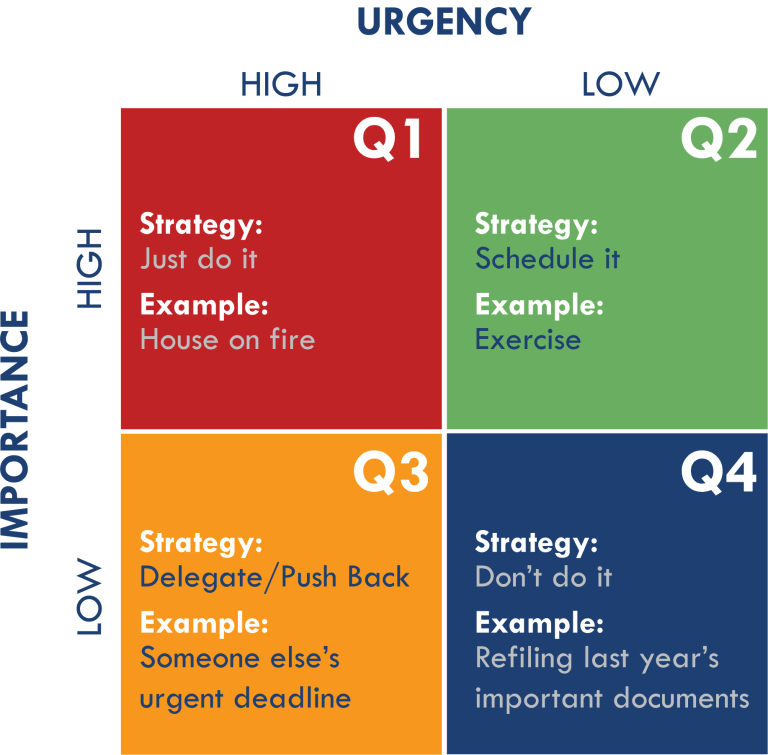
To use this method of time management, start by creating a matrix that places the tasks of the day in one of four quadrants.
The goal is to spend most of the time in the second quadrant (important but not urgent) because these tasks will interfere with the child’s long-term goals. The fourth quadrant is to be avoided whenever possible.
If your kid spends the vast majority of their time in the other quadrants and not in the second quadrant. This indicates that your child is still passive, not active, and it does not indicate that your kid is now a master of time management.
The Linearity of Time
We need to let children understand that time [has two characteristics, one is the linearity of time]. That is, time passes and never comes back.
[I recommend] a picture book, [A kid’s guide to managing time]. This book uses very child-friendly language to make time clear and simple, with seconds and minutes, hours and days, ages and millennia.
[“I found this book to lay out just what time is, from the first second to a year. Talking not only about how many seconds in a minute, and seasons in a year, but also how to make a list of what you need to do and set goals for plans. It helped me grasp a better perspective on time than some adult time management books. It said something like: We all have the same number of minutes in a day, it’s how we use those minutes that makes the difference. Not very profound, but something we don’t see in perspective. Although the book is not very big, it is to the point, and clear.”]
[Reviews from readers of this book]
The Cycle of Time
Another characteristic of time is the cycle of time. For example, the cycle of seasons and morning and evening. Seasons are a primary vehicle for introducing the cyclical nature of time. By observing how a tree changes through the seasons, children can see how it develops. Green leaves turn red in the summer, then brown, eventually fall off the tree, and then come back to life again in the spring. This is a concrete representation of the passage of time that the little ones can understand.
![Understand TAKT Time and Cycle Time vs. Lead Time [2022 Edition] | Simplilearn](/assets/img/blogs/tips-to-teach-your-kids-time-management-skills/media/image4.jpeg)
How does this help with time management? By observing patterns in nature and everyday life, young children can intuitively grasp the concept of time - and how to create order. Reinforce these lessons, for example, by having your children sort family photos by season. Or point out patterns in nature during your walks.
Help Them Create a Schedule
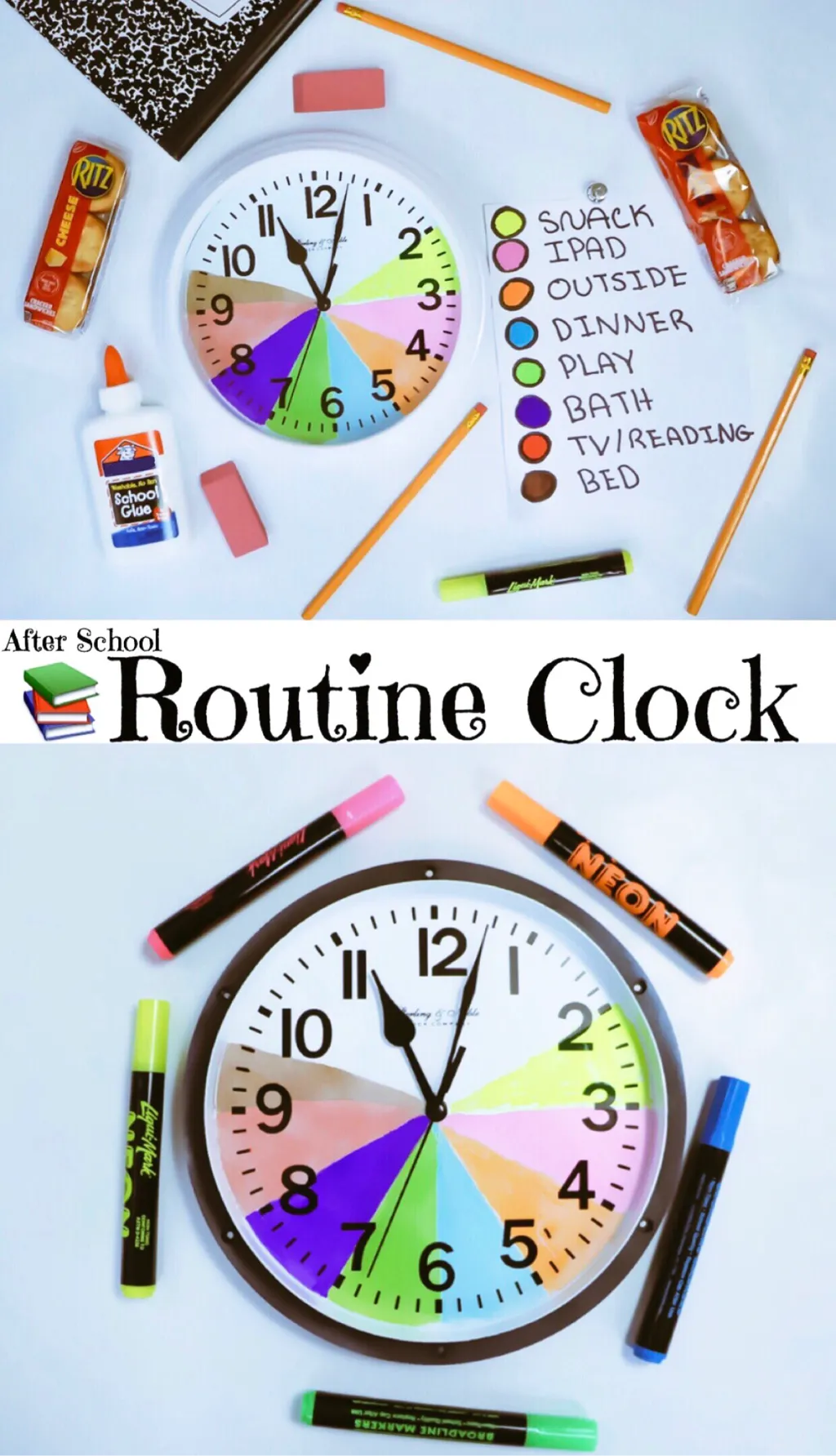
Observe how your child spends most of their time. Analyze how they use their time throughout the day or whether they waste valuable time playing video games or watching TV. Based on your observations, ask them to create a schedule that reserves time for studying, playing, field trips, and other activities. Once the schedule is set, they will follow it daily and make it a habit.
Teach Them to Estimate Time
Planning a schedule requires action analysis, and one of the easiest ways to do this is to prepare a reflective schedule. Have your child practice a schedule for the day. Contribute 15 minutes at the end of each day to analyze the day’s activities. You can compare time, work progress, and results. Reflect on any changes to the next day’s schedule and help your child improve their estimation skills.
Make Them Set a Routine
Following a set routine can teach your child patience and contentment. You can ask your child to do simple activities such as a morning routine. Cue them beforehand and provide them with plenty of time to prepare for any activity they don’t like. In this way, children learn to be patient and familiar with adjustments, and thus learn to take the initiative.
For more information on the morning routine, you can read Kmind’s previous article: How to Have a Smooth and Energetic Morning?
Use a Visual Timer
To help your child understand the importance of time, ask them to complete activities within the time frame planned. The best way to do this is to keep a graphic, visual timer. You can also use a classic hourglass or anything you think will reflect the running time. After successful completion, reward them with their favorite activity or a star. The goal is to help kids tackle their assignments more effectively and efficiently while making them more aware of the ticking clock

Let Them Know the Consequences
Taking responsibility for an action is a vital part of time management. Otherwise, it could lead to failed or delayed tasks, impacting the other activities. You can ask them to be responsible by handing over a job, and then explain what the consequences would be if they fail. Also, help them know what can be done to improve their time management skills.
Helping your children prioritize their day is something they can use throughout their lives and will help them accomplish their most important tasks daily and weekly, while also preparing everyone to accomplish long-term goals. Before moving to weekly and monthly priorities, start small and start with daily priorities. You will instantly set your kids up for success and soon make them masters of time management.
****
Reference
- 11 Easy Tips to Teach Your Kids Time Management Skills. (2020, August 29). Verywell Family. https://www.verywellfamily.com/how-to-teach-your-kids-time-management-skills-4126588
- Chandika, R. (2019, August 5). Time management for kids : Important things to focus on. WOW Parenting. https://wowparenting.com/blog/time-management-for-kids/
- Crawford, L. (2020, September 28). The instant guide to time management for kids. Parenting. https://www.greatschools.org/gk/articles/time-management-for-kids/
- Lakhotia, P. (2021, July 20). 25 Simple Ways To Teach Time Management For Kids. MomJunction. https://www.momjunction.com/articles/time-management-for-kids-students_00709236/
- Mom, S. A. T. S. (2020, May 8). 10 Tricks for Teaching Kids Time Management. The Soccer Mom Blog. https://thesoccermomblog.com/teaching-kids-time-management/
- Sippl, A. (2022, December 5). 12 Time Management Skills To Teach Your Child Now. Life Skills Advocate. https://lifeskillsadvocate.com/blog/12-time-management-skills-to-teach-your-child-now/
- Taylor, M. (2020, February 7). The Top 7 Time Management Theories Tested & Reviewed. Serene. https://sereneapp.com/7-time-management-theories-reviewed/
Explore Our Courses
Discover courses designed to help your child thrive

Public Speaking and Debate
Master public speaking and competitive debate through structured training in argumentation, rhetoric, and persuasive communication for grades 3-12.

Social Emotional Learning
Develop essential life skills including self-awareness, emotional regulation, empathy, and relationship building through evidence-based SEL curriculum.

Science Research Project
Develop scientific inquiry and research skills through hands-on projects, helping 3rd to 12th graders learn the scientific method, experimental design, and data analysis.