
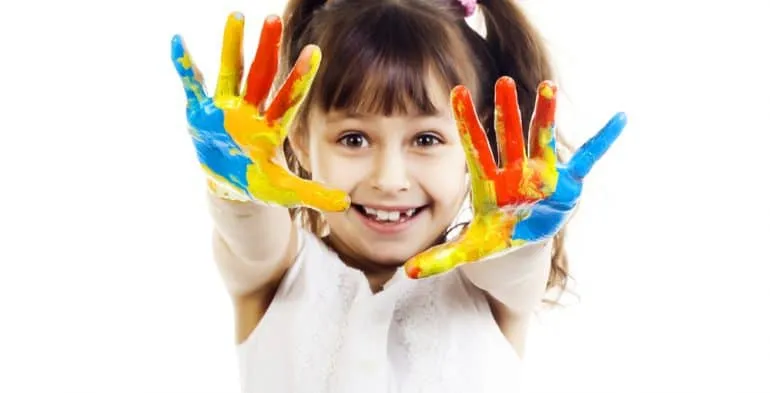
The development of a 5-year-old is fraught with emotional extremes and contradictions. At this age, ...
By Kmind
At this age, the most gratifying characteristic is that he loves life, enjoys himself, and always sees the bright side of life. The life of a 5-year-old is always closely related to now and here. He cares about his own room, his home, the street he lives in, his neighbors, and the kindergarten classroom. He doesn’t have much interest in new and strange things, and he won’t take risks for adventure.
Physical Development
Your 5-year-old has likely left their teetering toddler years long behind them and are well on their way to becoming more coordinated and precise in their movements as they enter the school-age years.
Many children’s faces gradually lose their chubby “baby fat” and look more like pupils with thin cheeks. Because at this stage, the child’s body is in the period of reducing fat and increasing muscle.
- Some typical developmental features include:
-
Weight: gain 4-5 pounds
-
Height: grow 2-3 inches taller
-
Visual acuity: reach 1.0 (normal vision)
- Key Milestones
-
Gross motor skills: Children’s abilities of hopping, skipping, running and jumping began to develop, and they will have good balance and coordination
-
Fine motor skills: As their small muscles become more fine-tuned, they will be able to dress themselves, handle buttons and zippers, and learn how to tie shoelaces. In particular, children are more skilled in using knives and forks and need less help from parents, such as cutting food; The family dining experience has changed
- Parenting Tip
- The age of 5 is a good time for children to try to complete new things and face new challenges. They are mastering various skills. For example, with the improvement of children’s ability to use tableware, they become more adept at handling forks and knives and need less help with things like cutting their food, parents can begin to teach them better table manners
Emotional Development
Five-year-olds are entering the world of “big kids,” with greater emotional self-control and a sense of rules. Many children are “people pleasers,” actively making friends and expecting positive responses from adults.
At the same time, children in this age group are not yet fully removed from the world of younger children and therefore may have extreme emotions, contradictions, and tantrums.
This is the age when many children beginning to be able to describe their feelings accurately and meaningfully. For instance, a 5-year-old child might say, “I don’t like it when I have to go to bed early.”
Children also naturally empathize with others; for example, if a child sees a friend who is sad, he/she may say, “I’m sorry you are sad.” If children at this age are frustrated about something, they may say what they are thinking directly, e.g., “Mom, I’m mad at you.”
- Key Milestones
-
Separates from caregivers without excessive upset
-
Plays and shares with other children
-
Attends to an adult-directed task for at least five minutes
- Parenting Tip
- It’s a key time to begin teaching your child socially appropriate ways to handle feelings, like anger and frustration. Talk about how drawing a picture, counting silently to themselves, or taking deep breaths are good ways to calm down the mind and body.
Social Development
Five-year-olds enjoy making new friends, experiencing relationships outside of their immediate family (including teachers and peers), and beginning to blossom as an independent person. Much of the social and emotional development of children at this stage will make their transition from preschool to kindergarten smoother.
As a result, friendships begin to take on more important as they grow. Children at this age may be more likely to choose specific friends and form strong bonds with two or three other peers.
- Key Milestones
-
Wants to please friends
-
More likely to agree with the rules
-
Wants to be like the other kids
- Parenting Tip
- Cliques may form and ostracism may occur in 5-year-olds, so it’s important to keep a close eye on dynamics in classrooms and playgroups. Bullying can also occur in kindergarten and at this age, kids lack the skills to respond to a bully so adult intervention is key.
Cognitive Development
Five-year-olds begin to understand the difference between “right” and “wrong”. They begin to grasp the concept of rules and want to please adults by following them.
At the same time, children are able to think and express themselves on higher levels. Children starting kindergarten will show interest in tackling academic and behavioral expectations at school.
- Speech & Language
-
By this age, kids can express their needs and wants with their words. Their language should be easily understood by adults who are not familiar with them and in turn, they can usually understand more complex instructions.
-
They can also understand positional vocabulary, and should know what you mean when you say things like, “on top of,” “below,” or, “next to.”
- Play
-
Most 5-year-olds enjoy dramatic play. They may initiate some privacy with their friends too, by suggesting they play in another room away from adult interaction. They can often resolve minor conflict on their own without requiring adult intervention in their play.
-
Their budding physical skills may also expand their play. Your child might enjoy riding a bike without training wheels, jump rope, or play more complex games with balls.
- Key Milestones
-
Able to count to 10
-
Begin to extend their oral language skills to reading and writing
-
Likes to sing, act, and dance
- Parenting Tip
- Expose your child to a variety of new experiences to help them learn new skills and practice the ones they already have. Introduce new crafts, sports, and social situations to help them flourish.
Other Milestones
Children at this age will begin to lose their baby teeth, which will gradually fall out over the following years and permanent teeth will emerge. It is important to note that pediatric dentists do not recommend that children have their loose baby teeth pulled out; it is best to let the baby teeth fall out naturally.
Many children can brush their own teeth, although parent supervision is usually still a good idea. They can bathe themselves and even learn to wipe clean after using the toilet, which also requires parental supervision or assistance until the child is fully mastered.
Kmind Say
All 5-year-olds develop at slightly different rates. Attendance at school or preschool will also play a big role in some of the milestones you’re likely to see. But the Centers for Disease Control and Prevention suggests talking to your child’s healthcare provider if you notice any of the following in your 5-year-old:2
-
Doesn’t show a wide range of emotions
-
Exhibits extreme behavior (unusually fearful, aggressive, shy or sad)
-
Is unusually withdrawn
-
Is easily distracted, has trouble focusing on one activity for more than five minutes
-
Doesn’t respond to people, or responds only superficially
-
Can’t tell what’s real and what’s make-believe
-
Doesn’t play a variety of games and activities
-
Can’t give first and last name
-
Doesn’t use plurals or past tense properly
-
Doesn’t talk about daily activities or experiences
-
Doesn’t draw pictures
-
Can’t brush teeth, wash and dry hands, or get undressed without help
-
Loses skills they once had
Reference: CDC: Important Milestones: Your Child By Five Years
Explore Our Courses
Discover courses designed to help your child thrive
STEAM
Explore Science, Technology, Engineering, Arts, and Mathematics through engaging hands-on projects that spark curiosity and develop critical thinking skills.

Science Research Project
Develop scientific inquiry and research skills through hands-on projects, helping 3rd to 12th graders learn the scientific method, experimental design, and data analysis.

Writing Class
Master the art of written expression through structured writing workshops, helping 1st to 6th graders develop storytelling, essay writing, and creative composition skills.