
Sensory Play for Children…. Why Is It Important?
By Kmind
Sensory experiences are critical to brain development. To best support your child’s development, look around for simple opportunities to engage your child’s senses. Listen to the sound of birds chirping on a sunny day. Take time to smell each spice. As your child uses their senses to explore, they will learn valuable information about the world around them.
[Maria Montessori], best known for the philosophy of education that bears her name believed that children do indeed learn through all their senses. While the Montessori approach prioritizes immersing children in the natural world, allowing them to feel textures and observe shapes around them. However, setting up sensory play, though somewhat artificial in terms of material experience, has many benefits for children.
What Is Sensory Play
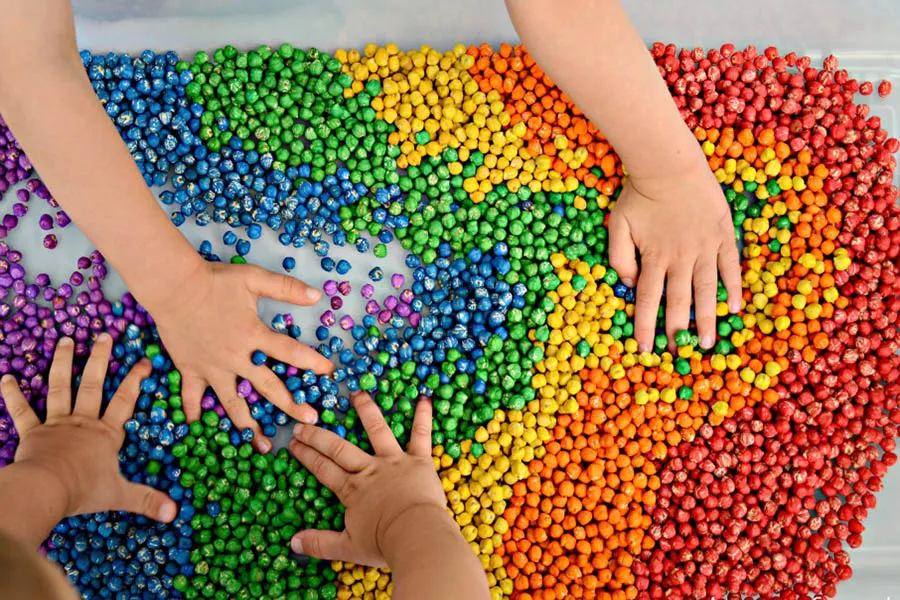
Sensory play is the activity that stimulates children’s senses, which are the different ways we perceive the world. Our brains use our senses to help us operate in our surroundings, and sensory play helps children develop their senses.
The five most common senses are taste, smell, sight, touch, and sound.
Most sensory play focuses on stimulating touch, sight, and hearing because they are more readily available. Activities that provide sensory experiences to stimulate the other senses are also important, although less common when people talk about sensory play.
Benefits of Sensory Play
It helps brain development
Research shows that sensory play builds nerve connections in the brain’s pathways, which leads to the child’s ability to complete more complex learning tasks. When your child engages in sensory play, they learn about objects’ shapes, textures, colors, smells, and other attributes. Their discoveries form the building blocks of observation and reasoning skills and shape the learning skills needed for school.
It helps build language skills
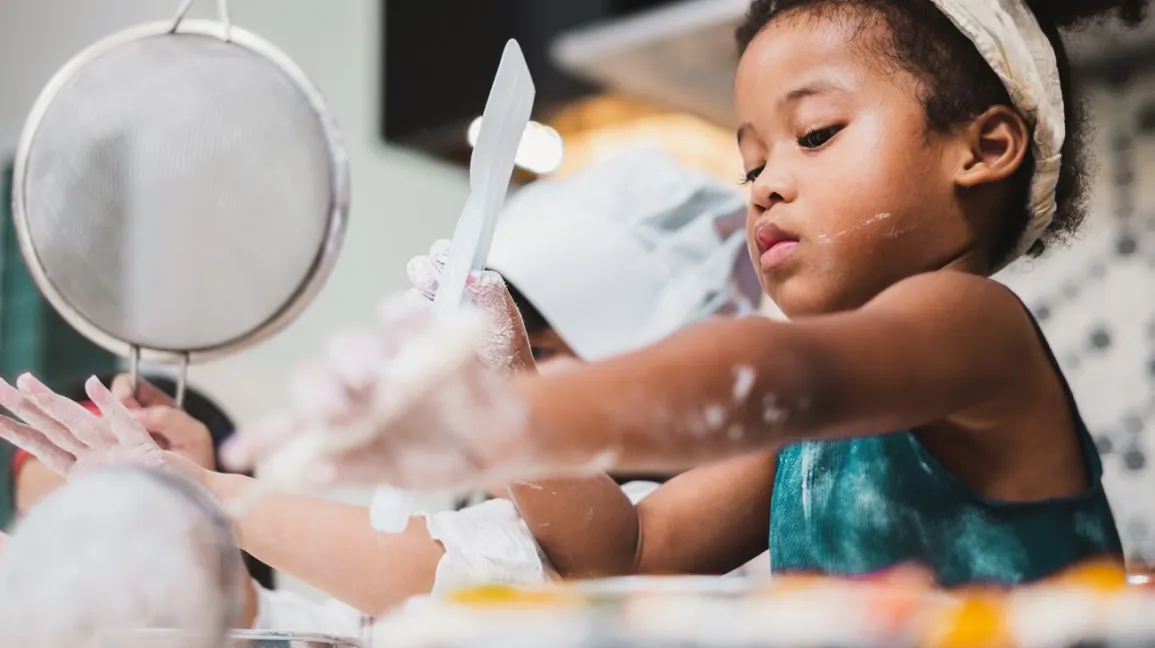
Sensory play helps your child learn new ways to describe their surroundings. In the sensory play, your child will learn to describe different sensations and new words for objects, use words to compare different objects, and tell others what they are doing.
It helps develop motor skills
Children identify objects by touch during tactile sensory play. Experiencing a variety of textures helps them to develop fine and gross motor skills - pulling, pushing, squeezing, and throwing.
It helps cognitive growth
Sensory play enhances thought processes, comprehension, and reasoning. As children manipulate new materials, they learn to understand new concepts - such as “sink and float”.
It helps creativity and self-discovery
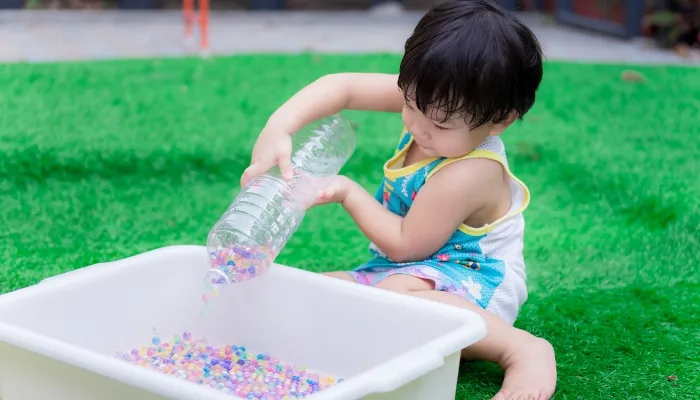
When presented with a new object or material, children explore various creative ways to discover more about both the material and themselves.
It helps develop problem-solving and experimentation skills
Sensory play often involves activities such as figuring out how to pour materials into a cup, trying to put an object into a tube, learning about the different sizes and weights of objects, sorting objects, and even coming up with new game ideas to see what happens.
These activities help develop the problem-solving skills needed in math, science, and other areas of learning.
It can be calming
Sensory play is great for calming an anxious or frustrated child. Moving their hands in the water and hearing the sound the water makes, feeling the oats flow between their fingers in the sensory bin, and doing activities such as squashing Play-Doh can be soothing for children.
In addition, sensory play can improve concentration. Focusing on any activity also builds children’s minds and calms them down - if they are focused on something they enjoy, it’s harder for them to stay upset or unhappy.
Sensory Play for All Ages
Children learn about themselves and their world by engaging closely with materials. Hands-on learning is increasingly referred to in early childhood and throughout children’s schooling. This is because when children are able to use hands-on learning and investigation, they can become more capable of retaining and understanding concepts. They can use their cognitive processes to experiment with and make sense of the information they receive. Here are some wonderful examples of sensory experiences that provide learning opportunities for children.
Sensory Bins
Fill a large container or table with new things that children can touch, smell, or hear to give them new sensory information.
Different materials with different textures can be used in themed sensory bins for variety.
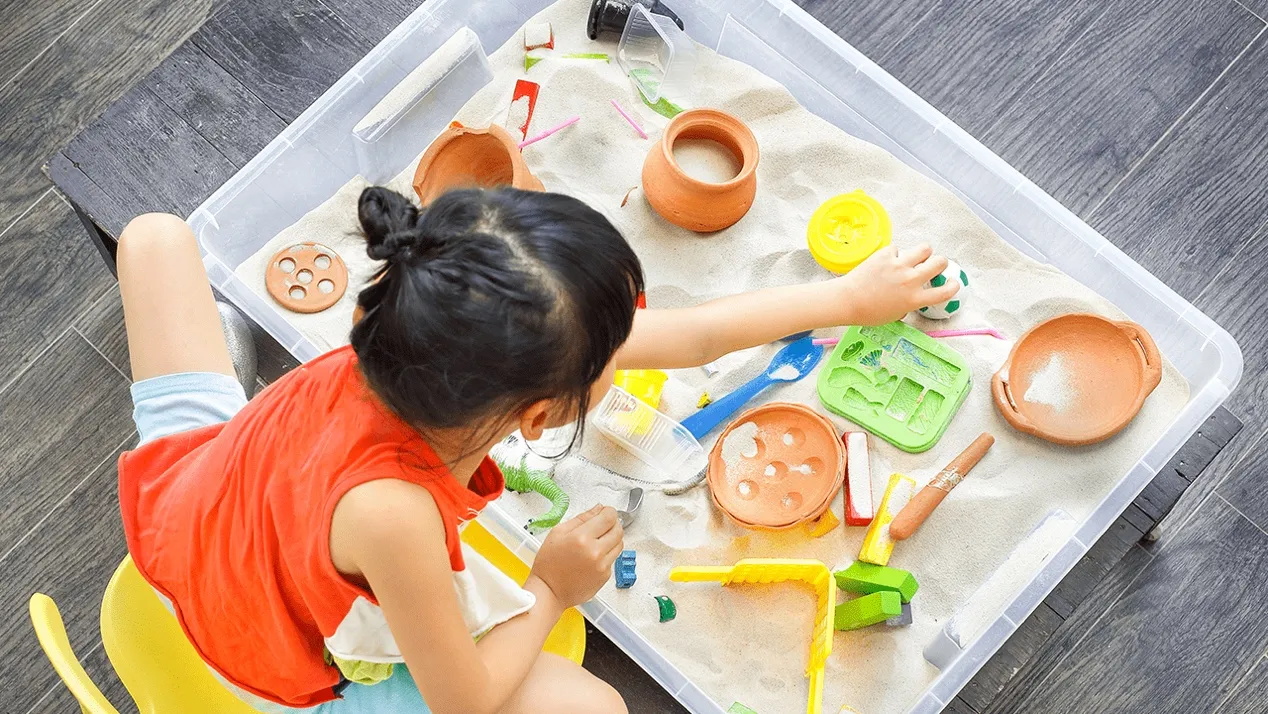
A sensory bin has:
-
A large storage container
-
The filler like craft sand, birdseed, colored rice, and water!
-
Theme Items such as toys and letters
-
Play accessories like a scoop or shovel
Clay and Dough
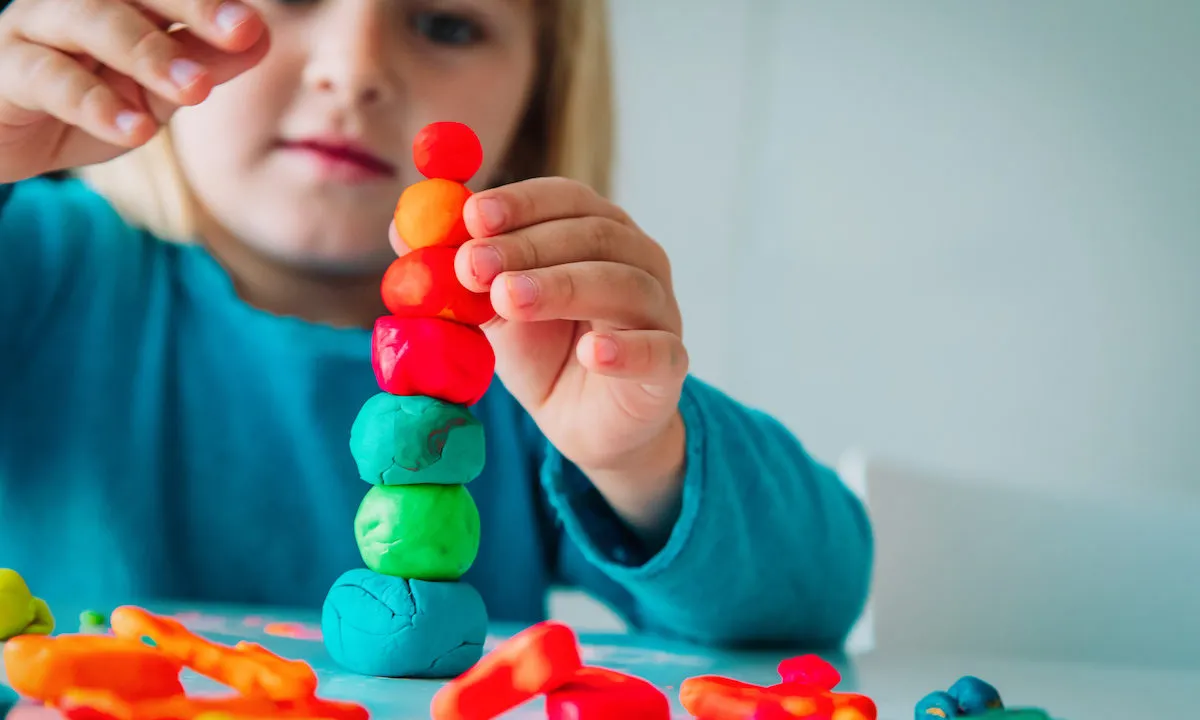
Clay, Play-Doh, and other types of dough are very popular among children and provide a medium for creative expression. Children can manipulate and explore their malleable properties as they create shapes, objects, and expressions. They can often be used and reused because children can use trial and error while also developing perseverance to achieve desired results. Younger children enjoy a sense of calm while building and developing their fine motor skills. Older children use cognitive thinking when creating shapes, considering the transfer of ideas and creativity into three-dimensional creations.
Smelling Bottles
You can make your own DIY-smelling bottles at home by soaking cotton balls with different essential oils or extracts (such as vanilla, peppermint, and lemon) and placing each scented cotton ball in a small bottle or jar. As your child investigates each smelling-bottle, you can talk about what each scent tastes like. Sweet? Sour? Bitter? If your child enjoys this activity, they’ll probably enjoy exploring the spice cabinet with you, too!
Sound Hide-and-Seek
While playing hide-and-seek, take turns hiding and ringing a small bell. Can the seeker listen carefully and find the hider?
Nesting Toys
Nesting boxes, cups, and dolls can help children with size discrimination and practice sorting objects by size. As your child plays, you can introduce descriptive words such as small, medium, and large, as well as comparative terms such as smallest and largest. This kind of work is a great way to introduce early math concepts to your child through play.
Mystery Box with Familiar Objects
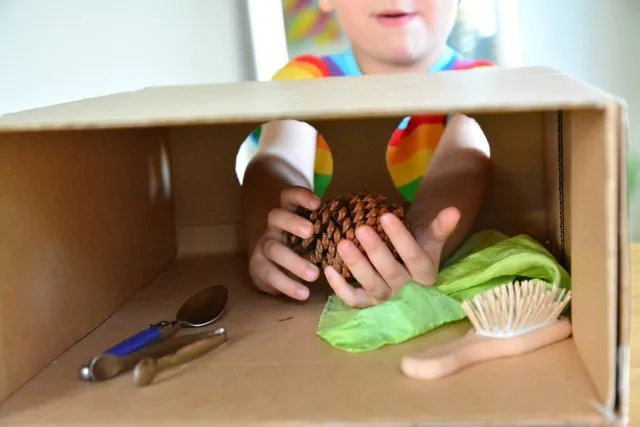
In this activity, put some objects in a paper box so your child can’t see what’s inside. These should be everyday objects that your child is familiar with, such as a comb, banana, or toy car. Then show your child how to put their hand in the box without looking and guess what might be inside. At first, you can ask your child to find specific items in the box based on the sense of touch, “Can you find the banana?” Once your child is comfortable with this game, try asking them to guess what each item might be.
Spending Time Outside in Nature
Natural elements are one of the most significant opportunities for children to develop sensory inclinations. Not only are these resources sustainable, but they also offer such wonderful possibilities. Creating natural sensory trays for children of all ages invites them to develop a connection with nature and allows us to bring the outdoors inside. Children can notice and become familiar with the differences between dried and fresh leaves and how this shows up in nature. They can explore the soft characteristics of flowers, from petals to stems, and see features explored in books or through discussion.
What sensory materials do you offer your children to provoke wonder, ignite curiosity, and stimulate the senses? We’d love to hear from you!
Reference
- 21 Easy Montessori Sensory Activities for Toddlers. (2020, August 26). The Toddler Playbook. https://thetoddlerplaybook.com/montessori-sensory-activities/
- Greutman, H. (2021, October 7). Including Sensory Activities for Your Toddler & Preschooler. Growing Hands-On Kids. https://www.growinghandsonkids.com/including-sensory-activities-for-toddler-preschooler.html
- Li, P. (2022, October 27). Benefits of Sensory Play and 21 Sensory Activities for Preschoolers. Parenting for Brain. https://www.parentingforbrain.com/sensory-activities-importance-sensory-play/
- McClelland, S. (2022, September 13). 5 Things You Need To Know About Sensory Bins. Little Bins for Little Hands. https://littlebinsforlittlehands.com/all-about-sensory-bins-5-things-need-know/
- Playcare, E. (2016, October 20). Why Sensory Play is Important for Development. Educational Playcare. https://www.educationalplaycare.com/blog/sensory-play-important-development/
- Top 10 Sensory Play Benefits For Kids [+ Ideas] | RSF. (n.d.). https://readysetfood.com/blogs/community/10-sensory-play-benefits-for-kids
- Why Sensory Play Is Important. (2022, November 6). Verywell Family. https://www.verywellfamily.com/why-sensory-play-is-important-2086510
- (n.d.). Sensory Play for All Ages. Halifax Public Libraries. https://www.halifaxpubliclibraries.ca/blogs/post/sensory-play-for-all-ages/
Explore Our Courses
Discover courses designed to help your child thrive

Writing Class
Master the art of written expression through structured writing workshops, helping 1st to 6th graders develop storytelling, essay writing, and creative composition skills.
Social Emotional Learning
Develop essential life skills including self-awareness, emotional regulation, empathy, and relationship building through evidence-based SEL curriculum.
Reading and Writing
Develop comprehensive literacy skills through engaging reading comprehension and creative writing activities designed for Kindergarten to 6th grade students.