
Main Types of Preschool Curriculum (1)
By Kmind
Preschool teaches children the basics that will give them a strong foundation for the elementary years. This includes academic concepts in literacy and math, such as counting, coloring, and letter recognition, as well as developing large and fine motor skills, such as walking in a line and using a pencil. It also includes social and school readiness skills, such as making friends, sharing, and taking turns.
Most preschools offer tailored types of programs based on their philosophy. While preschools don’t all follow the same educational guidelines, they are designed to prepare students for kindergarten.
As a parent, you want to choose a preschool that offers a program that best suits your child’s learning style.
Below, we have put together a list of the most popular types of preschool programs.
Main Types of Preschool Curriculum
-
Montessori
-
Reggio Emilia
-
Waldorf
-
Frobel
-
High Scope
-
Parent Co-Ops
-
Bank Street
-
Faith-Based
[Due to space limitations, this article will first introduce the first four preschool curriculums. The last four curriculums will be introduced next week.]
- Montessori
Origins and Development
The founder, Maria Montessori, was the first female doctor and medical doctor in Italy, who received a good family education as a child and later went into medicine, treating mentally handicapped children as her main duty. This led to a worldwide revolution in early childhood education.
Teaching Contents
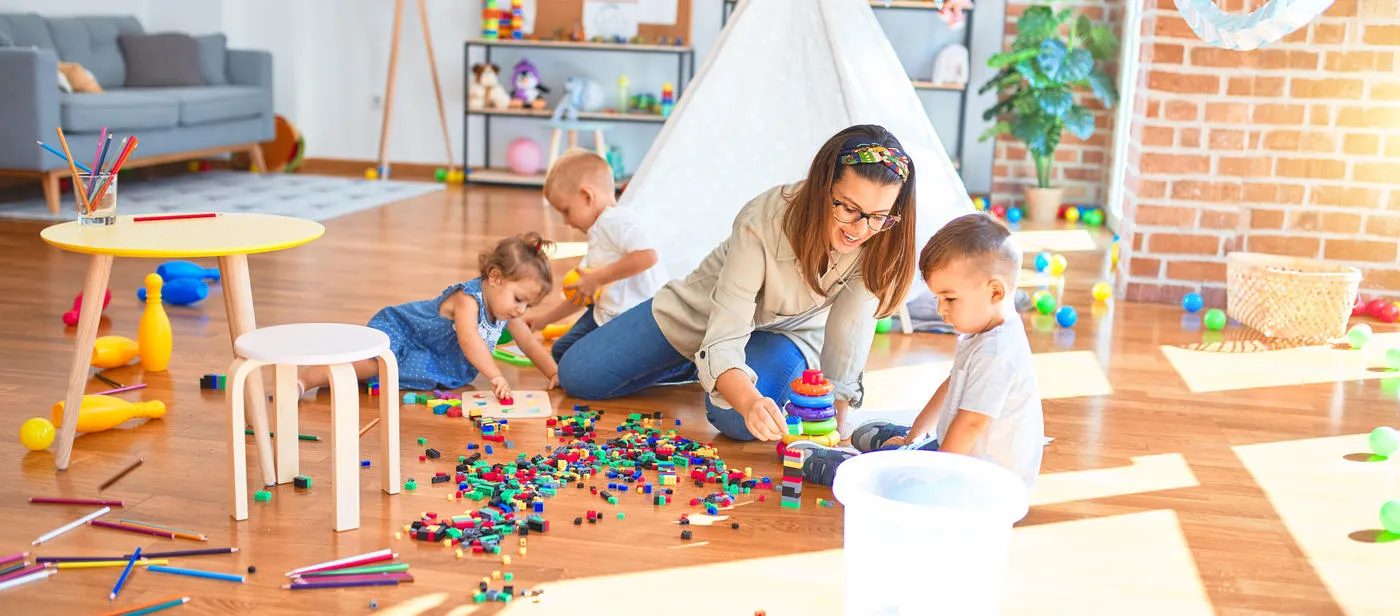
The Montessori curriculum is a child-centered program that sees teachers as learning guides. Children’s learning is self-paced in a mixed-age classroom setting. This curriculum offers five key study areas: language, culture, practical life, and sensorial mathematics.
In a Montessori setting, children learn independently or in groups. Students choose activities that interest them, which promotes responsibility, independence, and enthusiasm. Teachers then help students harness their skills through after-school activities and question-and-answer sessions.
Classrooms use moldable learning materials that help children explore new passions, concepts, and skills in a hands-on learning style. Classrooms are usually free of desks.
Pros and Cons
Pros:
-
Reveal the law of children’s growth sensitivity period and get the maximum learning effect by conforming to this biological law of the sensitive period.
-
The teacher becomes part of the environment and becomes the role of assisting, guiding, leading, enlightening, and demonstrating, which not only makes the child learn happily; but also enables individualized and differentiated education by teaching according to the material.
-
Mixed-age teaching, breaking the traditional concept of graded instruction, allows children to learn from each other, promoting the development of all-around ability and enhancing interaction skills.
-
No reward or punishment system is used to evaluate children. In the Montessori environment, spontaneous self-confidence is pursued. No rewards or punishments, only encouragement and praise.
Cons:
-
In sensory education, the Montessori curriculum emphasizes children’s ability to play quietly and develop independent concentration, which to a certain extent also limits the release of children’s nature and the development of social skills.
-
In art education, the Montessori curriculum places more emphasis on the instrumental value of art than the ontological value, which is not conducive to the development of children’s artistic creativity.
-
The system is well developed, focusing on theory, with a complete set of curriculum and teaching aids, but confined to the classroom, with less sense of nature.
-
Over-emphasizes authenticity, opposes children’s mythological stories, and ignores the value of imagination.
- Reggio Emilia
Origins and Development
Reggio Emilia is a small town in northern Italy that has created a public system of childcare based on the unique cultural and political context of Italy, forming an organic whole with a specific and innovative philosophy of education and teaching, school management methods, and ideas for environmental design.
Teaching Contents
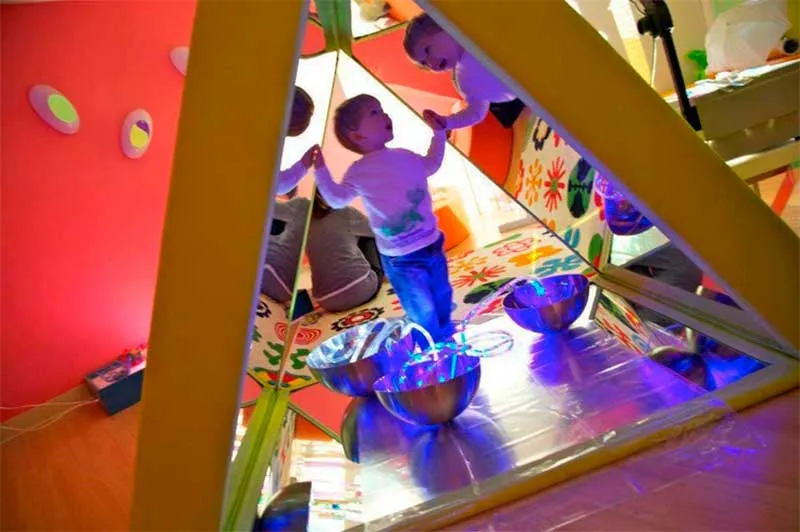
Reggio Emilia incorporates an emerging curriculum that encourages learners to become independently strong and capable through hands-on and visual experiences. The school implements a student-led approach to teaching and learning that explores ideas and free expression.
Children are encouraged to use active listening, engage in hands-on activities, and explore movement. Classroom activities are often collaborative and allow learners to forge healthy relationships around them. In this approach to learning, the environment is the educator. Classroom learning is then supplemented by the direct involvement of the child’s family.
In short, the Reggio Emilia program encourages children to create and explore. Creative space and family involvement are essential in the child’s learning process.
Pros and Cons
Pros:
-
A free, open, and respectful approach to education that is responsive to the developmental potential of young children follow the trends of history.
-
The emphasis on “interactive relationships” and “cooperative participation” in the curriculum facilitates the active participation of teachers, children, and parents, and provides a variety of opportunities and pathways for children’s development.
Cons:
-
The Reggio program does not have a unified educational goal, and although it is conducive to the motivation of teachers and students, the specific teaching situation is susceptible to a variety of factors, including subjective and objective.
-
The Reggio program is mainly suitable for small-class teaching, the quality of teachers requires high, in practice requires a variety of conditions, but also requires the close cooperation of teachers, parents and so on.
-
There are many factors in the implementation of the Reggio program that are difficult to strictly control, making the effectiveness of teaching uncertain.
- Waldorf
Origins and Development
The Waldorf education system originated in Germany, with the first school founded in 1919 by Rudolf Steiner, an Austrian scientist and educator, born in the same era as Montessori. Rudolf Steiner created the Waldorf curriculum to develop learners’ practical and artistic skills. Its philosophy is to promote the shaping of a well-rounded individual.
Teaching Contents
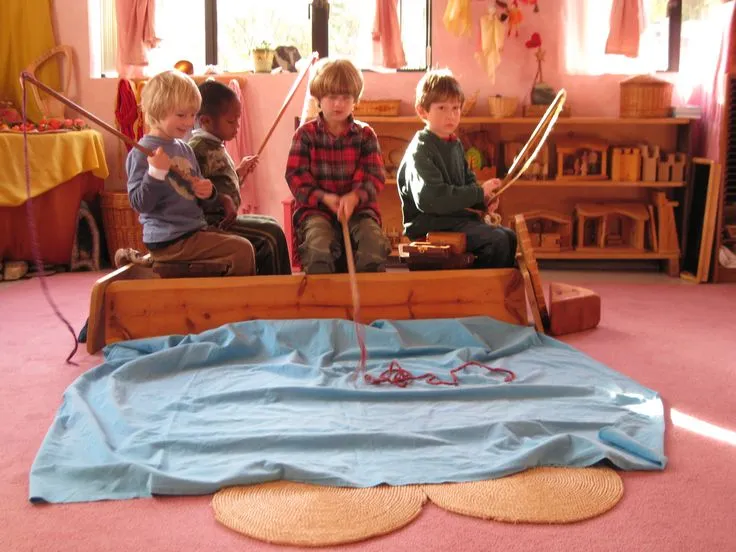
The Waldorf preschool curriculum is a blend of structure and creative learning. The system focuses on intellectual experimentation. Classrooms are mixed-age and use a play-based approach to learning.
The Waldorf curriculum emphasizes outdoor activities and creativity rather than traditional academics. There are no assessments, tests, homework, or grading. Instead, students are tested on an ongoing basis through a variety of activities.
There is no one set method of instruction. Teachers do not have pre-written syllabi or lesson plans; lessons are written based on the interests and experiences of the children. There is a progressively filled record book of the learning experience and what the students have learned, a “textbook” that they give themselves.
Waldorf is one of the early childhood programs that promotes the emotional, physical, and intellectual growth of children. Waldorf School is open to students from kindergarten through 12th grade.
Pros and Cons
Pros:
-
Emphasis on love and warmth, with a focus on spirituality and spiritual expansion. It is in line with the beautiful ideals of childhood and education and is suitable for people with spiritual needs.
-
Criticism and reflection on the materially flooded real world, emphasis on the integration of the concept of natural ecology, and the integration of education and life.
-
Focus on children’s hands-on skills, teaching aids are handmade with natural materials, and labor is used to promote the development of thinking.
-
A unique understanding and practice of art, beauty, and imagination.
Cons:
-
The Waldorf curriculum is somewhat “sacred,” and its wonderful educational goals are undeniably desirable, but the words “mindfulness,” “harmony,” and “life” are not. But the words “spirituality”, “harmony”, “life”, etc. seem to be a bit vague and difficult to grasp in the specific curriculum.
-
The focus of Waldorf education is on spiritual enlightenment, which is a spiritual practice. Therefore, Waldorf education is more suitable for families with a certain economic base.
- Froebel
Origins and Development
Fröbel, the “Father of Early Childhood Education,” pioneered the Froebel model of education in 1837.
Friedrich Wilhelm August Fröbel, a German educator, is recognized as one of the most important European educators of the 19th century and the originator of modern preschool education. He not only founded the first preschool institution called “Kindergarten”, but his educational ideas still dominate the basic direction of preschool education theory today.
Teaching Contents
Froebel advocated that education should be adapted to the nature of the child, he opposed compulsory education and divided early childhood education into four main themes: nature education and mathematics, language and language education, art education, and religious and religious education that provide children with balanced development in a comprehensive and multi-faceted way.
The curriculum is created to promote the development of children’s inner instincts, to stimulate their creativity and imagination, and to foster their initiative and creativity.
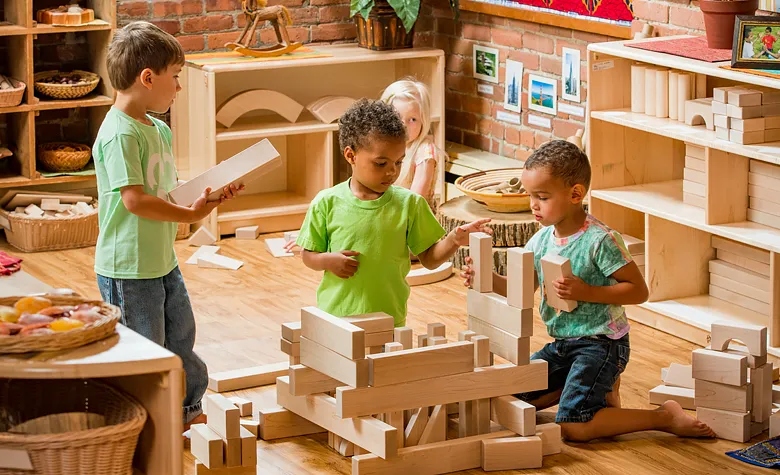
Using his expertise in mathematics and architecture, Froebel designed a set of toys for children, which he called “Froebel Gifts,” each of which is expressed in three different forms: intellectual, life, and beauty. Children discover and explore actively through play activities, resulting in unique learning experiences and higher levels of development.
Pros and Cons
Pros:
-
Emphasize children’s nature and allow them to develop freely without limiting their nature and ability to explore with adult beliefs.
-
The Froebel system carefully studies the characteristics of children, follows nature, and emphasizes the importance of freedom and activity in education.
-
In the practice of early childhood education, Froebel took “social participation” as an important method of early childhood education, requiring children to be educated to adapt to the life of a group and to reenact family and neighborhood life, cultivating children’s social skills from an early age.
Cons:
-
In contrast, the children under Froebel’s education are suitable for teamwork and are less capable of independent learning, living, and activities.
-
Froebel education focuses more on children’s knowledge in natural science and art education and is relatively weak in other areas.
-
It requires a high level of interaction between teachers, families, and neighbors, which makes it difficult to truly “synchronize” parents and schools in a contemporary society where parents are busy with work.
****
Reference
- 6 Types of Preschool Programs. (2020, June 18). Parents. https://www.parents.com/toddlers-preschoolers/starting-preschool/preparing/6-types-of-preschool-programs/
- Bartolone, V. A. P. B. G. (2019, May 6). 7 Popular Types of Preschool: Which One Fits Your Child? Niche. https://www.niche.com/blog/7-popular-types-of-preschool-which-one-fits-your-child/
- brightwheel. (2022, December 22). 8 Best Types of Preschool Curriculum for 2022. https://blog.mybrightwheel.com/types-of-preschool-programs
- Education | Definition, Development, History, Types, & Facts. (1999, July 26). Encyclopedia Britannica. https://www.britannica.com/topic/education/Froebel-and-the-kindergarten-movement
- Six Types of Preschool Curriculum. (2022, July 28). CCEI. https://www.cceionline.com/six-types-of-preschool-curriculum/
- Types Of Preschool Syllabus Every Parent Should Know. (2020, March 5). International-Schools.org. https://international-schools.org/syllabus-curriculum/types-of-preschool-syllabus-every-parent-should-know/
- What Kids Learn in Preschool. (2023, January 1). Verywell Family. https://www.verywellfamily.com/all-about-preschool-curriculum-2764977
Explore Our Courses
Discover courses designed to help your child thrive

Writing Class
Master the art of written expression through structured writing workshops, helping 1st to 6th graders develop storytelling, essay writing, and creative composition skills.

Leadership Development
Cultivate leadership qualities through communication training, teamwork exercises, and ethical decision-making practice for students K-12.

Science Research Project
Develop scientific inquiry and research skills through hands-on projects, helping 3rd to 12th graders learn the scientific method, experimental design, and data analysis.