
Learning is a Learned Behavior
By Kmind
Many people mistakenly believe that learning ability is related to intelligence. But if humans are either born to learn or not, why do we bother trying to learn better?
Learned behavior is not innate, instinctive, or “canalized” but rather is acquired through practice or a specific experience with an external event.
A growing body of research shows that learning ability is acquired, not innate. We can acquire expertise faster and more efficiently by continuously improving our learning skills through targeted training methods. In other words, we can all learn better through better learning methods.
Marcel Veenman found that those who focus on the learning process outperform those with higher IQs when learning new things. His research showed that understanding is 15% more important than innate intelligence when it comes to developing mastery.
Type of Learned Behavior
Learning can be categorized in many different ways.
Based On Cognition
Cognitive Learning
Cognitive learning involves the deliberate evaluation of the environment to acquire a skilled behavior reflectively. It uses the relationships between multiple environmental cues to build a mental map. For example, understanding mathematical formulas to solve application problems.
Habitual Learning
Habitual learning is formed through a learning process called conditioning. Habits are formed when an action is repeatedly paired with an outcome---for example, memorization by reading more.
Based On Consciousness
Conscious Learning
Conscious learning is the explicit acquisition of knowledge. Learners are aware that they are receiving and absorbing new information.
Paying attention and absorbing new information is an example of conscious learning.
Unconscious Learning
Unconscious learning is the implicit acquisition of knowledge. Learners may not be aware that they are acquiring and retaining new knowledge in their memory.
Unconscious forms of learning occur when children watch their parents speak without realizing that they have learned.
Based On Perspective
Personal Learning (Active Learning)
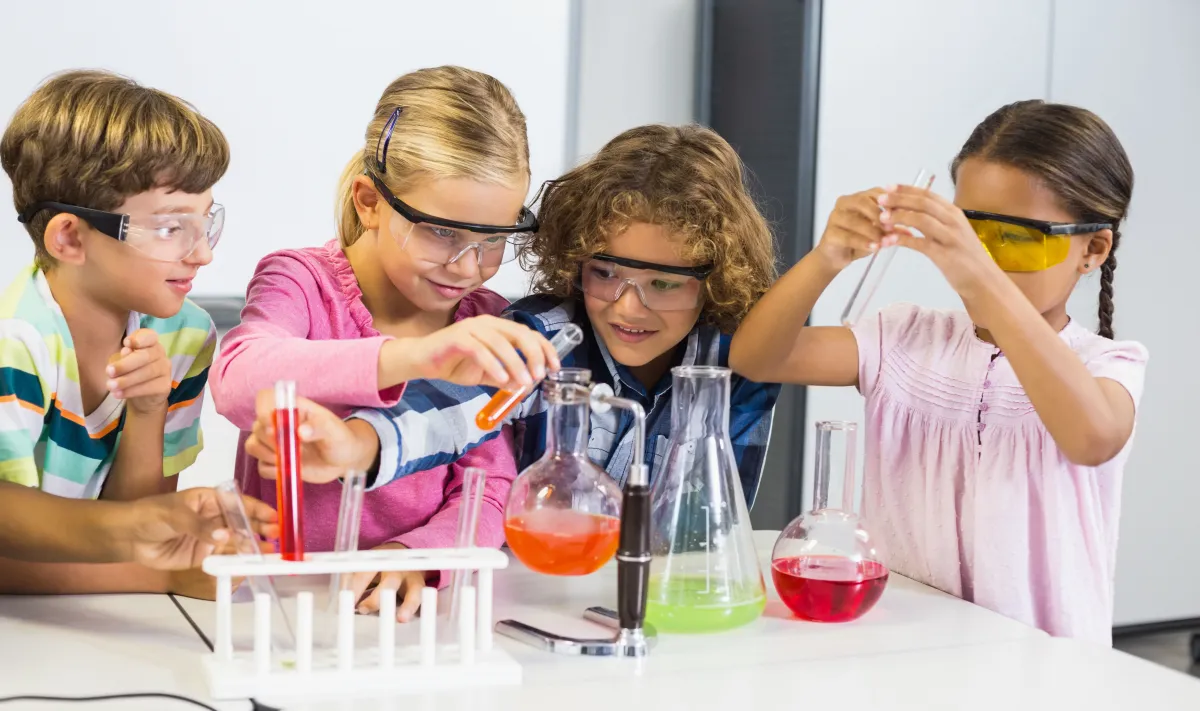
Personal learning involves direct interaction with the environment to experience the difference between predicted and actual outcomes. Individuals must understand through their actions and outcomes.
Individual learning occurs when an experiment is done. Children need to use different items to understand the responses they produce.
Observational Learning
Observational learning does not require direct interaction. People acquire new knowledge from observing the observable behavior of others. This type of learning involves imitation and social learning.
When learning pronunciation, the teacher teaches by modeling, and the learners imitate what they observe.
How to Build Your Child’s Learning Skills
Share Your Passion for Learning with Your Child
When parents are fascinated by a competition, an art, a technological achievement, or even a masterpiece dish, don’t forget to let your children share your joy together. If parents are excited about a good article they have just read, they should also tell their children about their excitement and let them know exactly what makes the adults so happy.
When the child is still too young to appreciate the mystery fully, this will at least let him feel the enthusiasm of the adults when they are learning, and it will also send a message to the child that adults also like to learn and that learning is a joyful thing.
Having Access to Books Everywhere
A Harvard University study showed that a child’s interest in reading is easily stimulated if they have access to books everywhere. So instead of keeping books in the house, keep them within reach of your child, on the dining room table, bedside, back of the sofa, or even in the car’s back seat. When your child is very young, you can give him some old newspapers and magazines to play with and let them tear into pieces.
Better yet, fix a time to read a book or tell a story so that reading becomes a family habit your child enjoys.

Start with Hobbies
If your child is obsessed with dinosaurs, take them to a nature museum or borrow some prehistoric animal picture books from the library. When appropriate, buy some model toys and put on a “Jurassic battle” at home whenever you want.
The simplest way is to expose your child to as many things as possible and give them enough time to explore and discover.
Use Your Encouragement as A Reward, Not Money
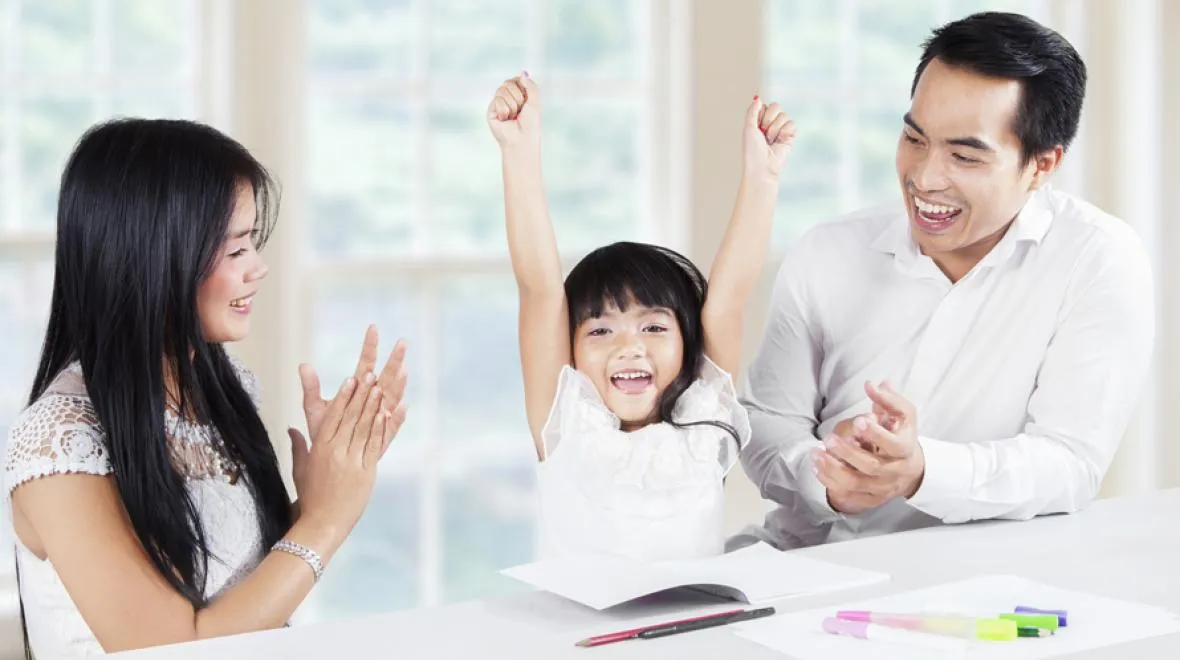
Behaviorism sometimes refers to the use of rewards to reinforce behavior. But using objects or money as stimuli can diminish a child’s interest in active learning. It makes the child see learning as a task only. But your smiling face, touch, and compliments are also rewards for your child. Such tips make the child feel that learning is an easy and surprising activity.
Keep A Planer or Routine
Time management is a crucial aspect of practical study skills. Therefore, ensure your students know how to keep a planer or routine. Good time management helps your child cope with homework easily and reduces resistance. A more manageable workload can help improve attention span and increase confidence.
Guiding Your Child’s Attributions for Success or Failure
It is essential to guide your child on how to view their successes and failures. When your child fails, don’t discourage them, but quietly analyze the reasons for the failure together with them and encourage them to keep going. When your child succeeds, don’t let your child get too carried away. Analyze the reasons for this success, and let them understand success correctly and have the ability to replicate it.
Provide Choices
Training your children to be independent is a good thing. Provide them with as many choices as possible. Let them choose. As children, many of the things they are going to do will be under your control. Put them in the driver’s seat as much as possible. By giving your kids choices, you recognize the value of choice and have the freedom to choose. This helps them grow up independent and not dependent on you for everything - their opinions and mindsets, thoughts, beliefs, etc. It starts with choices, but by training them to think for themselves, you don’t have to worry about them growing up without their opinions. Teaching them to make decisions for themselves is just the beginning. Your training will also help them think for themselves.
Use Graphic Organizer
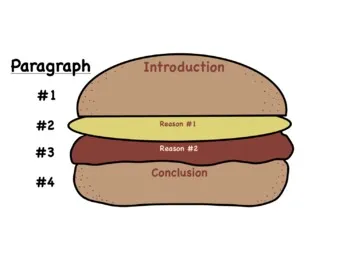
A graphic organizer is a visual and graphic display that depicts the relationships between facts, terms, and/or ideas within a learning task. Graphic organizer helps to visualize or present information in a more understandable way by breaking down larger or complex concepts or ideas into smaller and simpler parts. And it also helps develop cognitive skills such as brainstorming, critical and creative thinking, categorizing and prioritizing content, thinking, etc.
For more information, please see the previous article: [Graphic Organizers to Improve Learning.]
Use Mind Map
A mind map is a visual representation of ideas through the use of diagrams. It basically has a specific topic that branches out into various subtopics and so on and so forth. Its different colors and branches help children improve their memory skills and logical thinking, enabling them to perform better in school and get good grades.
Brain Games
Brain games serve as an exercise to sharpen the child’s brain and improve its function. Promotes the development of cognitive skills and learning abilities. Brain games will not only entertain kids but also help them improve their thinking and strategy skills---for example, Sudoku, Monopoly, Rubik’s Cube, Mazes, Jigsaws, crossword, etc.
Learning is a never-ending journey and something everyone should be doing. With these tips, you can create an environment that stimulates your child to keep learning and stay curious.
Reference
- Deepan, A. (2022, November 8). Follow These Tips to Improve Your Child’s Learning Skills - GIIS Bangalore. Global Indian International School Bangalore. https://bangalore.globalindianschool.org/blog-details/follow-these-tips-to-improve-your-childs-learning-skills
- Kinds of Learning - Evolutionary and Ecological Aspects of Behavior - EVOLUTION AND ECOLOGY - CONCEPTS IN BIOLOGY. (n.d.). Educational Materials. https://schoolbag.info/biology/concepts/121.html
- Learned behaviors (article) | Ecology. (n.d.). Khan Academy. https://www.khanacademy.org/science/ap-biology/ecology-ap/responses-to-the-environment/a/learned-behaviors
- Learning Is a Learned Behavior. Here’s How to Get Better at It. (2021, August 27). Harvard Business Review. https://hbr.org/2018/05/learning-is-a-learned-behavior-heres-how-to-get-better-at-it
- Li, P. (2022, December 2). 6 Types of Learned Behavior and Why Some Are So Hard to Change. Parenting for Brain. https://www.parentingforbrain.com/learned-behavior-types/
- Wierman, M. (n.d.). 7 Tips for Parents to Help Your Child Develop Effective Study Skills. Edmentum Blog. https://blog.edmentum.com/7-tips-parents-help-your-child-develop-effective-study-skills
Explore Our Courses
Discover courses designed to help your child thrive
Leadership Development
Cultivate leadership qualities through communication training, teamwork exercises, and ethical decision-making practice for students K-12.
Math
Build strong mathematical foundations through hands-on problem-solving and conceptual understanding, helping Pre-K to 2nd graders develop number sense and critical thinking skills.
Social Emotional Learning
Develop essential life skills including self-awareness, emotional regulation, empathy, and relationship building through evidence-based SEL curriculum.