

Later School Start Times & Sleep: Do Your Children Get Enough Sleep?
By Kmind
California just became the first state in the nation to push back the start of the school day. Several school districts outside the state have already implemented start times that meet California’s new standards. In Seattle Public Schools, for example, high schools start no earlier than 8:45 a.m. And an Ohio legislator introduced a bill to push back school start times there. Legislators in the Virgin Islands have also picked up on the idea.
Pushing back the start of the school day is their primary goal, so what are the benefits of delaying the start of the school day? The answer is letting adolescents get the sleep they need at that age.
What are Common School Start Times?
School start times vary considerably across the nation and within individual communities, with some schools beginning earlier than 7:30 a.m. and others after 9:00 a.m. Elementary schools start much later than middle schools (more than half of elementary schools begin at 9:15, and almost all of the rest start at 8:15)
Controversy over the Benefits of Pushing Back the School Start Time
Proponents of later start times argue that later school start times support the physical needs of adolescents; they increase the hours of sleep adolescents get. Other benefits of a later school start time include:
-
Improved attendance at school.
-
Decreased tardiness.
-
Better student grades8.
-
Fewer occurrences of falling asleep in class.
-
Reduced irritability and depressive symptoms.
-
Fewer disciplinary issues.
-
A decline in motor vehicle crashes. One study showed a 16.5% decrease in the teenage crash rate after the school start time was pushed back one hour.

Research shows that delaying the start of school by one hour, from 7:30 to 8:30, increases standardized test scores by at least two percentile points in math and one percentile point in reading. This impact would be most significant for students with below-average test scores, suggesting that a later start time would narrow the gap in student achievement.
But Kyla Wahlstrom, a national expert on school start time research at the University of Minnesota who was not involved in the current study, says, “The findings from all of the research regarding the relationship between start time, sleep duration, and academic performance are not totally conclusive.”
“That said, after 25 years of my looking at academic performance and start time, there is no question in my mind that greater sleep, meaning eight hours or more per night for teens, does yield better academic performance,” Wahlstrom said. “This is because there is incontrovertible evidence that sleep enhances cognition and memory.”
Best Time to Start School
Both the American Academy of Sleep Medicine and the American Academy of Pediatrics recommend starting school no earlier than 8:30 a.m. Both organizations want to ensure that students get enough sleep to be alert and ready to learn in school.
Biology plays a crucial role in the sleep cycle of children and adolescents. Around the onset of puberty, most adolescents start and wake up later from sleep, also known as a “phase delay.” This phase delay can delay the body’s internal clock backward by up to two hours. As a result, the average teenager is unable to fall asleep before 11 p.m. and is better off waking up at 8 a.m. or even later.

The Best Time to Study
The science of “good timing” - also known as chronobiology - suggests that peak performance is hardwired into our DNA. The human biological clock, an internal clock embedded in the brain since childhood, can help people decide when the best timing is to learn. Although the new findings prove that timing may not be everything, it is essential if one wants to create and perform at optimal levels consistently.
Science shows that learning is most effective between 10 a.m. and 2 p.m. and between 4 p.m. and 10 p.m. when the brain is in acquisition mode. On the other hand, the least effective time to learn is between 4 a.m. and 7 a.m. While there is no one best time of day to study, let’s look at the benefits of studying in the morning compared to other times of the day.
Studying in the Morning
Most people believe that mornings are the best time to study because our brains tend to be at their sharpest after a night’s sleep and breakfast. The available natural light is also suitable for students’ eyes, keeping them alert. This time is good for opening textbooks to learn new theories or just reviewing lecturer notes from the previous day, as the morning generally gives them better memory ability.

Studying in the Afternoon
In the afternoon, students’ brains are adept at combining new information with what they already know. At this time of the day, students are able to make connections that make more sense of the information they are learning.
Studying at Night
For some students, they have more energy later in the day. Therefore, evening or nighttime is more effective for them to read and study. Studying at this time of day also helps to improve the concentration and creativity of these students because there are fewer distractions and everyone is in bed, which is sure to be quiet. Sleeping after studying is also said to consolidate information and improve memory. However, one caveat is to ensure that students still get an average of eight to nine hours of sleep each night.
Just as each student has a unique learning style, different students may learn better at different times of the day. But if students study at the same time each day, they will gradually regulate their minds and bodies, and soon, they will be in the best frame for study. Once students know what works best for them, they can start their study routine more effectively and efficiently.
Do Your Children Get Enough Sleep?
The amount of sleep children need depends on their age. According to the National Sleep Foundation, children between the ages of 6-12 need 9 to 12 hours of sleep at night. Teens (ages 13-18) need 8 to 10 hours per night. However, studies show that most American teens do not get enough sleep. Nearly 60% of middle school students do not get enough sleep on school nights. For high school students, the number is over 70%.
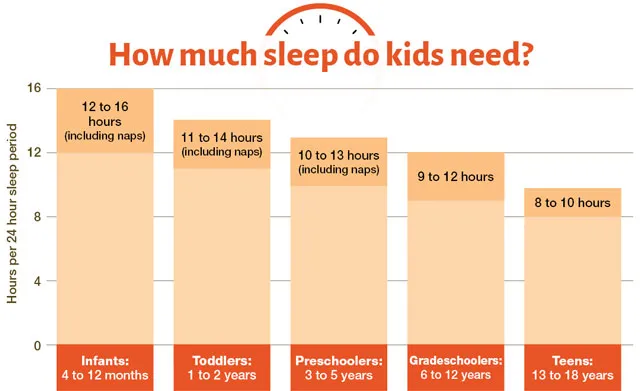
Late bedtimes and early school starts are contributing factors to adolescent sleep deprivation. Sleep deprivation can affect students’ overall health, well-being, and academic success, and can even have long-term health consequences.
Getting the Rest That Growing Bodies Need
Sleep deprivation can have devastating effects on growing bodies. Teens may have difficulty concentrating, have trouble handling their emotions and suffer short-term memory loss. Sleep deprivation has also been found to have authentic physical effects, contributing to a higher risk of metabolic disorders, heart disease, and even motor vehicle accidents.
Dr. David Dinges, Professor and Chief of the Division of Sleep and Chronobiology in the Department of Psychiatry at Penn Medicine, also believes that outside environmental factors lend to disruptions in circadian biology, particularly in the case of children. Regardless of the school start time, here are a few ways that teens and adults alike can get more rest:
-
Maintain the same bedtime and waking time every day, even on weekends
-
Avoid eating, exercising, and other stimulating activities in the hour before bed
-
Schedule time for daytime physical activity to help them feel tired and ready for sleep at night
-
For better sleep, get some bright morning light exposure daily. Increase your natural light exposure throughout the day, even if it is just through a window
-
Keep room dark, without bright lights or screens during the evening
-
Keep a bedtime routine like taking a warm bath, brushing teeth, and reading bedtime stories.
-
Use the sleeping area only for relaxing activities, doing homework, and watching TV somewhere else
-
Model good sleep behaviors for them.
-
Take melatonin supplements as directed by your physician
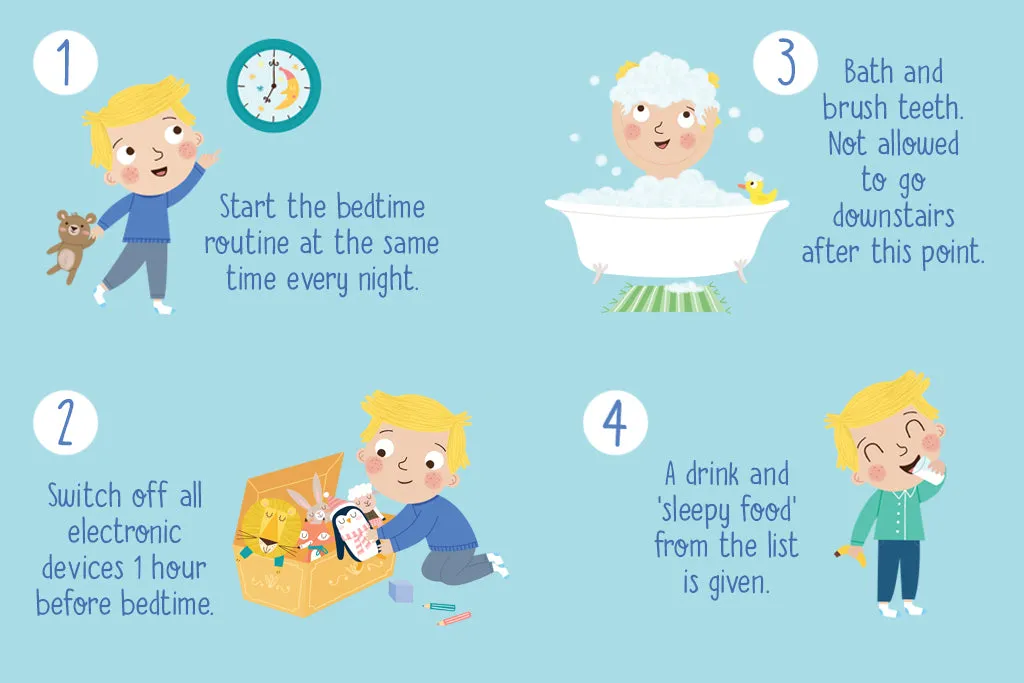
Will later school start times help kids to get the rest they need? The jury is still out. However, regardless of when they start school, getting enough sleep is critical to the growth and development of children and teens. Encouraging teens to have good sleep habits and to put away their screens well before bedtime may significantly impact their health while giving them the academic advantage they need to succeed.
Reference
- Barshay, J. (2021, April 26). PROOF POINTS: Later school start time gave small boost to grades but big boost to sleep, new study finds. The Hechinger Report. https://hechingerreport.org/proof-points-later-school-start-time-gave-small-boost-to-grades-but-big-boost-to-sleep-new-study-finds/
- Breus, M. (2022, July 15). How Much Sleep Do Children Need? The Sleep Doctor. https://thesleepdoctor.com/children/how-much-sleep-do-kids-need/
- Do Your Children Get Enough Sleep? | CDC. (2021). Centers for Disease Control and Prevention. https://www.cdc.gov/chronicdisease/resources/infographic/children-sleep.htm
- Edwards, F. (2022, March 14). Do Schools Begin Too Early? Education Next. https://www.educationnext.org/do-schools-begin-too-early/
- Schools Start Too Early. (2022, June 8). Centers for Disease Control and Prevention. https://www.cdc.gov/sleep/features/schools-start-too-early.html
- Suni, E. (2022, May 6). How Would Later School Start Times Affect Sleep? Sleep Foundation. https://www.sleepfoundation.org/school-and-sleep/later-school-start-times
- Wescott, E. (2022, August 7). Sleep Hygiene 101: Your Guide to Getting Better Sleep. Chronobiology.Com. https://www.chronobiology.com/sleep-hygiene-101-your-guide-to-getting-better-sleep/
- When is the Best Time to Study: Morning, Noon or Night? (2020). PSB Academy. https://www.psb-academy.edu.sg/blog/best-time-to-study
Explore Our Courses
Discover courses designed to help your child thrive

Reading and Writing
Develop comprehensive literacy skills through engaging reading comprehension and creative writing activities designed for Kindergarten to 6th grade students.

Leadership Development
Cultivate leadership qualities through communication training, teamwork exercises, and ethical decision-making practice for students K-12.

Writing Class
Master the art of written expression through structured writing workshops, helping 1st to 6th graders develop storytelling, essay writing, and creative composition skills.