
![[How To Have Fun Shopping With Kids, tips for parents, child development]](/assets/img/blogs/how-to-have-fun-shopping-with-kids-tips-for-parents-child-development/media/image1.webp)
[How To Have Fun Shopping With Kids, tips for parents, child development]
By Kmind
Talking about money can be difficult, no matter our kids’ ages or the size of our bank account. It can be even tougher when it comes to teaching our kids about finances, especially what is a “want” and what is a “need”.
Saying “no” is an important part of teaching our kids that they can’t have everything they want (even if it’s affordable). Children need to know that we will provide everything they need. Teaching them the difference between needs and wants will set them up with the right financial priorities, which will benefit them later in life.
How to Get Our Child to Accept Our No?
First, there is no shame in explaining to kids that we have a certain amount of money to spend on the things we need and the extras we want. Some children may not understand that we have a limited amount of money.
We can help our children understand that money is about choices. How much do we spend or don’t spend? Which brands do we buy? What prices we are willing to pay. Whether we want to buy the most valuable thing or the first thing we see.
Have a grocery cart discussion
By the time our child starts kindergarten, she may be ready to start learning some details about “wants” and “needs”. If our child goes to the grocery store with us regularly, this is a handy exercise.
If they can read, have them take the grocery list and confirm with them the need for those items. As we walk down the aisle and pick up the items, [ask our child if this is a need or a want.]

If it’s on the list, it’s a need; if it’s not, it’s a want. Laundry detergent is on the list, so that’s a need. Ice cream isn’t on the list, so that’s a need.
Once they get a little older, we can also talk about price points:
For example, matcha ice cream is on sale, but chocolate ice cream looks delicious, even though it’s not on sale. What do we have to remove from the list to get the chocolate one instead of the vanilla one? This gives our child an idea of how we can make sacrifices (or save money) to buy what we want, or how we can fit special items into our budget.
Being Empathetic
Many parents believe that the best way to stop their children from flooding them with emotions when they say “no” is to discuss things with them. In theory, this is a good idea. However, when our child is emotionally flooded, crying, negotiating, or throwing hurtful words at us, talking is like pouring gasoline on a fire. Then, as we experience the strong emotions that arise from trying to talk to them, we begin to relate to their emotions and we react. After all, we and our children are connected.
To stop all reactions, we need to put aside our desire to perform “no” and control things for a while. [Look at our children’s emotional responses and see what’s happening underneath.] Be compassionate and address the cause of the reaction, the fact that our child thinks he’s missing out on something and can no longer have that toy, play that game, or a delicious snack.
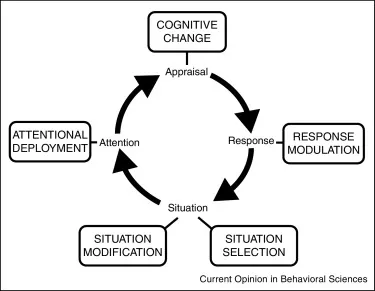
*The process model of emotion regulation proposed by psychologist James Gross emphasizes that people can act to control their emotions at different points in time---including before they feel an emotion (“antecedent-focused emotion regulation”) and after they have already begun to react emotionally (“response-focused emotion regulation”).
[Remember, our children’s brains are using immature thinking. Our children are still developing and will continue to develop until age 25] (Interested in Cognitive development? Check previous Kmind weekly letters). They believe they are missing out on something. They believe that this is the only time they will ever have this opportunity. So no matter how often we tell them it’s not true, they will still react as if it is. This is where all the drama and emotion come from.
Empathy lets our children know that their deep need for understanding has been heard, and they begin to settle down and become more willing to accept “no.”
Explain rules to our child when things are calm
Children may make a fuss when they don’t get what they want, and this is not the time to argue or explain. When things are going well is the time to explain concepts to our child. So, [when things are calm, sit down and talk to our child.]

If the word ‘no’ is particularly frustrating for our children, we can help guide them. Say:
“If you don’t like ‘no,’ if it frustrates you, take a deep breath or go do something to calm yourself down.”
This should start very early. Let me be clear: If we give in to tantrums with our two-, three- and four-year-olds, we are training them to challenge our authority. We’re teaching them that when they act out, we’ll give in. Whenever we challenge them, they will use the same tactics.
Remember, the best thing to do is to prepare our children ahead of time. Let them know what the expected behavior is so that we will be more likely to have a positive experience with our child on our outing.
Reference:
proactiveparenting.net
Explore Our Courses
Discover courses designed to help your child thrive

Leadership Development
Cultivate leadership qualities through communication training, teamwork exercises, and ethical decision-making practice for students K-12.

Writing Class
Master the art of written expression through structured writing workshops, helping 1st to 6th graders develop storytelling, essay writing, and creative composition skills.

Phonics
Build a strong reading foundation through systematic phonics instruction, helping Pre-K to 1st graders master letter sounds, blending, and decoding skills.