
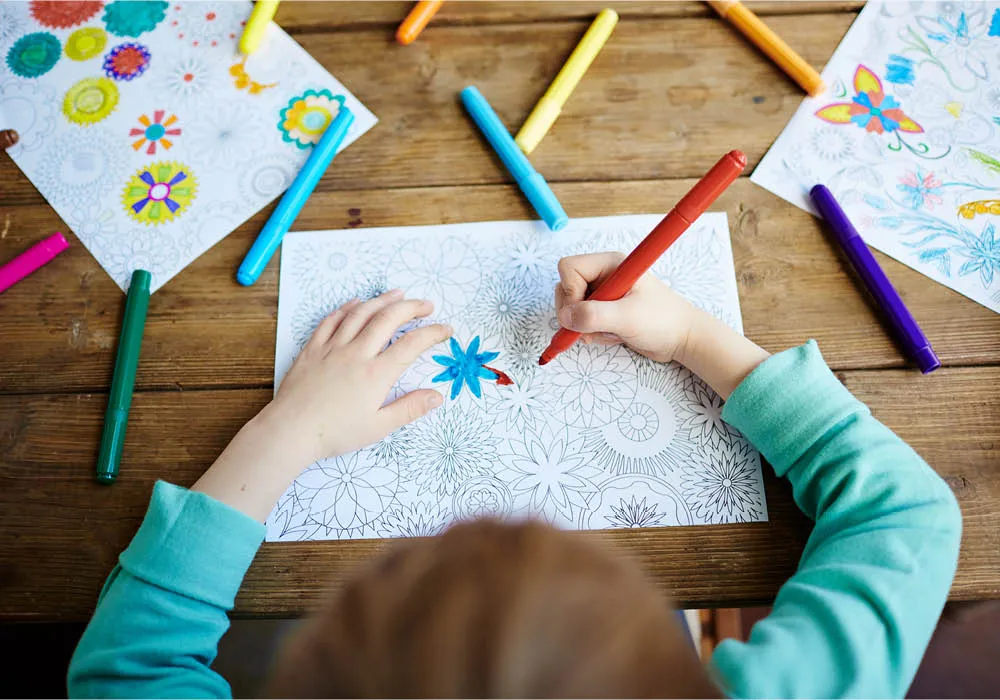
How does Coloring Benefit Your Child?
By Kmind
Books and colored paper are essential educational tools for any child, especially preschoolers. Drawing and coloring will take your child into the world of imagination and give them the opportunity to express themselves. Fine motor skills can also help your child write and manipulate small objects. Drawing and coloring are not just for play and entertainment. Beautiful and lively images, vibrant colors and impressive paintings … empower your child to be more creative and maximize the richness of his or her imagination. When the crayons draw different colors, the child’s brain will be used to distinguish colors and think more creatively to create their own works.
Cognitive abilities are the ability to perceive, remember, imagine and think. Children in early childhood are more interested in more colorful cognitive objects, and the differences in colors they encounter on a daily basis can affect their perception of objects and the development of their cognitive abilities. Therefore, [color initiation education is important for the development of young children’s cognitive abilities].
Milestones in the Child’s Perception of Color
-
As early as 16 weeks of pregnancy, babies can already perceive light and habitually look to brighter areas.
-
After 6 or 7 months of life, babies start to be interested in brighter colors such as red.
-
Growing to about 1 year old, babies begin to be able to distinguish several colors, such as red, yellow, blue, etc.
-
At 2 or 3 years old, they can basically distinguish between different colors.
-
By the time they are about 5 years old, they can distinguish all the colors.
-
As they grow older, children can not only distinguish different colors, but also instinctively choose the color of their choice on their own.
Benefits of Coloring and Drawing?
Prepare for Future Writing Skills
Get familiar with coloring pens as a child. Children will be better at controlling the pencile before going to school and learning to write. Children need hand strength and dexterity to manipulate a pencil on paper. Strength training will eliminate the possibility of holding the pencil incorrectly. Activities such as coloring pages and paper for children will help them hold the writing instrument in the correct way. This will improve your child’s writing skills.
Develop Logical Thinking Skills
By the age of 2, children are able to distinguish colors and name some basic colors. In addition, children can distinguish between images shown before and after in space. Therefore, when babies are familiar with color combinations, it is helpful to exercise thinking skills as they identify and form images in their young brains. Many people believe that drawing and coloring is more abstract, which is a prejudice, and essentially it is also a way to forge a child’s intelligence.
Observation and Concentration Habits
Please give your child a page to color. The coloring chart asks your child to color in a designated area. This helps develop your child’s hand-eye coordination. It also combats cognitive loss, especially if you choose challenging and difficult drawings. That’s where habits of observation and concentration are formed. Concentration is an important lesson your child can learn from coloring. It has been proven that children who spend time coloring have better attention spans and focus.
!(/assets/img/blogs/how-does-coloring-benefit-your-child/media/image2.webp)
Developing Motor Skills
The act of coloring can improve a child’s motor skills. Coloring actions like holding tools and scribbling with crayons can help develop small muscles in his wrists, fingers and hands, which help with later activities like holding, lifting or typing. Fine-motor skills help your child write and manipulate small objects. This helps your child perform better in school.
Inspire Creativity and Confidence
Now, you can hand your child a box of crayons and a white page. Tell them to color something they like. And wait for the results. This can lead to many highly desired results. It will get your child thinking about what different color combinations he or she can use to make the picture look more appealing. Children often express their personalities through drawing and coloring.
When you see your child make a mistake while coloring, don’t scold; help them. You can teach him how to fill in the spaces and stroke up and down. It is a sense of accomplishment to help complete the coloring sheets for your child. It also boosts confidence in your young child.
Develop Abstract Thinking Skills
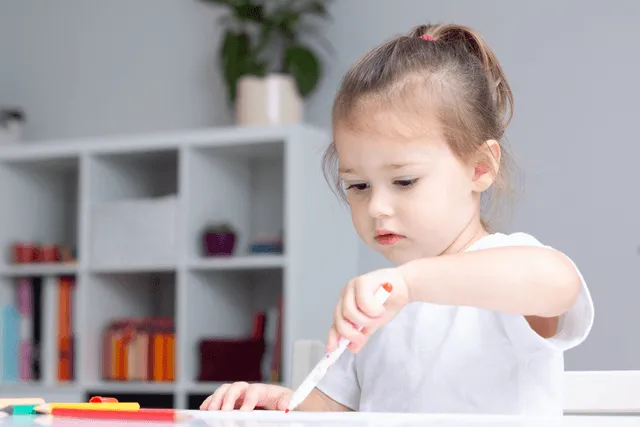
Thinking abstractly and promoting a rich imagination is very helpful in helping your child visualize and think about the world around them through the pictures and colors your baby sees. When forcing a child’s imagination and ideas about something, it is much easier for the child to become familiar with abstract thinking if it has already been done by drawing and coloring images and colors that are familiar to them.
Language Development
You can help your child color a certain picture and teach your child to talk about it and the colors. This will give your child the opportunity to learn new words and sentences. Children will use descriptive words to talk about how they feel when they see different styles of coloring sheets. Children’s coloring pages help develop their critical thinking skills. That’s great!
Recognize the Beauty and Creativity of Art
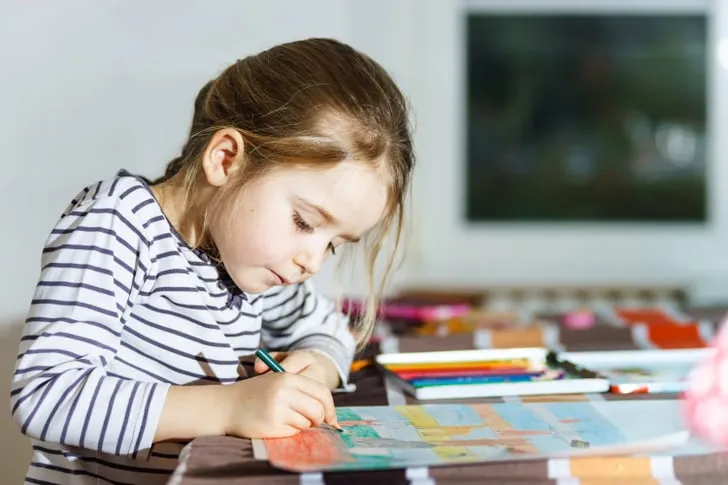
When drawing or coloring, children will feel the beauty, where the harmony is, and the richness of colors, thus improving the ability to enjoy and recognize the beauty of life and the world around them. This inspires young people to become more and more creative in art, love nature, love life and have environmental awareness.
Timely Catharsis of Emotions
Children have a natural interest and a strong desire to express themselves, and their joy, anger, and sorrow appear on the paper. When they are not yet able to express their inner world with rich words, the combination of their hands and brains - drawing - is created. In other words, every painting reflects the child’s true inner thoughts, an outward expression of the child’s emotions. Here’s a little secret: If your child’s doodles have hard, mixed, overlapping lines and dull colors, they may be in a bad mood at the moment. On the contrary, if your child’s doodles have soft, rich lines and bright colors, your child is emotionally healthy and in a good mood.
Relaxation and Patience
Kids can color shapes, coloring pages and graphics as they wish. Coloring can help your child learn the skill of patience. It will also allow your child to relax and be comfortable while creating a piece of art. Coloring will help your child focus better and will discover many interesting and fascinating things about the world around them. It is certainly much more useful than a child who plays games or stares at the TV all day.
How to teach child to draw or color?
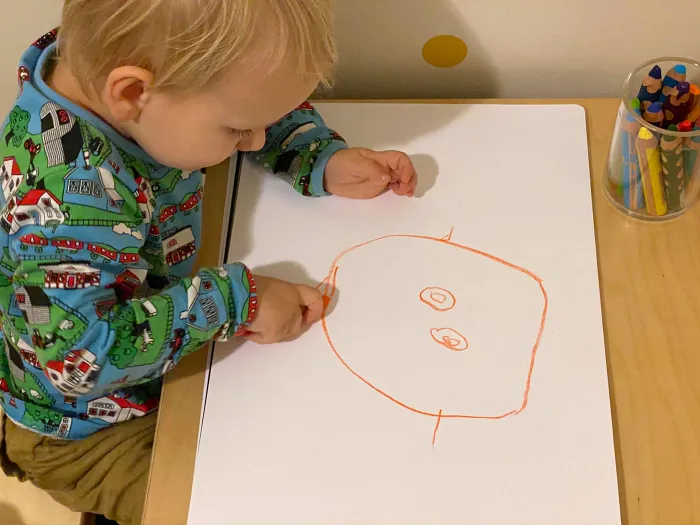
Babies aged 2 to 3 years old have no concept of drawing yet, and they treat drawing activities as a kind of game. They are very satisfied when they paint or draw something decent on the paper, and they feel a sense of success and happiness.
At the age of 3-4, babies’ eyes are fully developed and they have higher requirements for beauty, so it is most appropriate to train their aesthetics by coloring in a picture book. Picture books are small and inexpensive, and there are many non-toxic crayons and watercolors available on the market today. Therefore, coloring to train your baby’s sensitivity to color can be beneficial and not harmful.
For Toddlers and Pre-schoolers
-
Start by providing only one crayon. Offering too many choices can be overwhelming for young children.
-
Show them how to color. Color with your child so that you have the opportunity to connect and interact with your child. Young children love to imitate others and can learn a lot by watching their parents color next to them.
-
Don’t expect perfection. Just putting crayons on the page is a great learning experience that builds hand strength, eye-hand coordination and coloring experience.
-
Expect whole arm movements. Young children color with shoulder and elbow motions, or proximal motions, and do not color with precise finger motions until older ages. This is normal and to be expected. Coloring in young chilren looks like scribbling, and that’s OK!
For School-age Children
-
Encourage coloring with interest-based coloring pages.
-
Show off the artwork! Create a space in your home or clinic where coloring projects can be displayed. This can be a great motivator for many children.
-
Encourage smaller coloring areas to improve eye-hand coordination for line use. Smaller coloring spaces allow children to move crayons with their fingers rather than with their wrists, elbows, or shoulders.
-
Use smaller or broken crayons to promote a developmentally appropriate quadrangular or static tripod grip.
-
If a child complains of tired hands or tends to switch crayon colors frequently, this may be a sign of hand weakness. To strengthen the hand, encourage play with tweezers, pliers, spray cans, pinching and grasping activities, Legos, playdough, beading activities, and pegboards.
You want to look for creative ways to encourage your child to color without forcing them. Take the power play struggle out of the situation and try new angles for creatively enticing your child into the art process. The above ideas should help you flush out some new interest in art. In the summer take them outside to paint instead!
Everyone, even adults, have a different preference in their art experience. Just because your child hates to color doesn’t mean they should be allowed to run wild and free during preschool art times. It just means you may need to think outside the box a little to find something quiet and engaging for them.
Reference
- 5 Tips On Teaching Coloring Skills To Kids. (2021, June 4). Every Little Thing Birth and Beyond 360 Magazine. https://www.birthandbeyondmagazine.com/moms-features/5-tips-on-teachingcoloring-skills-to-kids
- 7 Fun Ways to Teach Colors to Preschoolers. (2021, January 14). Green Kid Crafts. https://www.greenkidcrafts.com/7-fun-ways-to-teach-colors-to-preschoolers/
- Beck, C. (2022, August 25). How to Teach Coloring Skills. The OT Toolbox. https://www.theottoolbox.com/how-to-teach-coloring-skills/
- Crystal @ Surviving a Teacher’s Salary. (2021, January 12). Encouraging the Child Who Hates to Color. Surviving a Teacher’s Salary. https://www.survivingateacherssalary.com/encouraging-child-who-hates-to-color/
- Handy Handout #554: Benefits of Coloring. (n.d.). https://www.handyhandouts.com/viewHandout.aspx?hh_number=554
- Nagar, N. (2021, April 8). How does Coloring Benefit your Child: Ways to Teach Coloring To Kids. The Real School | Blog |. https://therealschool.in/blog/how-does-coloring-benefit-child-ways-teach-coloring-kids/
- That Magical Moment Your Preschooler Starts Coloring Inside the Lines. (2018). Scholastic. https://www.scholastic.com/parents/books-and-reading/raise-a-reader-blog/developmental-milestones-coloring-in-the-lines.html
Explore Our Courses
Discover courses designed to help your child thrive

Science Research Project
Develop scientific inquiry and research skills through hands-on projects, helping 3rd to 12th graders learn the scientific method, experimental design, and data analysis.

Writing Class
Master the art of written expression through structured writing workshops, helping 1st to 6th graders develop storytelling, essay writing, and creative composition skills.

Social Emotional Learning
Develop essential life skills including self-awareness, emotional regulation, empathy, and relationship building through evidence-based SEL curriculum.