
How and Why to Teach Sequencing
By K-Mind Education Team
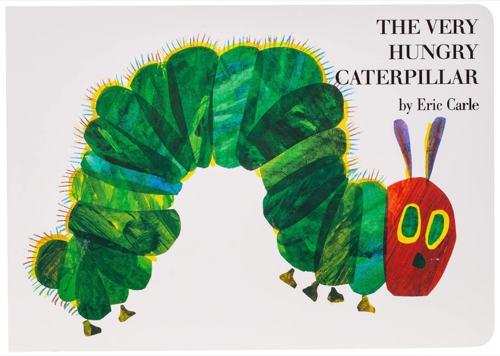
Sequencing is an essential reading skill that students must develop if they are to fully comprehend all the reading material. Fortunately, sequencing comes naturally to most children, as the concept of sequencing is reinforced from early on through routine practice in everyday life. From the first fairy tales to later literary classics, students encounter the importance of a defined beginning, middle, and end is further emphasized (The most representative work in sequencing teaching: The Very Hungry Caterpillar). While it is clear students know what a sequence is from the beginning, understanding how a sequence is formed and developing the necessary skills to identify its components is another matter, which will be the focus of this article.
What is Sequencing?
Sequencing is one of many skills that contributes to students’ ability to comprehend what they read. Sequencing refers to the identification of the components of a story — the beginning, middle, and end — and also to the ability to retell the events within a given text in the order in which they occurred. The ability to sequence events in a text is a key comprehension strategy, especially for narrative texts. Sequencing is also an important component of problem-solving across subjects (Reading Rockets, 2015).
Why is Sequencing Important?
For students, being able to determine the order of events in a text is critical to their clear understanding of what they are reading. As an important reading comprehension strategy, sequencing enables students to understand how events unfold in the reading. In turn, these reading skills will help students in their own writing. It will help them construct a coherent, logical flow in their writing that readers can easily follow. When children are able to use sequencing skills successfully, they can do the following:
• Recognize patterns
• Make predictions
• Put a series of objects or events in a logical order
• Understand transition words like first, next, and last
• Know the elements of a story like beginning, middle, and end
• Comprehend stories
• Retell stories and past events
• Put words and sounds together in the correct order to communicate
• Follow daily routines at home and school
• Approach an unfamiliar task in a logical manner
• Know when a task is completed
Engaging Sequencing Activities for Kids For Kindergarteners and Preschoolers:
Sequencing a Story with Pictures
Use story pictures to help children understand the sequencing concept of first, next,
and last. LINE IT UP is an engaging activity that includes several sets of story cards.
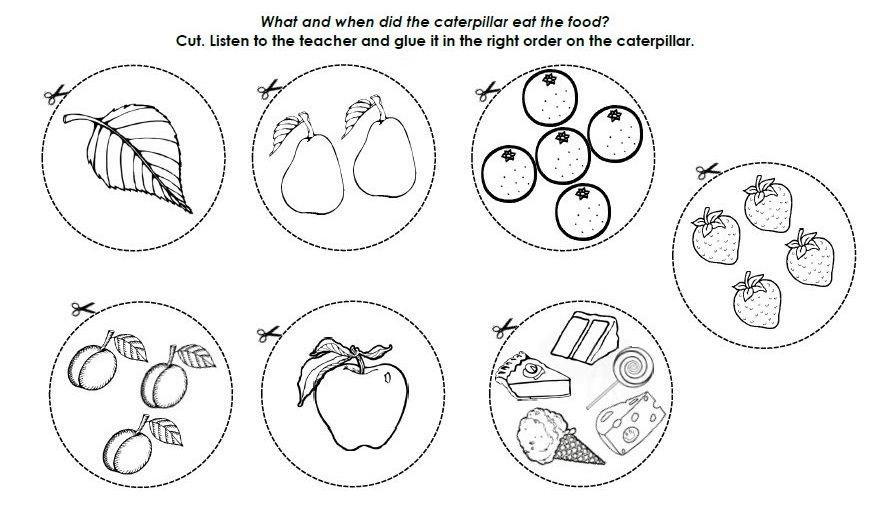
Children can arrange the picture cards in the correct order and retell the story! (Like
the very hungry caterpillar sequencing card, See the picture below)
Kmind will provide free printable worksheets after this article.
Cut or tear out the pages from an old calendar. Mix up the months and hand the
stack of pages to your child. Ask your child to order the months from January to
December by laying the pages out on the floor. Which month goes first? Then which
one? Which month is last?
Introduce sequencing words and use them often.
Using words such as first, second, third, next, then, before, after, and last when
discussing everyday activities with your child can help them build comprehension.
You can use and teach your child these words in everyday conversations. For
example, when your child dresses for school, you can narrate his or her actions.” First
you put on your T-shirt. Next, you put on your jacket. Then, we can go to school.”
Many activities in daily life can provide opportunities to practice sequencing as well
as vocabulary.
The “Robot Game” is another example of an engaging activity that involves a wide
range of sequencing and communication skills. An adult can become a robot and
follow the child’s instructions very carefully. For example, if a child orders a robot to
do a task, such as “pour the juice,” the adult must follow the child’s command, even if
the command is incomplete. If the child forgets to tell the robot to open the cap or
whether to pour apple juice or orange juice, the adult may make the humorous
mistake, prompting the child to use a more specific instruction.
For 1st Graders to 3rd Graders:
Use your story time books as models. The books you read together provide a chance
to talk about a sequence of events. After you finish a book, ask your child what
happened first? And then what happened? How did the book end? To extend this idea,
write each event on a separate index card or popsicle stick. Ask your child to put the
cards (or sticks) in order.
Sequencing with a Graphic Organizer
Graphic organizers are a great way to help students organize their ideas more
effectively in a range of areas - and sequencing is no exception. There are many
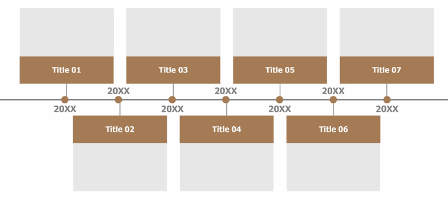
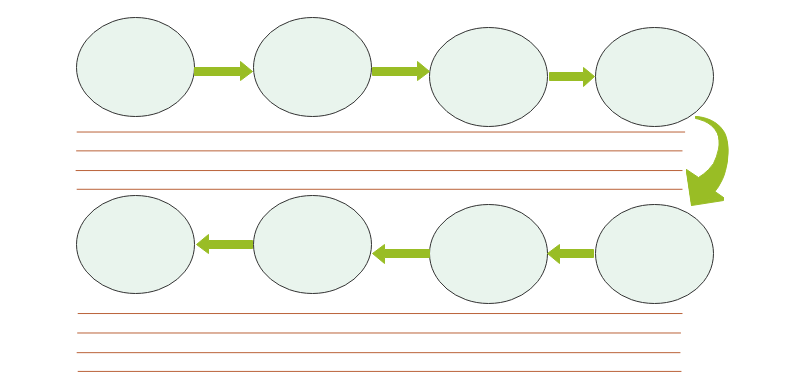
different graphic organizers that work well to show the order of events. Timelines and
Story Sequence Chart are two of the most appropriate ones.
Order out of chaos
Give your child a short story, which should be cut into paragraphs (or individual
sentences). Have your child reassemble the story according to what he/she think the
chronological should be. They can read their story to you and explain the reasons for
their decisions.
Books to Teach Sequencing
There Was an Old Lady Who Swallowed a Fly by Simms Taback All ages
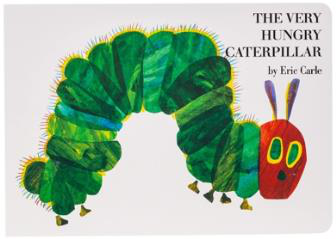
The Very Hungry Caterpillar by Eric Carle Ages 3–up
The Snowy Day by Ezra Jack Keats Ages 3-5
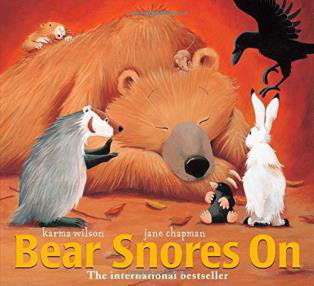
Bear Snores On by Karma Wilson Ages 3-7
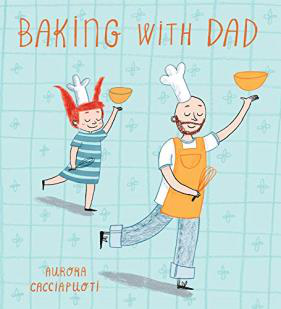
Baking with Dad by Aurora Cacciapuoti Ages 3–8
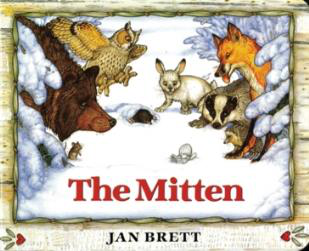
The Mitten by Jan Brett Ages 4-8Y
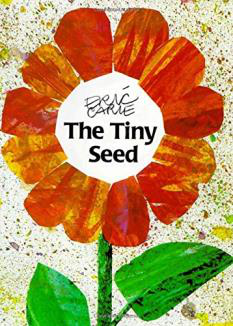
The Tiny Seed by Eric Carle Ages 4-8
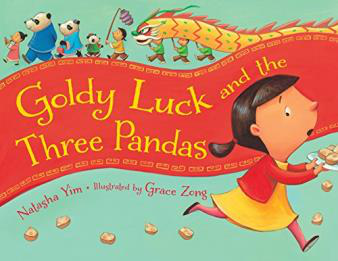
Goldy Luck and the Three Pandas by Natasha Yim Ages 4–8
I Know an Old Teacher by Anne Bowen Ages 5-9
Providing your child with the opportunity to recall events in the correct order will
help your child engage in scientific exploration and discovery. Understanding the
sequence will also help your child understand the structure of the story, which in turn
will develop reading comprehension and writing skills.
There is no shortcut to the development of any of the key reading comprehension
skills – and sequencing is no exception. First, students must understand what
sequencing is. Then, they must understand how to identify it in a variety of text
genres. After that, they must gain lots of experience through practice activities such as
those outlined above. Finally, they will become confident, active readers capable of
getting the most out of everything they read.
Reference
-
7 Sequencing Activities for Kindergarteners and Preschoolers . (2022, June 20).
Learning Without Tears. https://www.lwtears.com/blog/7-sequencing-
activities-kindergarteners-and-preschoolers
-
Chen, G. (2022). “What Happens Next?”: Strategies for Teaching Your Child
Sequencing Skills . Stages Learning. https://blog.stageslearning.com/blog/what-
happens-next-strategies-for-teaching-your-child-sequencing-skills
-
Fultz, C. (2021, December 7). How To Teach Sequencing In Upper Elementary .
Teaching with a Mountain View.
https://teachingwithamountainview.com/how-to-teach-sequencing/
-
literacyideas.com. (2021, August 29). Sequencing events in reading and writing: A Complete Guide for Students & Teachers . Literacy Ideas https://literacyideas.com/teaching-sequencing-in-english/
-
Staff, T. (2021, November 22). Teaching Strategies for Sequencing Reading (Grades 1–5). TeacherVision. https://www.teachervision.com/reading- comprehension/sequencing-lesson
-
Teaching Sequence . (2022). Reading Rockets. https://www.readingrockets.org/article/teaching-sequence
Explore Our Courses
Discover courses designed to help your child thrive

Writing Class
Master the art of written expression through structured writing workshops, helping 1st to 6th graders develop storytelling, essay writing, and creative composition skills.

Reading and Writing
Develop comprehensive literacy skills through engaging reading comprehension and creative writing activities designed for Kindergarten to 6th grade students.

Social Emotional Learning
Develop essential life skills including self-awareness, emotional regulation, empathy, and relationship building through evidence-based SEL curriculum.