

Fun Facts about Christmas
By Kmind
It may not be news to anyone that the meaning of Christmas is more than just giving and receiving gifts, wearing festive Christmas sweaters, decorating the halls with Christmas decorations, and making your home look like Santa’s workshop. Christmas is an ancient celebration with centuries of tradition, and there is deep symbolism behind every aspect of the holiday.
Sharing a fun fact with your family or friends at a holiday party or dinner table will make you all enjoy the moment even more. Or look up fun facts about Christmas with your kids to enjoy bonding time and exercise their thinking skills while looking forward to Christmas!
”Jingle Bells” Was the First Song Played in Space
“Jingle Bells” was one of the first songs broadcast from space as a Christmas-themed prank by Gemini 6 astronauts Tom Stafford and Wally Schirra. While in space on Dec. 16, 1965, they sent a report to mission control that they had spotted an unidentified object. Just as things got tense, they broadcast a rendition of “Jingle Bells” using a smuggled harmonica and sleigh bells.
”Jingle Bells” Was Originally A Thanksgiving Song
“Jingle Bells” was written by James Lord Pierpont (1822—1893) and published under the title “The One Horse Open Sleigh” in the autumn of 1857. It has been claimed that it was originally written to be sung by a Sunday school choir for Thanksgiving, or as a drinking song.
Decades later, Christmas adopted ‘Jingle Bells’ as its own. Bing Crosby made ‘Jingle Bells’ a Christmas hit in the 1940s, including it on his Merry Christmas record. The record quickly became one of the best-selling holiday albums of all time.
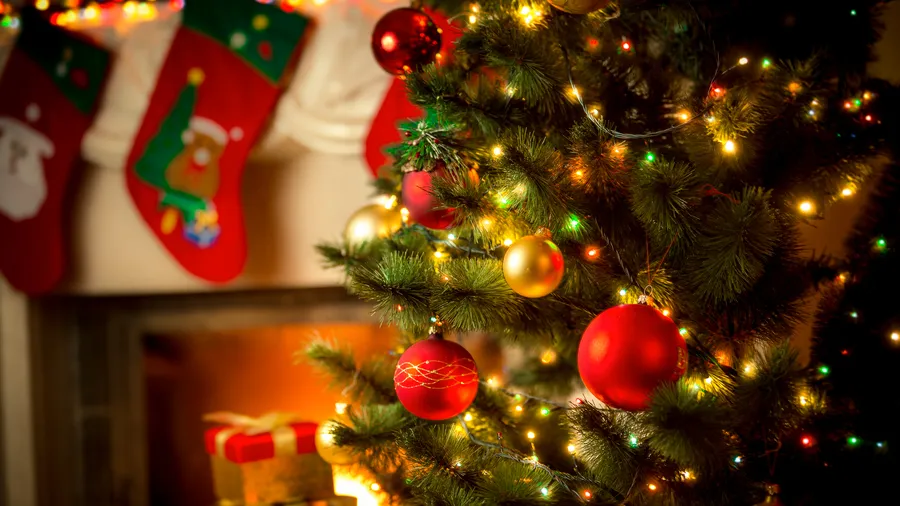
The Use of Evergreen Trees to Celebrate the Winter Season Occurred before the Birth of Christ.
The origin or the use of Christmas trees goes way back to ancient Egyptians and Romans to celebrate the winter holidays. People use the branches to decorate their homes during the winter solstice because it reminds them of the coming spring. Evergreens are especially chosen because they stay green all year round, even in the dead of winter. They decorated their homes and temples with evergreen boughs to celebrate the end of winter and the return of longer days, sunshine, and agriculture.
It wasn’t until the 16th century that German Christians began bringing real evergreens into their homes as part of their own winter solstice celebrations. This was due to their long-held belief that the evergreen tree symbolized eternal life with God. Around this time, the Germans began to merge ancient pagan winter traditions with the Nordic ritual of evergreen. This fusion created the earliest dawn of contemporary Christmas traditions, which we celebrate to this day.
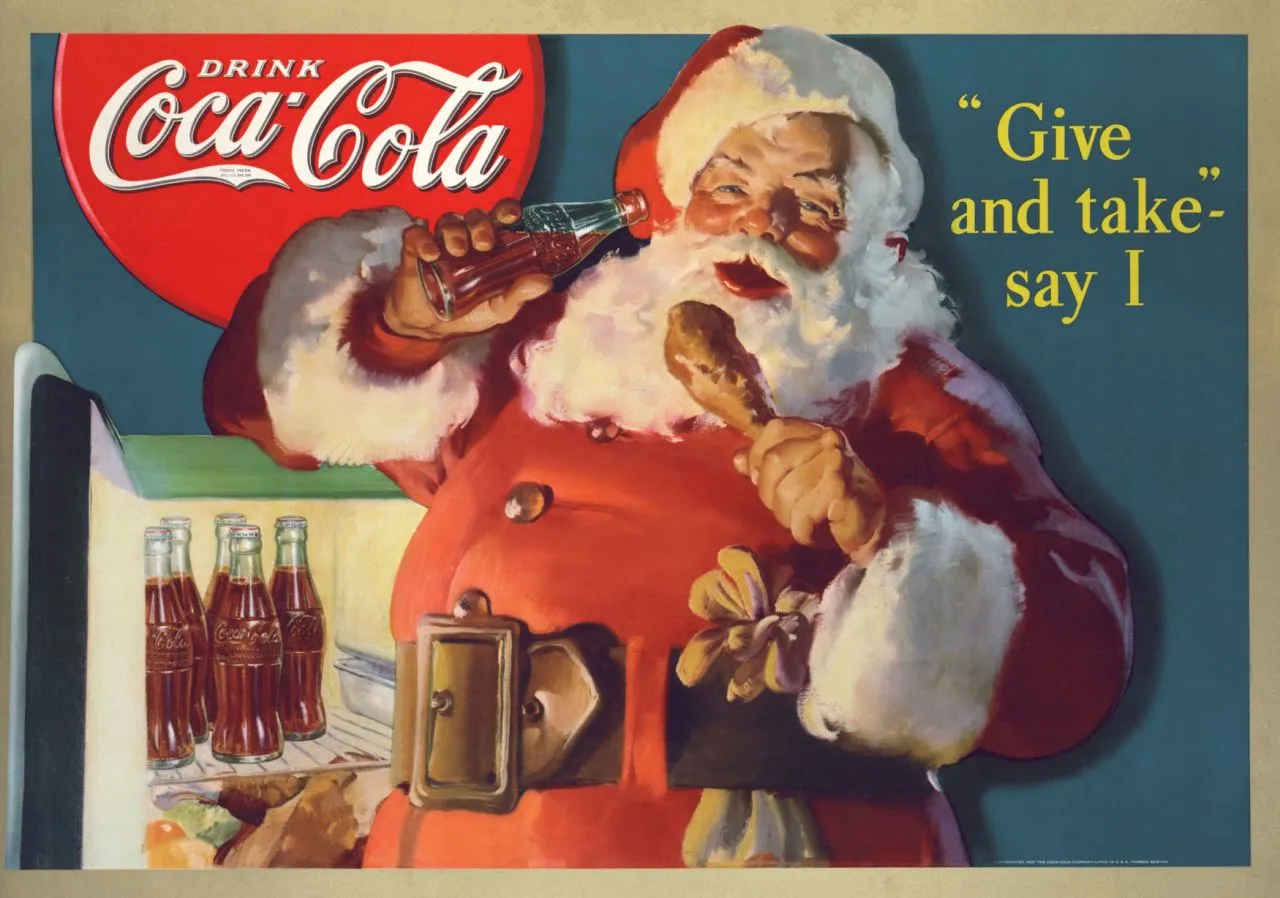
Coca-Cola & Santa’s Image
There’s a chance you’ve heard it before: Coca-Cola created the Santa Claus we see today. It’s certainly believable. Santa’s red and white suit matches the colors of Coca-Cola, and there are perhaps no depictions of Santa Claus as famous as the one in the classic Coca-Cola Christmas advertisements.
But Santa Claus as we know him today originated from works in the 1800s by poet Clement Clark Moore and cartoonist Thomas Nast. Coca-Cola did not invent the modern image of Santa Claus but Coca-Cola helped popularize the image.
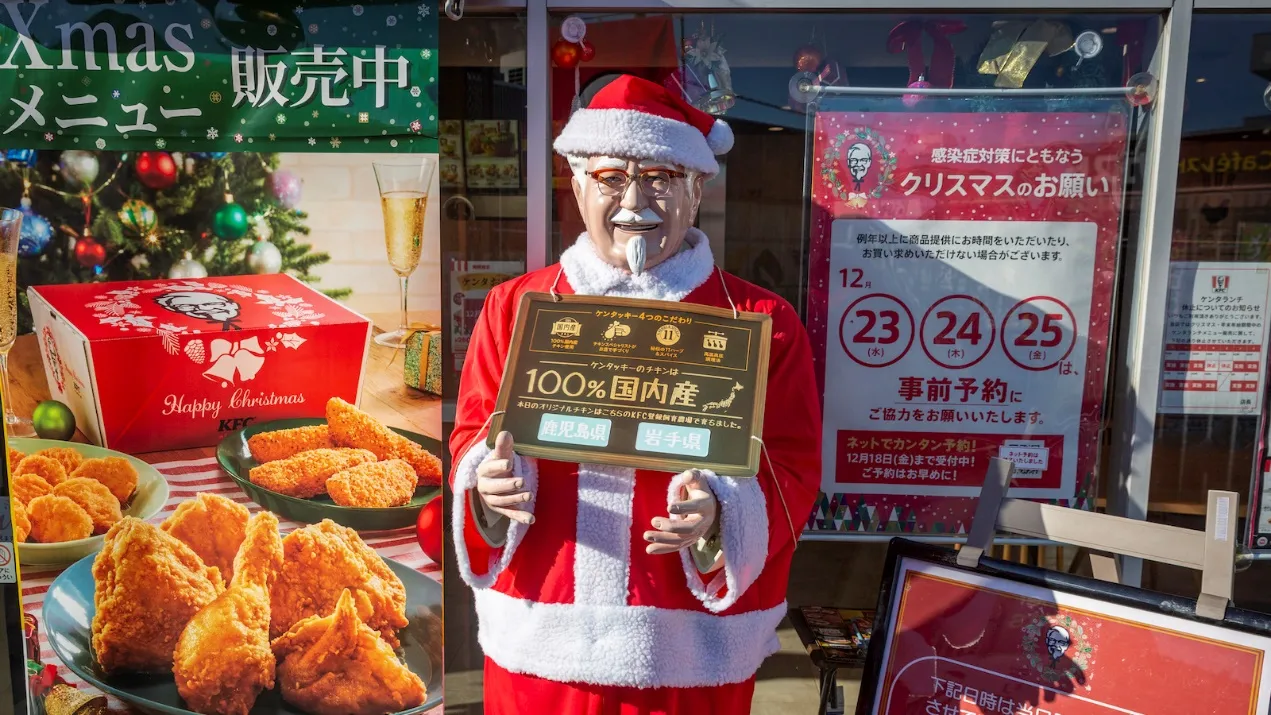
In Japan, A Traditional Christmas Dinner Is to Go to KFC
Christmas in Japan is a secular holiday with less than 1% of the Japanese population identifying as Christian. When KFC launched their “Kentucky for Christmas” marketing campaign in 1974, it was an instant hit and now KFC is a popular choice for Christmas dinners in Japan.
The Traditional Christmas Meal Is Not What You Think It Is!
The traditional Christmas meal in England before turkey became the obvious choice of food for the holidays was a pig’s head covered with mustard.
Candy Cane Invented to Quiet Choirboys?
Legend has it that the candy cane dates back to 1670, when the choirmaster at the Cologne Cathedral in Germany handed out sugar sticks to his young singers to keep them quiet during the Living Creche ceremony. The hook was meant to symbolize a shepherd’s crook for the Christmas occasion but other people think the hook exists so they can easily be hung from trees.
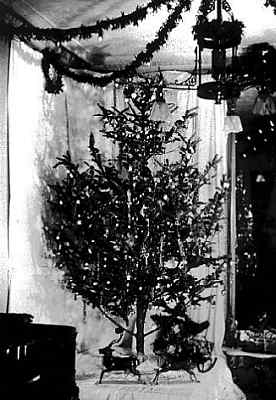 Thomas Edison’s Partner Was the First to Put Electric Lights on a Christmas Tree
Before electric Christmas lights, families used candles to light their Christmas trees. This practice was dangerous and led to many home fires. In 1882, Edward H. Johnson, a friend and partner of Thomas Edison, assembled the first string of electric lights for Christmas trees. He hand-wired 80 red, white, and blue bulbs and wound them around his Christmas tree. The tree is not only illuminated by electricity, but it also revolved.
The First Artificial Christmas Trees Were Made of Dyed Goose Feathers and Wire
If you like artificial trees, you’re not alone. It’s a cheaper, lower maintenance option that gives parents and pet owners one less thing to worry about during the holidays. Artificial trees date back to the 1880s, when the Germans made the first artificial tree by using dyed goose feathers held together with wire to offset deforestation. Since then, people around the world have made fake trees out of aluminum, cardboard and glass, although most artificial Christmas trees sold today are made of PVC plastic.
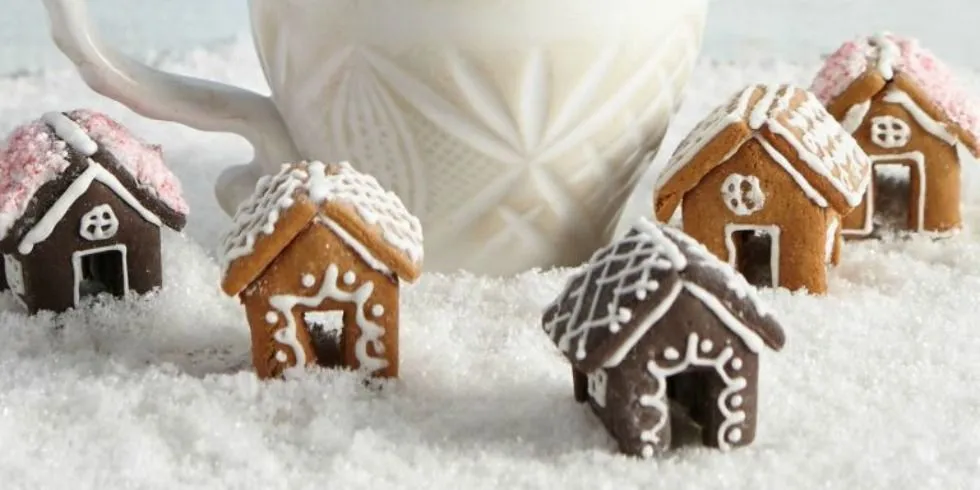 Which Fairy Tale Helped Inspire Gingerbread Houses?
Gingerbread houses originated in Germany during the 16th century. The elaborate cookie-walled houses, decorated with foil in addition to gold leaf, became associated with Christmas tradition. Their popularity rose when the Brothers Grimm wrote the story of Hansel and Gretel, in which the main characters stumble upon a house made entirely of treats deep in the forest. It is unclear whether or not gingerbread houses were a result of the popular fairy tale, or vice versa.
Santa Claus Gets Gifts Too!
Santa comes bearing gifts for the children who have been good throughout the year. But do you know that Santa gets gifts too? Who gives presents to Santa? It’s us! Yes, even you can give gifts to Santa! And no, the jolly old man does not want traditional gifts, but he is a bit partial to cookies and milk to keep him satisfied during his trip around the world.
The original roots of this holiday food tradition go back even further - all the way to ancient Norse mythology. Odin was the most important Norse god and was said to have had an eight-legged horse named Sleipner. During the Yule season, children would leave food for Sleipner in the hope that Odin would stop by on his travels and leave gifts in return. Such a tradition continues to this day in countries such as Denmark, Belgium and the Netherlands.
We Ship a Ton of Packages during the Holidays
For the 2021 peak season --- the period between Thanksgiving and New Year’s Day --- the Postal Service will deliver more mail and packages to homes than any other shipper. It’s anticipated that between 850 million and 950 million packages will be delivered for the holidays. The total number of letters, cards, and packages processed and delivered is estimated to be more than 12 billion. That’s why it’s so important to thank our mail carriers. They work harder than Santa’s elves!
Reference
- Avey, T. (2022, December 1). History of Gingerbread | The History Kitchen. PBS Food. https://www.pbs.org/food/the-history-kitchen/history-gingerbread/
- C, T. (2021, November 8). 24 Fun Christmas Facts and Information for Kids. FirstCry Parenting. https://parenting.firstcry.com/articles/21-interesting-facts-and-information-about-christmas-for-kids/
- Fogle, A., & Schumer, L. (2022, December 11). 35 Interesting Christmas Facts for a Fun Holiday Trivia Night. Good Housekeeping. https://www.goodhousekeeping.com/holidays/christmas-ideas/g2972/surprising-christmas-facts/
- How the Christmas tree won the holidays. (n.d.). Ambius. https://www.ambius.com/blog/how-the-christmas-tree-won-the-holidays/
- Hugh Baird College. (n.d.). 10 interesting facts about Christmas. https://www.hughbaird.ac.uk/blog/10-interesting-facts-about-christmas
- Maloney, W. (2017, December 19). Trending: Who Invented Electric Christmas Lights? | Library of Congress Blog. https://blogs.loc.gov/loc/2017/12/trending-who-invented-electric-christmas-lights/
- No, Coca-Cola did not invent the modern image of Santa Claus. (n.d.). VERIFY. https://www.verifythis.com/article/news/verify/holiday-verify/coca-cola-did-not-invent-santa-claus-modern-image-costume-red-suit/536-d4c9529c-e97d-48e5-92e2-912c7ee609fc
- Wikipedia contributors. (2022, December 14). Jingle Bells. Wikipedia. https://en.wikipedia.org/wiki/Jingle_Bells
Explore Our Courses
Discover courses designed to help your child thrive

Leadership Development
Cultivate leadership qualities through communication training, teamwork exercises, and ethical decision-making practice for students K-12.

Writing Class
Master the art of written expression through structured writing workshops, helping 1st to 6th graders develop storytelling, essay writing, and creative composition skills.

Math
Build strong mathematical foundations through hands-on problem-solving and conceptual understanding, helping Pre-K to 2nd graders develop number sense and critical thinking skills.