
Fun Activities to Improve Observation Skills
By Kmind
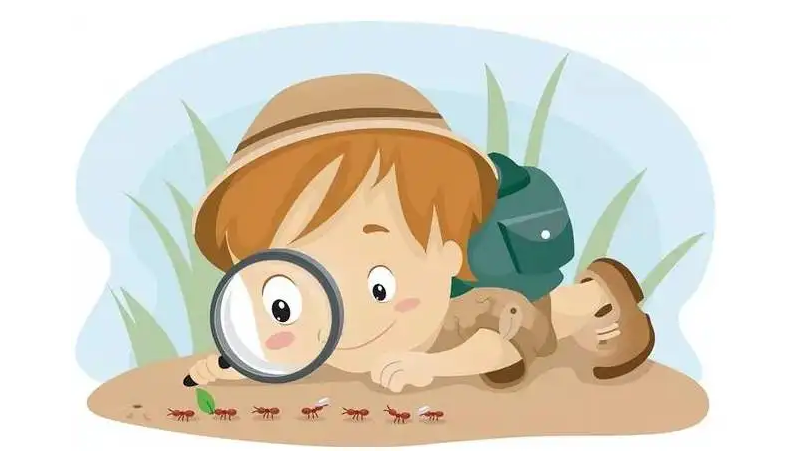
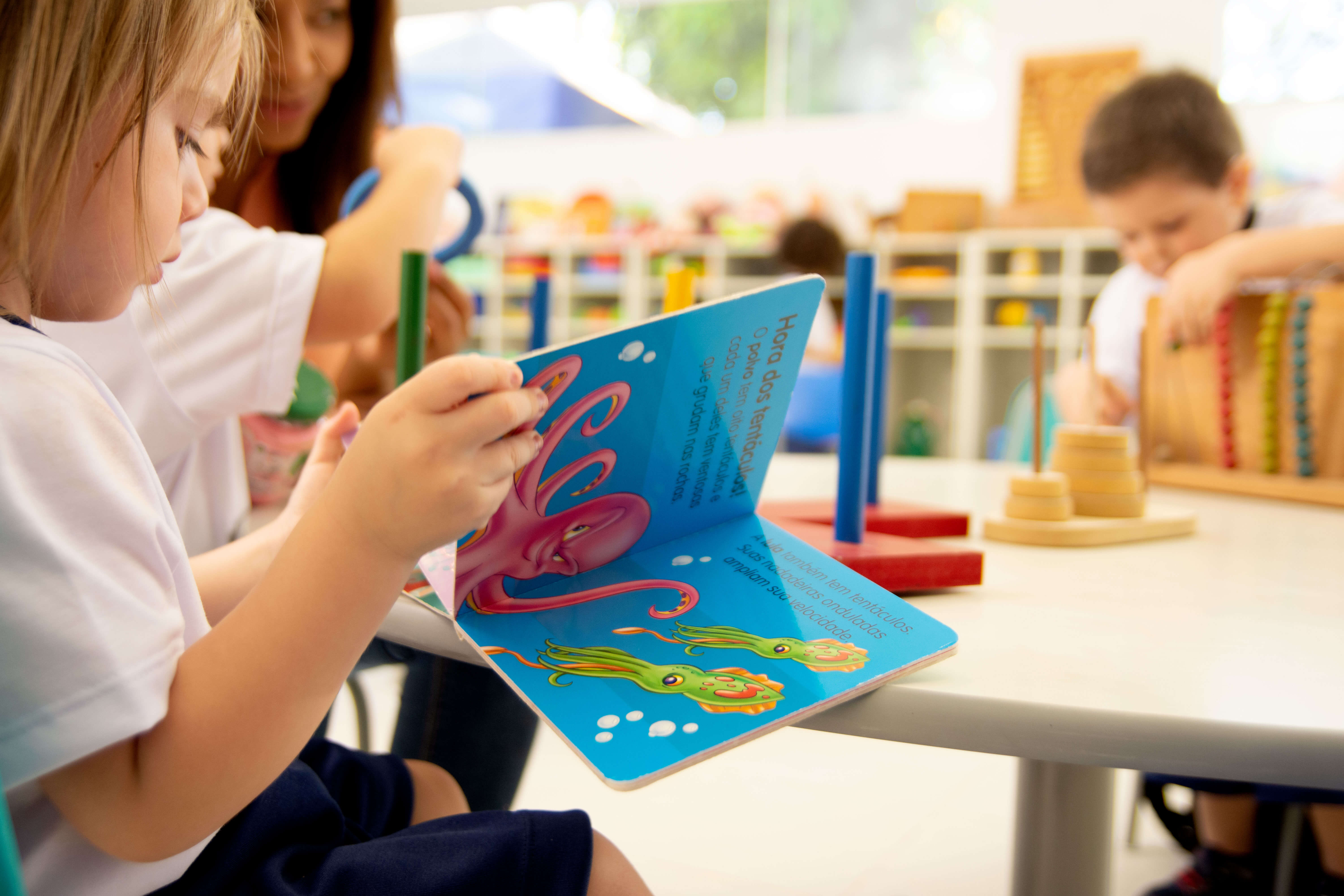
Children are seekers of explanations to make sense of their experience of nature. Young children’s fascination with the world around them is something that education must capitalize on in order to develop their worldview and build skills in the scientific process. Children’s observations and investigations of their local environment allow them to identify and answer questions that trigger further curiosity. However, are their observations trivial and effortless, or do we as teachers or parents need to encourage and facilitate their observational skills?
!(/assets/img/blogs/fun-activities-to-improve-observation-skills/media/image1.png)
What is Observation?
Observation is an essential part of intelligence and is a conscious, purposeful, and organized perceptual ability. A higher level of perceptual activity arises when the intentionality of the child’s mental action reaches a certain level based on the general perceptual ability. The ability to observe is not just “seeing something” or “looking at something” but involves understanding, thinking, and purposeful, planned perception. The strength of observation can determine to a great extent the level of one’s ability to analyze and solve problems.
How to Improve Observation Skills in Children?
Observation skills do not require special training but fun daily activities that help children improve their observation skills and have a good time!
Compare and Contrast
-
Give your child two similar objects, such as two pens, two play cars, two shoes, etc.
-
Discuss with your child how the objects are alike and how they are different.
Where is it?
-
Have your child look for the assigned item in the picture or storybook illustration.
-
For example, where is the apple in this picture? Where did the caterpillar go in the previous picture?
Tree Observations
-
Pick out a tree in your yard that has leaves.
-
Have your child observe the tree in summer, fall, winter, and spring.
-
How did the tree change during the different seasons?
What’s in the Bag
-
You will need a soft-sided bag or sock for this activity.
-
Place a small familiar toy in a bag or large sock.
-
Give the sock to your child and have her try to determine what the object is by feeling its shape through the bag.
Cultivate multi-sensory observation
-
When you return from buying vegetables, take a small vegetable for your child.
-
Let your child play with it and carefully touch it, look at it, taste it, smell it, lift it and fold it.
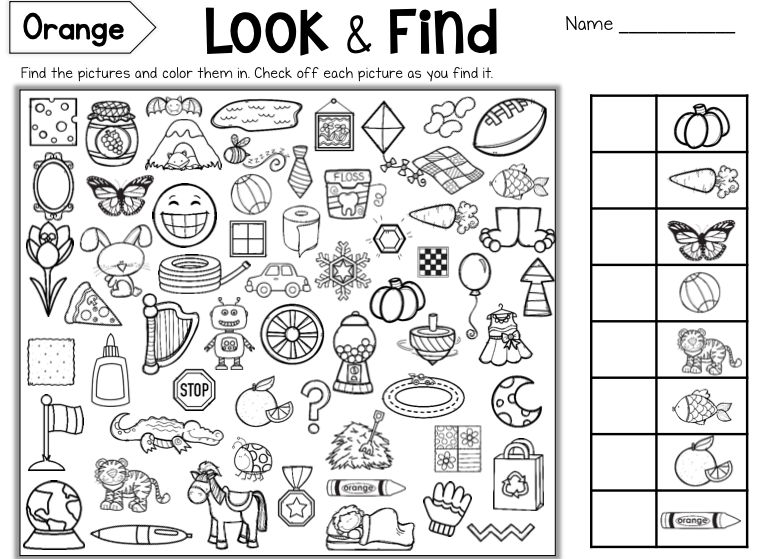
Hidden Picture Puzzles
-
Kmind provides several printable documents to parents— see shared PDF document (at the end of this article)
-
Find the assigned pictures in them.
What am I Wearing?
-
Occasionally, take a blanket and wrap it around yourself.
-
Ask your children what you are wearing.
-
If you do this about three times a week, your children will start to notice what you are wearing.
What is Missing?
-
Sit with your children and put out four small objects on a table.
-
Have your child turn around while you remove one of the objects.
-
Then have him turn around and tell you which object is missing.
-
When he gets good at this game using four objects, gradually add more objects.
Battleship
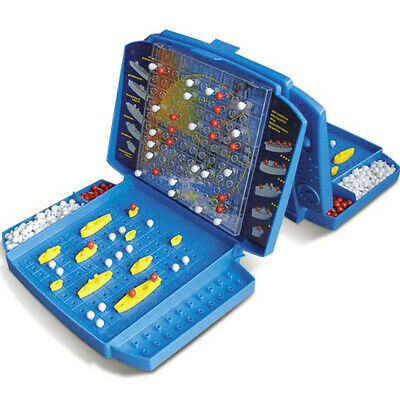
- Battleship is a strategy-type guessing game for two players. It is played on ruled grids (paper or board) on which each player’s fleet of warships is marked. The locations of the fleets are concealed from the other player. Players alternate turns calling “shots” at the other player’s ships, and the game’s objective is to destroy the opposing player’s fleet.
I Spy
-
One player is chosen to be the Spy.
-
The Spy picks an object that everyone can see. The player gives the first letter of the object as a clue. For example, if the player chooses a fence, they say, ‘I spy with my little eye something beginning with F’.
-
Players take turns to call out guesses until someone gets the right answer. The first person to guess correctly gets the next turn to choose an object.
As Maria Montessori once said “We cannot create observers by saying ‘observe’, but by giving them the power and the means for this observation and these means are procured through the education of the senses”.
Cultivating children’s observation skills can be done in daily life. These methods and ideas for cultivating observation skills mentioned in this article can hopefully be used for reference. In short, developing children’s observation skills requires the patience of parents. Try not to give your child rewards other than the ‘observation results’, because that will affect the development of the child’s interest in observation.
Let’s cheer together!
Reference
- From Seeing to Observing: How Parents and Children Learn to See Science in a Botanical Garden. (n.d.). Taylor & Francis. Retrieved September 8, 2022, from https://www.tandfonline.com/doi/abs/10.1080/10508406.2017.1308867?journalCode=hlns20
- How to improve a 5-year-old Child’s Observation Skills? (n.d.). Retrieved September 8, 2022, from https://www.kidschaupal.com/blog/how-to-improve-a-5-year-old-child-s-observation-skills
- New Economics Foundation. (2020, March 30). Five ways to wellbeing. Retrieved September 8, 2022, from https://neweconomics.org/2008/10/five-ways-to-wellbeing
- Taking notice: Children’s observation skills in nature as a basis for the development of early science education. (n.d.). BERA. Retrieved September 8, 2022, from https://www.bera.ac.uk/blog/taking-notice-childrens-observation-skills-in-nature-as-a-basis-for-the-development-of-early-science-education
Explore Our Courses
Discover courses designed to help your child thrive
Reading and Writing
Develop comprehensive literacy skills through engaging reading comprehension and creative writing activities designed for Kindergarten to 6th grade students.

Science Research Project
Develop scientific inquiry and research skills through hands-on projects, helping 3rd to 12th graders learn the scientific method, experimental design, and data analysis.
Phonics
Build a strong reading foundation through systematic phonics instruction, helping Pre-K to 1st graders master letter sounds, blending, and decoding skills.