
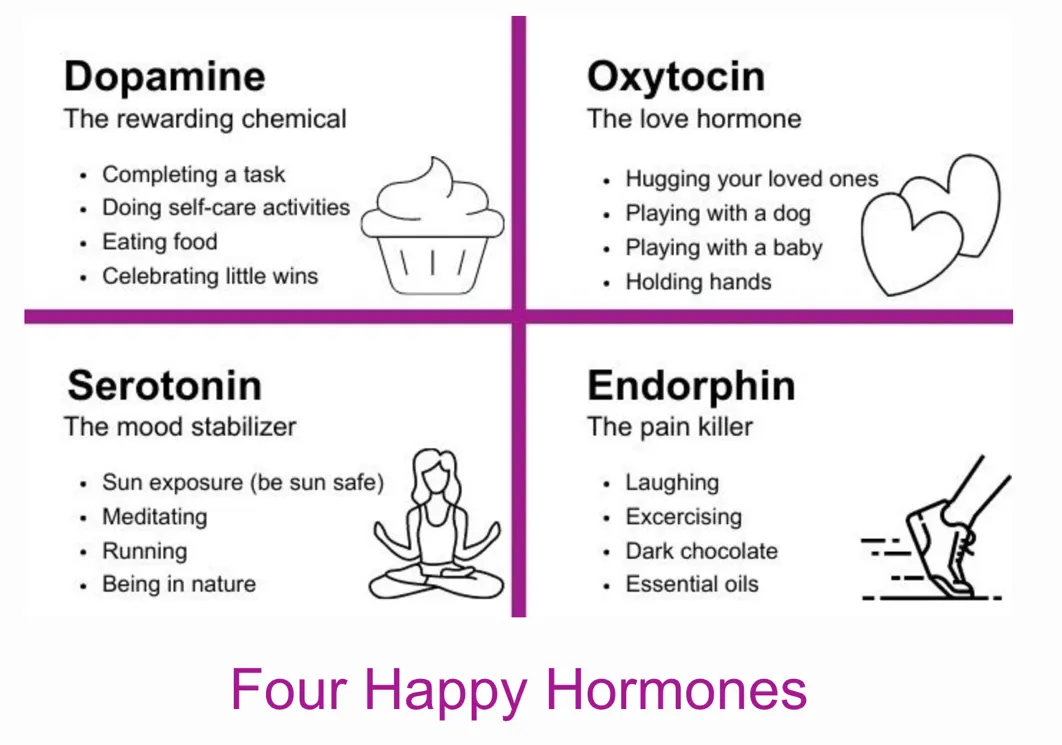
Four Happy Hormones and How to Harness Them- Part 1
By Kmind
Research into true happiness, carried out by Harvard University over a 75-year period, concluded that the people we surround ourselves with, as well as our acceptance into society, can have a positive effect on our physical and mental health and help us live longer. Our mood is influenced by many things --- the good, as well as the bad. Spending time with a loved one or friend can improve it. Sitting in an hour of unexpected traffic can ruin it.
In between sensing a situation and responding to it, chemicals called neurotransmitters and hormones help our brain understand, evaluate and communicate what you’re experiencing. These various neurotransmitters and hormones have specific jobs --- each being activated in a certain way, signaling certain emotions and stimulating certain areas of your brain.
So then, what’s the real cause of our happiness? What makes us feel sensations of happiness, closeness, and joy? Brain chemicals! There are four primary chemicals that can drive the positive emotions you feel throughout the day: dopamine, oxytocin, serotonin, and endorphins (sometimes referred to as D.O.S.E.).
Quick Overview:
-
Dopamine, aka The Reward Feeling --- Motivates you to form habits & reach goals by rewarding completion of tasks and pleasurable activities.
-
Oxytocin, aka The Loving Feeling --- Released by physical contact and social connections.
-
Serotonin, aka The Mood Booster --- Connected to pride, satisfaction, a sense of accomplishment, and recognition.
-
Endorphins, aka The No-Pain Feeling --- Relieves pain when we’re stressed or uncomfortable (including the “pain” from things like deep belly laughs).
Here’s what you need to know about these happy hormones, including tips for activating the feel-good brain chemistry they provide to help improve your mood:
!(/assets/img/blogs/four-happy-hormones-and-how-to-harness-them-part-1/media/image2.webp)
Endorphins:
Endorphins are chemicals (hormones) your body releases when it feels pain or stress. They’re released during pleasurable activities such as exercise, massage, eating and sex too. Endorphins help relieve pain, reduce stress and improve your sense of well-being.
Endorphins are created in your pituitary gland and hypothalamus, both located in the brain. Endorphins are a type of neurotransmitter, or messenger in your body. They attach to your brain’s reward centers (opioid receptors) and carry signals across your nervous system.
Main function:
Endorphins are released when your body feels pain or stress. Your body releases endorphins to help you survive. When you feel pain, nerves in your body send pain signals to your brain. Your brain releases endorphins to block the nerve cells that receive the pain signals.
How to Harness Endorphins:
One of the easiest ways to release endorphins is by exercising. The more you exercise, the more endorphins your body will produce. Many people feel a “runner’s high” after a good run. But you don’t have to run to feel a runner’s high. Other forms of exercise that will help you release endorphins include:
-
Power walking.
-
Swimming.
-
Dancing.
-
Hiking.
Other ways to release endorphins include:
-
Intimacy
-
Acupuncture.
-
Massage.
-
Eating.
Serotonin:
As a neurotransmitter, serotonin carries messages between nerve cells in your brain (your central nervous system) and throughout your body (your peripheral nervous system). These chemical messages tell your body how to work.
Most of the serotonin found in your body is in your gut (intestines). About 90% of serotonin is found in the cells lining your gastrointestinal tract. It’s released into your blood circulation and absorbed by platelets. Only about 10% is produced in your brain.
Serotonin is made from the essential amino acid tryptophan. An essential amino acid means it can’t be made by your body. It has to be obtained from the foods you eat.
Main function:
-
Mood: Serotonin in your brain regulates your mood. It’s often called your body’s natural “feel good” chemical. When serotonin is at normal levels, you feel more focused, emotionally stable, happier and calmer.
-
Sleep: Serotonin, together with another neurotransmitter dopamine, plays a role in the quality of your sleep (how well and how long you sleep). Your brain also needs serotonin to make melatonin, a hormone that regulates your sleep-wake cycle.
-
Digestion: Most of your body’s serotonin is in your GI tract where it helps control your bowel function and plays a role in protecting your gut. Your gut can increase serotonin release to speed digestion to rid your body of irritating foods or toxic products. Serotonin also plays a part in reducing your appetite while eating.
-
Others: nausea, wound healing, bone health
How to Harness Serotonin:
Ways to increase serotonin levels include:
-
Eating more tryptophan-containing foods.
-
Getting more sunlight.
-
Taking certain supplements.
-
Getting more exercise and lowering your stress level.
Foods to increase serotonin levels
Many foods naturally contain tryptophan, the amino acid from which serotonin is made. You can try increasing your serotonin level by eating tryptophan-containing foods, such as:
-
Salmon.
-
Eggs.
-
Cheese.
-
Turkey.
-
Tofu.
-
Pineapples.
-
Nuts, oats and seeds.
Sunlight
Not getting enough exposure to sunlight can lead to the mood disorder seasonal affective disorder in some people. Try to get 10 to 15 minutes of sunlight each day to boost not only serotonin levels but vitamin D levels too.
Exercise
Regular exercise is known to increase serotonin levels. Thirty minutes of aerobic exercise five times a week plus two strength-training sessions per week can improve mood disorders and heart health.
Specific Activities for Children to Activate Happy Hormones:
ENDORPHINS
The body’s natural pain killer that triggers positive feelings.
-
Make up jokes, read a joke book, or check out a free kid jokes app --- then host a family comedy hour.
-
Turn on some music and have your own personal dance party.
-
Re-watch the funniest movie you ever saw.
-
Ask for something yummy that’s made with dark chocolate.
-
Perform a random act of kindness.
-
Play tag or any game that gets your body moving.
-
Stretch your arms and legs for 5 minutes.
SEROTONIN
The mood stabilizer that makes everything seem better.
-
Go on a nature scavenger hunt.
-
Play in the bathtub.
-
Name 3 things you’re good at.
-
Listen to a kid-friendly meditation or take a kids yoga class.
-
Bike to the playground or your best friend’s house.
-
Ask if you can have some fish tacos, bell peppers, cauliflower, or yogurt to eat.
-
Think about your “happy place,” a fun vacation you took, or another favorite memory.
Next week, we will discuss the function and ways to harness the other two happy hormones (dopamine and oxytocin).
Explore Our Courses
Discover courses designed to help your child thrive

Leadership Development
Cultivate leadership qualities through communication training, teamwork exercises, and ethical decision-making practice for students K-12.
Science Research Project
Develop scientific inquiry and research skills through hands-on projects, helping 3rd to 12th graders learn the scientific method, experimental design, and data analysis.

Reading and Writing
Develop comprehensive literacy skills through engaging reading comprehension and creative writing activities designed for Kindergarten to 6th grade students.