
Curriculum Mapping: Fostering Impactful Learning Experiences
By Kmind
Curriculum mapping, an integral part of educational planning and organization, plays a pivotal role in designing effective learning experiences. By examining the structure and relationships within a program of study, curriculum mapping aims to ensure alignment between learning objectives, content, and assessment. In the K-12 education sector, curriculum mapping originated as a means for teachers to assess major concepts taught and their timelines. Kmind, as an innovative educational platform, has embraced the principles of curriculum mapping and combined them with the well-established ADDIE model to create a comprehensive approach to curriculum design. In this article, we explore the concept of curriculum mapping, the benefits it offers, and how Kmind’s curriculum design methodology fosters engaging, relevant, and impactful learning experiences for students. By incorporating best practices and emphasizing reflective learning, Kmind aims to empower students and educators alike on their journey of growth and development.
What is Curriculum Mapping?
Curriculum mapping is a way of examining a program of study and the courses within that program in order to understand curriculum structures and relationships, gain insight into how students experience their discipline, and increase awareness of curricular content. Curriculum mapping is a process used in education to design and organize the instructional content, skills, and learning outcomes of a particular course, subject, or educational program. It involves creating a detailed plan or map that outlines what will be taught, when it will be taught, and how it will be taught, with the overall goal of ensuring alignment between learning objectives, content, and assessment. In K-12 education, curriculum mapping was originally developed in the 1970s as a way for teachers to inventory the major concepts taught in their classrooms and the timespan allotted for each major concept on the academic calendar.
Benefits of Using Curriculum Mapping
Using curriculum mapping offers numerous benefits for educators, schools, and educational institutions.
-
Strategic Curriculum Planning: It’s an effective planning tool that can help set up short-term and long-term instructional goals. Teachers can carefully map out the objectives they want their students to achieve during the academic year and beyond. This process involves breaking down complex concepts into manageable learning objectives, ensuring a coherent and progressive learning journey for the students.
-
Promoting Transparency: It provides transparency in the curriculum, allowing participants to examine the curriculum in its entirety. This transparency fosters a shared understanding and commitment to the educational objectives, leading to a more cohesive learning experience.
-
Streamlined Curriculum Development: Elimination of gaps and unproductive repetitions in the curriculum. By carefully examining the planned content, educators can ensure that all essential topics are adequately covered without unnecessary overlaps. This streamlined approach optimizes instructional time, allowing students to delve deeper into each subject area and avoid redundancy in their learning.
-
Aligning with Excellence: Better alignment of curriculum with state standards and this alignment ensures that the educational program meets the required benchmarks, leading to better overall educational outcomes for students.
-
Staying on Course: It serves as a roadmap, guiding educators through the sequential delivery of content and assessments. This focus ensures that instructional time is utilized efficiently, maximizing students’ learning potential and achieving the desired educational outcomes.
-
Assessment Made Easy: It allows teachers to monitor student progress against the set objectives, identify areas of improvement, and tailor instructional approaches accordingly. By having a clear overview of student achievements, educators can make data-driven decisions to enhance their teaching methods effectively.
-
Building on Foundations: It allows for teachers to trace the previous knowledge and skills of their students and build on them. By understanding students’ prior knowledge, educators can design learning experiences that build a strong foundation and scaffold new information effectively. This approach helps create a supportive and inclusive learning environment, enabling all students to progress at their own pace while still achieving the desired educational goals.
-
Reflective Teaching: It encourages teachers to reflect on their teaching practices and make improvements. By assessing the effectiveness of their teaching methods, educators can identify areas where improvements can be made. This reflective practice fosters professional growth and leads to a more engaging and impactful learning experience for students.
Curriculum Design Best Practices
Curriculum design is a crucial process that involves planning and organizing educational content and activities to achieve specific learning goals. Implementing best practices in curriculum design can enhance the effectiveness of teaching and learning.

-
Identify Clear Learning Goals: Define specific and measurable learning objectives that outline what students should know and be able to do by the end of the curriculum. These goals provide a clear direction for instructional design.
-
Consider Learner Needs: Understand the characteristics and needs of the learners who will engage with the curriculum. Consider their prior knowledge, interests, and learning styles to create engaging and relevant content.
-
Use Backward Design: Start with the end in mind. Begin curriculum development by identifying desired outcomes and then work backward to determine appropriate assessments, instructional strategies, and content.
-
Promote Active Learning: Encourage hands-on and participatory learning experiences. Active learning methods, such as group discussions, problem-solving activities, and project-based learning, help retain information better than passive methods like lectures.
-
Integrate Technology Appropriately: Leverage technology as a tool to enhance learning experiences, not just for the sake of using technology. Select appropriate digital resources and tools that align with the learning goals.
-
Provide Differentiated Instruction: Recognize that students have diverse learning needs and abilities. Differentiate instruction to cater to various learning styles, levels, and interests, enabling each student to progress at their own pace.
-
Assessment and Feedback: Implement a variety of assessment methods to measure student progress accurately. Provide timely and constructive feedback to help learners understand their strengths and areas for improvement.
-
Cultivate Critical Thinking and Problem-Solving Skills: Design learning activities that challenge students to think critically, analyze information, and solve problems independently.
-
Encourage Collaboration: Foster a collaborative learning environment where students can work together, share ideas, and learn from each other’s experiences.
-
Keep the Curriculum Flexible: Recognize that education is an evolving process, and adjustments may be necessary over time. Allow room for modifications and improvements based on feedback from students and educators.
-
Align with Standards and Guidelines: Ensure that the curriculum aligns with relevant educational standards, guidelines, and requirements. This alignment helps maintain consistency and ensures that students meet essential learning outcomes.
-
Professional Development for Educators: Offer ongoing professional development opportunities for educators to keep them updated on the latest teaching strategies, technologies, and subject matter expertise.
-
Promote Real-World Relevance: Integrate real-world applications and examples into the curriculum to demonstrate how the knowledge and skills learned can be applied in practical scenarios.
-
Encourage Reflective Practice: Encourage students to reflect on their learning experiences regularly. This process can deepen their understanding and help identify areas for further improvement.
-
Evaluate and Revise Regularly: Regularly assess the effectiveness of the curriculum and make necessary revisions based on student performance, feedback, and changes in educational trends.
Kmind Curriculum Design
ADDIE Model
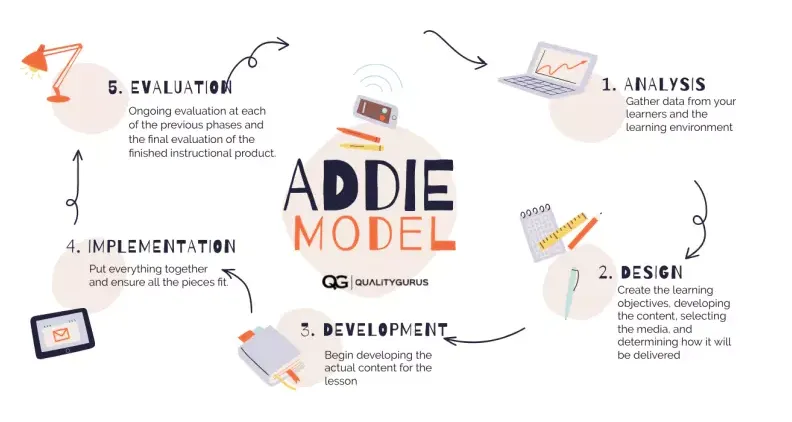
To ensure a logical approach to curriculum design, Kmind first adheres to the ADDIE model, a well-established and systematic instructional design framework widely recognized in the education and training domain. This model offers a structured methodology for creating highly effective and efficient instructional materials and courses. The model is named after its five key phases: Analysis, Design, Development, Implementation, and Evaluation. Each stage plays a pivotal role in the comprehensive instructional design process. By following this model, Kmind can strategically develop curricula that cater to the specific needs and learning outcomes of its students, fostering a conducive and impactful learning environment.
- Analysis
The first phase of the ADDIE model is Analysis. During this stage, instructional designers work closely with subject matter experts and stakeholders to identify and understand the learning needs, goals, and objectives of the instructional project. This includes analyzing the target learners, their existing knowledge and skills, learning preferences, and the context in which the training will be delivered. The goal of this phase is to gather all the necessary information to inform the subsequent design and development stages.
- Design
Once the instructional requirements are gathered and the learning objectives are defined, the Design phase begins. In this stage, curriculum designers will design learning theories, outcomes and alignment, assessments, instructional strategies, technologies, and instructional messages.
They outline the overall structure of the course, determine the content and its organization, and design the instructional strategies and methods to achieve the learning objectives effectively. Designers may also create prototypes or storyboards to visualize the flow and structure of the course.
- Development:
The Development phase involves actually creating the instructional materials based on the design specifications. This is where the course content is developed, multimedia elements are created, and interactive components are built. The development process may also involve pilot testing the materials with a smaller group to identify and address any potential issues or improvements.
- Implementation:
Once the instructional materials are developed and tested, the Implementation phase begins. This stage involves the actual deployment of the course to the target audience or learners. Trainers, instructors, or facilitators deliver the course content to the learners through various delivery methods, such as in-person training, online courses, or blended learning approaches.
- Evaluation:
The final phase of the ADDIE model is Evaluation. This phase assesses the effectiveness of the instructional design and its impact on the learners and organizational goals. Evaluation is done through various methods, such as quizzes, assessments, surveys, feedback from learners, and performance measurements. The data collected during this phase helps identify the strengths and weaknesses of the instructional design and provides insights for potential improvements.
After completing the Evaluation phase, the cycle can loop back to the Analysis phase to refine and update the instructional materials based on the feedback and evaluation results. This iterative approach allows Kmind for continuous improvement and ensures that the instructional design remains relevant and effective over time.
Curriculum Mapping
Besides following the ADDIE Model, Kmind incorporate all the best practices of curriculum mapping into curriculum design, so that we can create engaging, relevant, and effective learning experiences that support students’ growth and development.
-
Backward Design: A Focus on Learning Outcomes: Kmind prioritizes learning outcome that we aim to help students master all skill sets required by the California State Standards so that we standardized curriculums for all the students. When design learning objectives for the curriculum and each lesson, we use backward design by start with the end in mind. Begin curriculum development by identifying desired outcomes and then work backward to determine appropriate assessments, instructional strategies, and content.
-
Personalized Education with Integrated Teaching Materials: Kmind combine and bridge the gaps of research-based teaching materials. This approach guarantees that students receive the best possible education, tailored to their individual learning styles and cognitive abilities.
-
Holistic Learning through Integrative Curriculum Design: We insist in integrative curriculum design to promote holistic learning and help students see connections between different skills. For example, in language class, the program integrates multiple language arts components by covering phonics, grammar, vocabulary, reading, and writing skills in each session.
-
Meaningful Learning with Authentic Content: Kmind use authentic and targeted content. For instance, the readings selected by teaching experts target specific reading strategies, fluency, and comprehension skills which are relevant to real life to engage students and make learning meaningful.
-
Active Learning for Deeper Understanding: Kmind curriculum design also focus on active learning by providing ample opportunities for students to discuss and write in response to texts fosters deeper understanding and active engagement. During the class, the instructors organize active and interactive learning activities such as discussions, debates, and hands-on activities to promote better retention and application of knowledge.
-
Empowering Growth through Reflective Learning: Kmind encourages reflective learning for both students and teachers. Kmind emphasis on reflective learning offers an enriching and transformative experience. By engaging in thoughtful self-assessment, students become more attuned to their strengths and areas for improvement, leading to enhanced self-awareness and a deeper understanding of their learning styles. Equally important, Kmind recognizes that teachers are the driving force behind effective education. The platform empowers educators to engage in continuous professional development through reflective learning practices. By regularly evaluating their teaching methodologies and approaches, educators can identify innovative techniques and tailor their strategies to meet the diverse needs of their students effectively.
-
Evolving Education: Embracing Feedback and Improvement: We also regularly evaluating the effectiveness of the curriculum and making improvements based on feedback and student performance is essential. A curriculum design that incorporates a reflective approach can evolve to meet the changing needs of learners.
Kmind’s innovative and systematic curriculum design, rooted in the well-established ADDIE model, demonstrates a commitment to delivering effective and impactful learning experiences for students. The integration of curriculum mapping best practices further enhances this approach, providing engaging and relevant content that supports students’ growth and development.
Reference
- Archambault, S. G., & Masunaga, J. (2015). Curriculum mapping as a strategic planning tool. Journal of Library Administration, 55(6), 503-519.
- Buchanan, H., Webb, K. K., Houk, A. H., & Tingelstad, C. (2015). Curriculum mapping in academic libraries. New Review of Academic Librarianship, 21(1), 94-111.
- Kelley, K. A., McAuley, J. W., Wallace, L. J., & Frank, S. G. (2008). Curricular mapping: process and product. American Journal of Pharmaceutical Education, 72(5).
- Larson, M. B., & Lockee, B. B. (2019). Streamlined ID: A practical guide to instructional design. Routledge.
- Rawle, F., Bowen, T., Murck, B., & Hong, R. (2017). Curriculum mapping across the disciplines: differences, approaches, and strategies. Collected Essays on Learning and Teaching, 10, 75-88.
- Shilling, T. (2013). Opportunities and challenges of curriculum mapping implementation in one school setting: Considerations for school leaders. Journal of Curriculum and Instruction, 7(2), 20-37.
- Udelhofen, S. (2005). Keys to curriculum mapping: Strategies and tools to make it work. Corwin Press.
Explore Our Courses
Discover courses designed to help your child thrive

Leadership Development
Cultivate leadership qualities through communication training, teamwork exercises, and ethical decision-making practice for students K-12.

STEAM
Explore Science, Technology, Engineering, Arts, and Mathematics through engaging hands-on projects that spark curiosity and develop critical thinking skills.

Science Research Project
Develop scientific inquiry and research skills through hands-on projects, helping 3rd to 12th graders learn the scientific method, experimental design, and data analysis.