
Bilingualism in Children
By Kmind
How to Help Develop a Bilingual Child
We can often encounter the problem that some parents worry that bilingual children will have delayed language development because of the influence between different languages. There is even a suspicion that bilingual children are slower to learn to speak because of the shift in thinking between two different language symbols.
What is better or worse than exposing children to two languages during the language initiation phase? It has always been a point of debate. Many wonder if young children are capable of accepting two languages at the same time? in other words, will bilingual parenting lead to confusion in language use?
”If you speak two languages at home, don’t be afraid, it’s not a zero-sum game. Your baby is very equipped to keep these languages separate and they do so in remarkable ways.”
UBC psychologist, Janet Werker
What is Bilingualism?
Bilingualism is the ability to know two different languages at a single time. It is a skill that requires the acquisition of two languages that use different speech sounds, vocabulary, and grammatical rules.
Research shows that the executive function of the brain is stronger in bilingual children than in monolingual children; it can easily switch between different tasks, and children raised in a bilingual environment have more outstanding problem-solving skills later in life. In terms of language skills, bilingual children have greater meta-linguistic awareness and can learn new languages more quickly than monolingual children.
Bilingual Education Myths
”One Parent-One Language”
Some parents use a “One Parent-One Language” strategy to keep their children from “mixing up the two languages,” such as a father speaking only English with the child and a mother speaking only Chinese with the child. In fact, Parents of bilingual families do not need to intentionally differentiate between the two languages, nor do they need to follow a strict one-language strategy for bilingual development because the parents are not the ones making the distinction, the children are.
”Anyone who wants to raise a bilingual child, regardless of your background and motivation, must realize that to master a language, you must have a lot of exposure to that language. “
FAU psychologist, Erika Hoff
Parents can speak to their children in different languages, and with a basic level of exposure (35%-40% or more), the child will “differentiate” between the two systems based on phonological, lexical and syntactic features, and eventually build up a grammar of the two different languages. The fact that code-mixing may occur during this period but does not affect the fact that the child identifies the two systems. However, it is only after being explicitly taught that the child understands that these are two “languages”; until then, they are only aware that they know two different language variants, but not directly that they are related.
Silent Period
The “silent period” is also referred to as the “silent phase” or “nonverbal period”. It is a normal time for young children to learn a second language. It is primarily characterized by non-speech, often at the beginning of preschool or kindergarten. It occurs most often in bilingual children ages 3-8 who are suddenly exposed to an environment where people speak a different language than the child’s first language. The silent period usually begins when the child realizes that their first or “home” language is not understood in preschool or school and that their second language skills are not sufficient for effective communication. They then have a period of complete silence in that setting.

Parents are often anxious at this stage. Your child is sensitive and your anxiety will make him or her more frustrated and “shy”. Children in the silent period, although silent, but the brain has begun to work at high speed, through observation, listening, and constantly grasp the connection between speech sounds and specific things scene, when this connection has accumulated to a certain level of magnitude, the child will instinctively speak. During the silent period, children should be given enough support. Tell them that you understand their feelings and don’t be afraid to make mistakes. This will keep the child from losing interest in learning the language. Children should also listen a lot, repetitively and with scenarios to help them acquire language naturally from hearing to speaking.
Code-mixing
Linguists refer to the use of two or more languages concurrently in a conversation as code-mixing or code-switching. Thought to be a natural outgrowth of multilingual usage, code-mixing is considered to be distinct from other linguistic practices, including language transfer, and language borrowing. In addition to the use of language, code-mixing also involves switching between dialects, styles of speech, gestures, body language, and vocal registers.
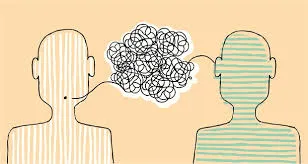
Code-mixing occurs even in adult sequential bilinguals with full grammatical awareness and is not the preserve of children who “mix up languages”. Many parents would assume that when children mix multiple languages, it is a sign of a problem with their language skills or a result of their lack of proficiency in both languages. In fact, on the contrary, transcoding is not a sign of language confusion or low expressive skills, but rather a sign of flexibility in the use of both languages.
Some would consider it a sign of a vocabulary deficit for children to know how a meaning is expressed in one language but not how it should be expressed in another. This possibility does exist. But bilingual children will have at least as much total vocabulary in both languages as monolingual children.
Children Should become Proficient in One Language before Learning Another?
Parents of bilingual children may worry that speaking two languages at the same time will put too much pressure on their children. They believe that it will be much easier to wait until the child is fluent in one language on his or her own before learning the other.
How can you tell when your child is fluent in the first language to learn another language? Language learning is a lifelong path. In this case, parents can never pick a time when their child is truly ready.
However, as children get older, they begin to develop an awareness of language. This means that they need to “learn” a language, rather than acquiring it naturally. The younger a child learns a language, the easier it is for them. The “window of opportunity” is between birth and age five!
The More Words They Memorize, The Better?
Is the way you check your child’s English proficiency that how many words she can memorize? It’s true that bilingual children don’t master as many words in one language as monolingual children. But the total vocabulary in both languages is about the same as that of monolingual children. With only few hours in a day, a child’s vocabulary cannot be exponentially larger than someone else’s.
We cannot deny that working on vocabulary alone is effective in the short term, but in the long term, it is not conducive to the formation of logical language thinking. On the contrary, such training forms and extreme results orientation tend to discourage children from learning English and can seriously hurt their self-esteem, which is not worth the loss.
Dr. Puchta, a renowned expert in language, also mentioned this problem in his speech several times. He specifically mentioned that the language learning process for children is not mechanical, but also has a strong emotional component. It is far better for parents to learn English with their children in an interactive scenario, even if the pronunciation is inaccurate, than to let the child memorize the words alone.
Additional Resource
Books
!(/assets/img/blogs/bilingualism-in-children/media/image5.webp)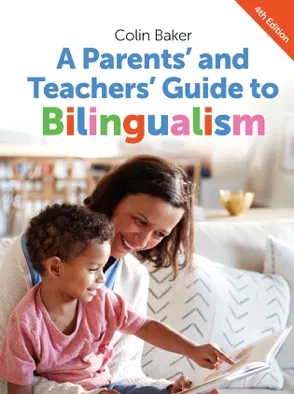 Raising a Bilingual Child by Barbara Zurer Pearson
A Parents’ and Teachers’ Guide to Bilingualism by Colin Baker
Online Guide
Supporting Emergent Bilingual Children in Early Learning
Supporting English Language Development When Children Have Little Experience with English
[https://eclkc.ohs.acf.hhs.gov/sites/default/files/pdf/dll-english-languagedevelopment.pdf]
How to Use Bilingual Books
[https://eclkc.ohs.acf.hhs.gov/sites/default/files/pdf/how-to-use-bilingual-books.pdf]
Using Cognates to Develop Comprehension in English
[http://www.colorincolorado.org/article/using-cognates-developcomprehension-english]
Reference
- → V. A. P. B. G. G. (2018, December 2). A critical period to learn a second language? Tradiling. https://www.tradiling.net/a-critical-period-to-learn-a-second-language/
- Bilingualism in Young Children: Separating Fact from Fiction. (n.d.). Retrieved October 27, 2022, from http://www.hanen.org/helpful-info/articles/bilingualism-in-young-children\—separating-fact-fr.aspx
- Ford, K. (2020, February 18). Language Acquisition: An Overview. Colorín Colorado. https://www.colorincolorado.org/article/language-acquisition-overview
- Gunturi, U. (2021, December 15). A Primer on Code Mixing & Code Switching! - Uma Gunturi. Medium. https://umagunturi789.medium.com/a-primer-on-code-mixing-code-switching-9bbde2a15e57
- Kinnane, D. (2021, May 23). Help! My bilingual child just started preschool but won’t speak! (FAQs on the “Silent Period”). Banter Speech & Language | Sydney Speech Pathologists Helping Child and Adult Clients, and Other Speech Pathologists. https://www.banterspeech.com.au/help-my-bilingual-child-just-started-preschool-but-wont-speak-faqs-on-the-silent-period/
- tatyana@globalchildrenschool.com. (2021, July 1). Stages of Bilingual Development. Global Children School. https://globalchildrenschool.com/stages-of-bilingual-development/
Explore Our Courses
Discover courses designed to help your child thrive
Writing Class
Master the art of written expression through structured writing workshops, helping 1st to 6th graders develop storytelling, essay writing, and creative composition skills.
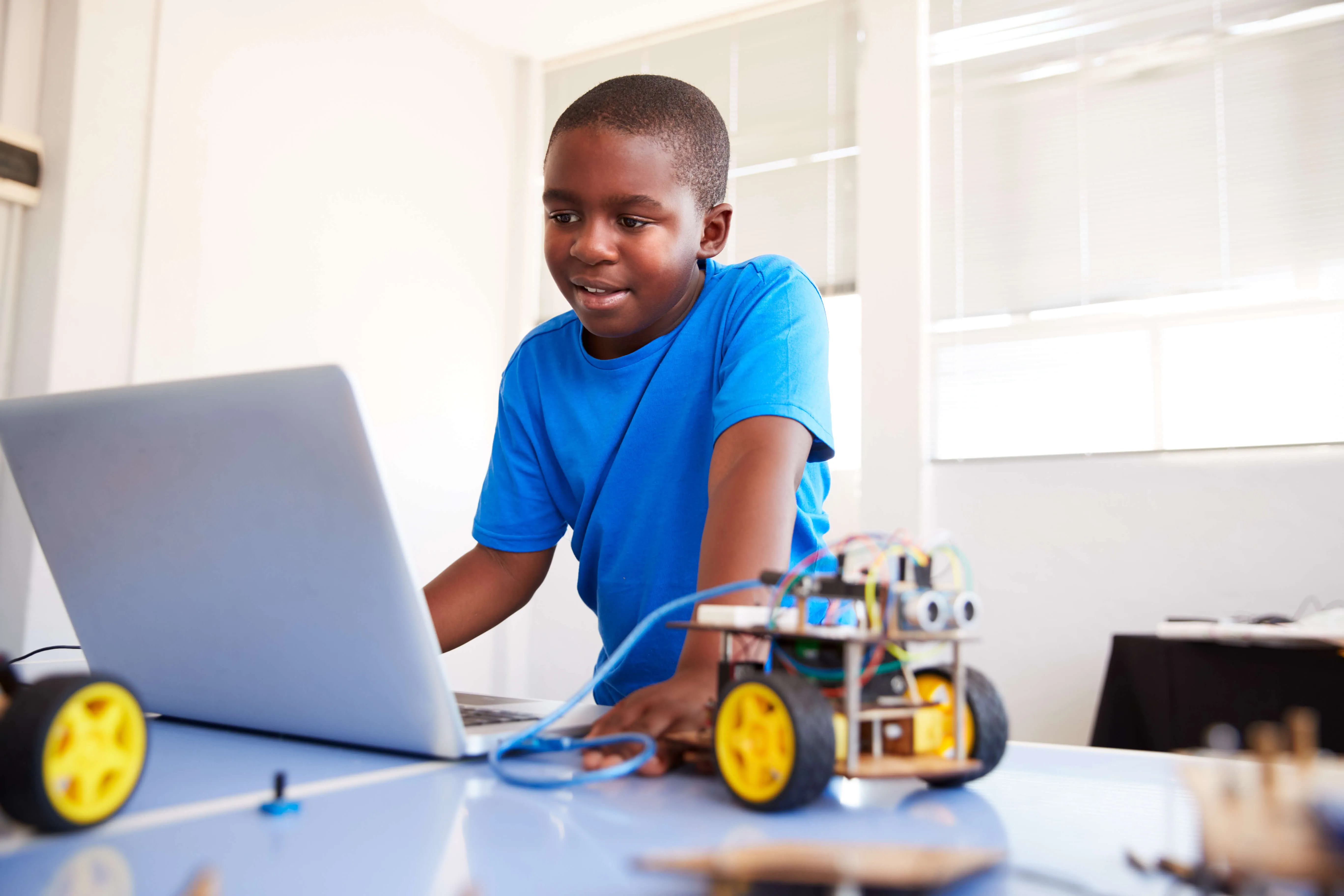
STEAM
Explore Science, Technology, Engineering, Arts, and Mathematics through engaging hands-on projects that spark curiosity and develop critical thinking skills.
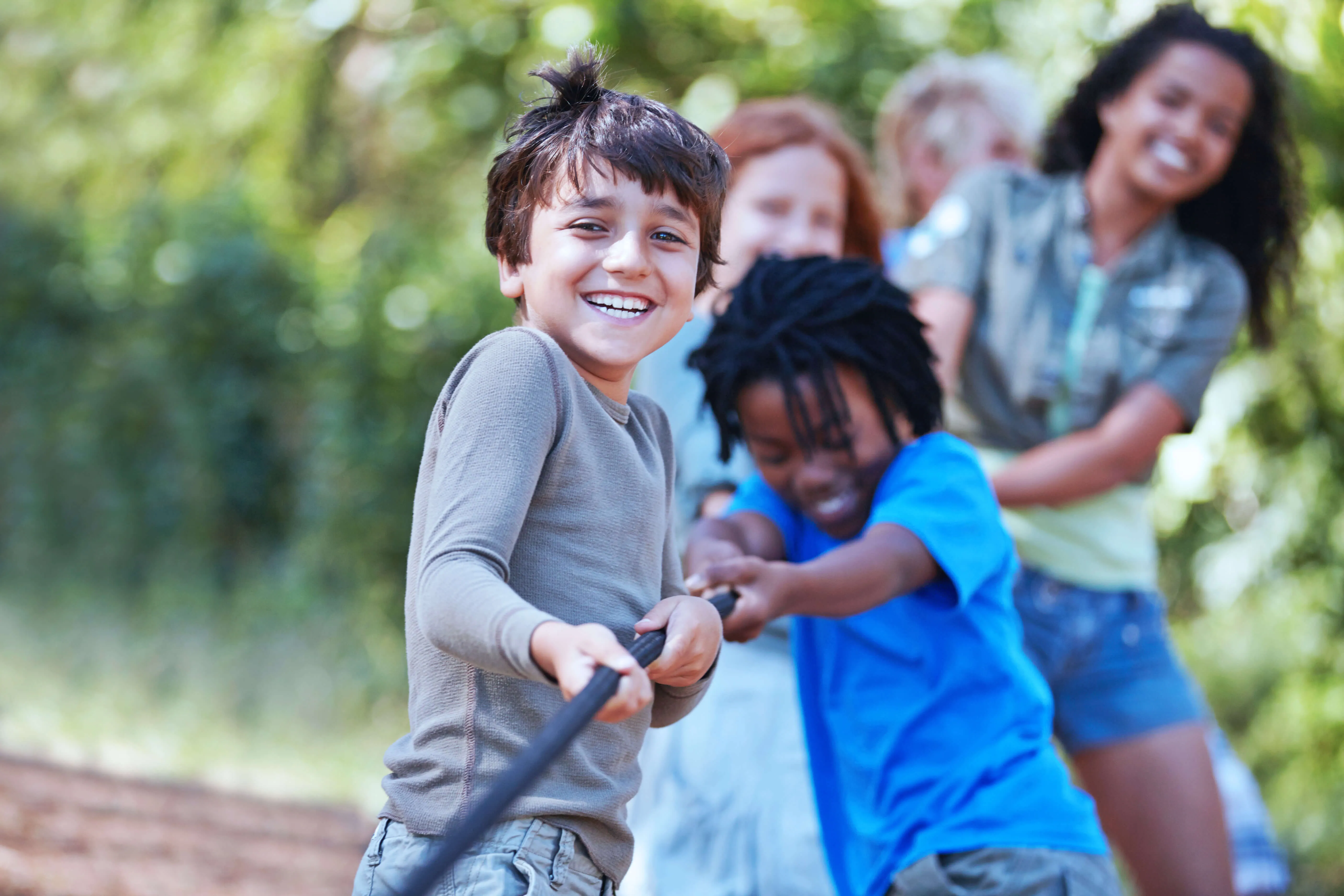
Social Emotional Learning
Develop essential life skills including self-awareness, emotional regulation, empathy, and relationship building through evidence-based SEL curriculum.