

Benefits of Open-Ended Questions and What to Ask
By Kmind
We parents, as the people who have the most contact with our children every day, directly impact how they think and express themselves. Compared to closed-ended questioning, open-ended questioning can effectively stimulate children’s thinking and foster divergent and creative thinking.
As early as 2,500 years ago, the great philosopher Socrates used The Socratic Questioning Technique to enable students to examine ideas logically and to determine the validity of those ideas. In this technique, the teacher professes ignorance of the topic in order to engage in dialogue with the students. With this “acting dumb,” the student develops the fullest possible knowledge about the topic.
”I know you won’t believe me, but the highest form of human excellence is to question oneself and others.”
Socrates
Open-ended Question V.S. Closed-ended Question
Open-ended questions are questions that allow someone to give a free-form answer.
Closed-ended questions can be answered with “Yes” or “No,” or they have a limited set of possible answers (such as A, B, C, or All of the Above).
“Mom, what should we eat today?”
This is open-ended questioning.
“Mom, can we have taco bell today?”
This is closed-ended questioning.
The Benefits of Asking Open-Ended Questions
Open-ended Questions Develop Children’s Language
Instead of “yes” or “no,” open-ended questions are often answered by guiding children to use long sentences to answer the questions in detail. Open-ended questions provide children with opportunities to explain or describe something, thereby expanding and developing their speech, language and vocabulary.

Open-ended Questions Motivate Children to Express Themselves
Frequently, children are reluctant to communicate with their parents because they are afraid of judgment or criticism. There are no standard answers to open-ended questions, so children will generally want to answer and dare to answer. When you ask your children open-ended questions, you let them know that you are interested in hearing what they say without judgment. This can help encourage them to communicate more freely with you about both good and bad experiences.
Open-ended Questions Promote Critical Thinking
When you ask your child an open-ended question, you encourage them to think critically about the answer. They must process the inquiry and come up with a response that is more than just one word. This type of thinking is an essential skill that will help them develop in school and life.
Open-ended Questions Show That You Value Your Child’s Opinion
Asking for your child’s opinion shows that you value their ideas and opinions. For example, when we ask our child, “Is this your favorite flavor?” The child will likely follow our cues or agree with our suggestions to please us. But when we ask the child, “What is your favorite flavor,” the child has the freedom to share his or her favorite flavor honestly. This builds self-confidence and helps them feel more comfortable sharing their opinions.
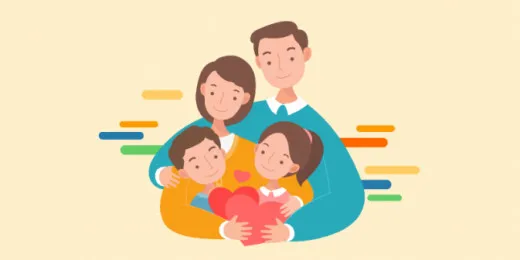
In addition, it helps strengthen your relationship with your child because they feel they can come to you with anything on their mind.
Open-ended Questions Guide Children’s Exploration and Learning
Generally speaking, people are more excited to learn something when they are perceived or discovered by themselves than taught by others. This is because discovery and insight cannot be achieved by lecturing but by thinking. The most thought-provoking way is to ask questions. Asking open-ended questions arouses curiosity, and curiosity becomes the motivation for thinking.
Types of Open-ended Questions that Parents Can Use
We all know the importance of open-ended questions, but often get caught up in the dilemma of not knowing what to ask. Open-ended questions are certainly flawed; ask them too openly and too broadly and the answers you get will remain superficial and not be explored in depth. For example, if you ask your child what he or she did at home today, you may only get a simple answer like “playing with toys” or “doing homework.” So limit the scope of your questions to get to a more meaningful discussion.
Here are some types of open-ended questions to give you ideas when asking your young children questions:
Making Predictions
-
What do you will happen…
-
What do you think this story is about?
-
What do you think will happen next?
Understanding
-
Why do you think/do…
-
Why is the caterpillar always so hungry?
-
Why do piglets build houses with bricks?
Extend on Thinking
-
What would happen if there were…
-
Where do you want to fly to if you become a butterfly?
-
What would happen to the pigs if they didn’t use bricks to build their house?
Consider Consequences
-
What would happen if …
-
What if you wake up late and are late for school?
-
What would happen if you jumped and I wasn’t there to catch you?
Putting in the role
-
How would you feel if that happened to you?
-
If you were him, what would you do?
Similarities and Differences
-
How are these the same?
-
What makes these go together?
-
What makes these different?
Solving problems
-
What could you do to…
-
Do you have any ideas for solutions?
-
How could we figure that out?
Evaluate
-
What made you decide…
-
How do you come up with that solution?
-
What made you think of that?
Preference
-
What is your favorite smell? Why?
-
Sweet or savory? Why?
-
Would you rather eat apples every day or carrots?
Summarizing
- What does this story tell us?
Tips
Combine closed and open-ended questions - To begin with, you can use closed-ended questions at the beginning of the conversation and then use open-ended questions to expand on your child’s language, thoughts and ideas. For example, “Do you like Halloween” (closed-ended) and “What do you like best about Halloween” (open-ended). “What is your most memorable thing about Halloween” (open-ended).

Use encouraging phrases - When asking open-ended questions, try to avoid using questions like “who,” e.g., “who knows how to draw a lion,” and replace them with “what are some ways to draw a lion.” Encouraging phrases enable children to collaborate and learn from each other.
Don’t expect a specific answer - Avoid expecting the “right” answer to the questions you ask. For example, “What color is the ocean?” If a child answers “yellow,” don’t dismiss them because they didn’t say it was blue. Continue to ask the question, “Why do you say that?” and your child may answer, “In the evening, when the sun goes down. If you start asking for specific answers, children will know that you are not interested in their thoughts, opinions and views and will become less engaged.
Give your child time - Children may need to become familiar with these types of questions and need time to answer them more complexly.
Practice - Use open-ended questions as part of your practice. Get a generic list of open-ended questions you can see as you interact with children to remind you of what questions to ask.
Reference
- Alexander, L. (2021, February 1). 250 Questions for Kids (Get to Know Them Better). Mom Loves Best. https://momlovesbest.com/questions-for-kids
- Benefits of Open-Ended Questions. (n.d.). YMCA of Greater Seattle. Retrieved November 3, 2022, from https://www.seattleymca.org/blog/benefits-open-ended-questions
- Craycroft, M. (2022, October 12). 100s of Open Ended Questions Examples to Ask Kids Every Day. Carrots Are Orange. https://carrotsareorange.com/open-ended-questions-for-kids/
- Open-Ended vs. Closed-Ended Questions in User Research. (n.d.). Nielsen Norman Group. Retrieved November 3, 2022, from https://www.nngroup.com/articles/open-ended-questions/
- Sutton, J., PhD. (2022, September 10). Socratic Questioning in Psychology: Examples and Techniques. PositivePsychology.com. https://positivepsychology.com/socratic-questioning/
- The Socratic Questioning Technique. (n.d.). Retrieved November 3, 2022, from https://www.schoolnet.org.za/teach10/resources/dep/questioning/socratic.htm
- Using Open Ended Questions with Children. (2015, May 15). Aussie Childcare Network. https://aussiechildcarenetwork.com.au/articles/teaching-children/using-open-ended-questions-with-children
Explore Our Courses
Discover courses designed to help your child thrive

Leadership Development
Cultivate leadership qualities through communication training, teamwork exercises, and ethical decision-making practice for students K-12.

Science Research Project
Develop scientific inquiry and research skills through hands-on projects, helping 3rd to 12th graders learn the scientific method, experimental design, and data analysis.
Phonics
Build a strong reading foundation through systematic phonics instruction, helping Pre-K to 1st graders master letter sounds, blending, and decoding skills.