
8 Types of Intelligence: Howard Gardner's Theory of Multiple Intelligences
By K-Mind Education Team
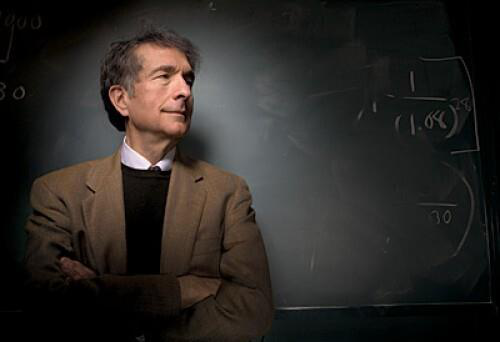
Each child has his/her motivations and talents, and he or she develops at his or her own pace and in his or her own way, unlike anyone else. This is the conclusion reached by Harvard University neuropsychologist and educator Howard Gardner in his book Frames of Mind: The Theory of Multiple Intelligences.
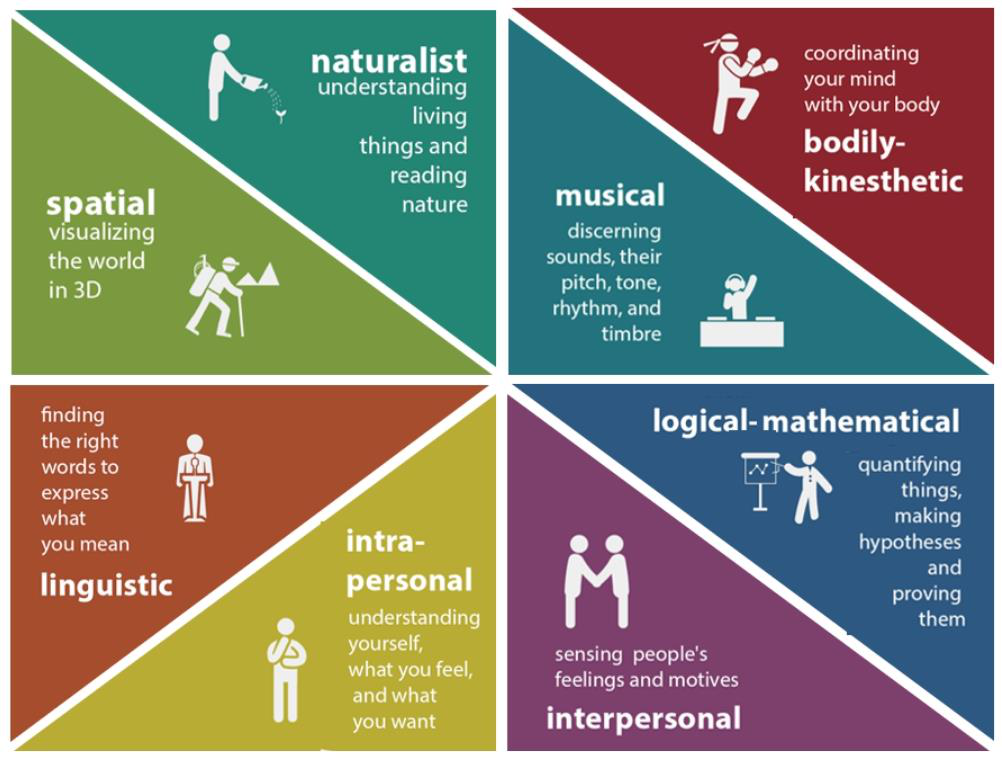
The theory of multiple intelligences, developed by Howard Gardner in the late 1970s and early 1980s, posits that individuals possess eight or more relatively autonomous intelligences. Individuals draw on these intelligences, individually and corporately, to create products and solve problems relevant to the societies in which they live. Dr. Gardner states that there are eight types of human intelligence — each representing different ways of how a person best processes information.
According to Dr. Gardner, each child has his/her own developmental needs. Thus, for example, a child who is not interested in language may have extraordinary abilities in the areas of mathematics and spatial intelligence.
Image Credits: Thrive Global, 2019.
A Summary of the Eight Intelligences
- Logical-mathematical intelligence - Analyzing problems and mathematical operations.
- Linguistic intelligence - Words, language, and writing
- Spatial Intelligence - Visual and spatial judgment
- Musical Intelligence - Rhythm and music
- Bodily-kinesthetic Intelligence - Physical movement and motor control
- Intrapersonal Intelligence - Introspection and self-reflection
- Interpersonal Intelligence - Understanding and relating to other people
- Naturalistic intelligence - Finding patterns and relationships to nature
The Multiple Intelligences Test
The test based on the concept of multiple intelligences, formally known as the Multiple Intelligences and Learning Styles Test, can be found in Psychology Today and consists of 33 questions that take about 20 minutes to complete (according to the test’s website). Multiple Intelligences Test can help you discover your/your child’s skills. It’s the easiest way of detecting your special interests and intelligence types.
This Multiple Intelligences Test is well-regarded for its operationalization of preferred learning styles and the test taker’s capacity to solve various problems. However, free online tests and quizzes such as this one are solely first takes and cannot provide accurate assessments of your child’s potential intelligence. Hence, the test is intended to be used for educational purposes only. A definitive intelligence assessment can be made only by a qualified professional.
8 Types of Intelligence
Due to space limitations, only a short overview here today. The subsequent Kmind article will detail the characteristics of each intelligence, suitable careers, and activities that can improve the intelligence.
Logical-mathematical Intelligence
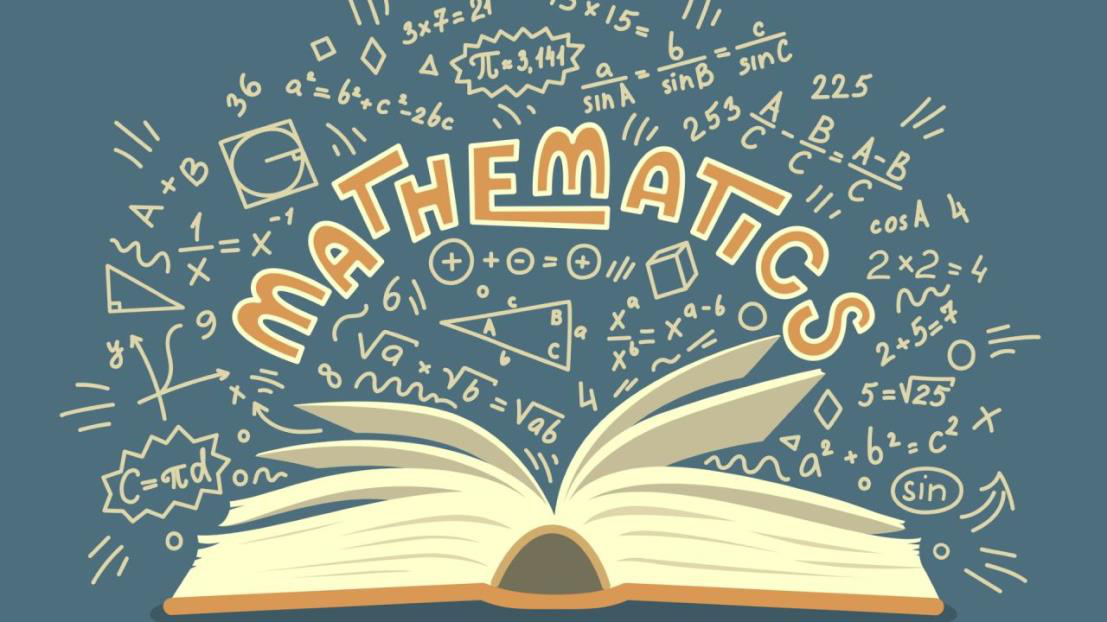
People who are strong in logical-mathematical intelligence are good at reasoning, recognizing patterns, have strong analytical skills, are drawn to quantitative problems, and are naturally comfortable with reasoning and scientific practices. These individuals tend to think conceptually about numbers, relationships, and patterns. Per the sample test results, this type of intelligence is “most often associated with scientific and mathematical thinking,” so a high score on logical intelligence might mean you’d make a good scientist, mathematician, engineer, or programmer.
Linguistic Intelligence
These people “have a way with words”. They typically have good comprehension skills and learn better from reading rather than seeing a visual. People with this intelligence often think about how and when they’ll deliver a message and carefully consider the person to whom they’re delivering it. And they tend to be excellent writers, journalists, orators, and poets, and most have careers that involve literature. They pick up on definitions of words easily and are good at figuring out how to use them in context. They are also very good at explaining things. Early signs of this intelligence are learning to speak early and loving storytelling.
Spatial Intelligence
Spatially intelligent people are typically artists in the visual arts scene. They are good at making logos and organizing images on paper. Core capacities include mental imagery, spatial reasoning, image manipulation, graphic and artistic skills, and active imagination. They tend to be highly creative and learn best when using visuals. People with this intelligence find that they are good in areas such as landscaping, photographers, sculptors, and so much more! Early signs of this intelligence include loving to draw/paint and having a good eye for colors.
Musical Intelligence
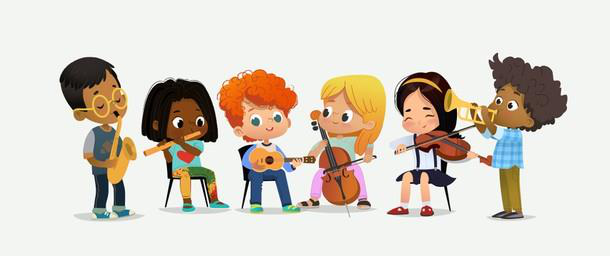
Musically intelligent people are very good with sounds. They can easily recognize rhythms in everyday sounds, like water dripping from a faucet, and they are also good at connecting song lyrics with emotions. These people are also good at developing their rhythms, playing instruments, and generating song lyrics. People with this intelligence tend to become great DJs, singers, composers, etc. Early signs of this intelligence include expressing interest in musical instruments and wanting to create rhythms by simply stomping a foot or hitting things such as blows together. Additionally, music is a language of its own, so there might also overlap with linguistic intelligence.
Bodily-kinesthetic Intelligence
People with this type of intelligence are agile people. They typically love to be moving, so naturally, they usually enjoy sports and have perfect balance and coordination. Because of the bodily-kinesthetic intelligence these people possess, they usually are good at various things that include physical activity; for example, they are quick to learn choreographies and play sports. People with this intelligence make for good athletes, dancers, and even sign language interpreters. An early sign of this intelligence is not being able to sit still and taking up an interest in sports.
Intrapersonal Intelligence
Intrapersonal intelligence is the ability to detect and discern one’s feelings (self-knowledge) and use that knowledge for personal understanding. This type of intelligence is very much a self-awareness. People who have intrapersonal intelligence are very good at knowing themselves. They tend to be realistic and are great at reflecting on past experiences. Since they are so emotionally aware, people with this intelligence usually do well in fields such as psychology. An early sign of this intelligence is being emotionally mature from a very young age.
Interpersonal Intelligence

People with high interpersonal intelligence understand how people communicate with one another and how verbal language, emotions, and thoughts or cognition play in forming relationships, which might mean these people’s interpersonal relationships are in good shape. These people tend to be good leaders since they are good at seeing other people and their talents, making them very charismatic. They are also good at reading people through gestures and facial expressions and acting accordingly to others’ feelings and emotions. An early sign of this intelligence is being able to work well with others.
Naturalistic Intelligence
People with high naturalistic intelligence are highly observant regarding plants, animals, rocks, butterflies, or anything else found in nature. They are very good at interpreting natural occurrences, such as the importance of different weather types and how the ecosystem works. These people easily see the natural beauty in things and easily understand the environment and its many elements. People with this intelligence can become great botanists, veterinarians, and earth scientists. Early signs of this intelligence are loving to be outside and having an interest in plants and animals.
Criticism
Psychologists and educators have criticized Dr. Gardner’s theory. These critics argue that Gardner’s definition of intelligence is too broad and that his 8 different “intelligences” merely represent talents, personality traits, and abilities. Gardner’s theory also lacks the support of empirical research.
Nevertheless, the theory of multiple intelligences enjoys considerable popularity among educators. Learning more about multiple intelligences can help you better understand your own or your child’s strengths.
References
- www.multipleintelligencesoasis.org
- wohspioneer.org
- fairborndigital.us
- www.mentalup.co
- www.verywellfamily.com
Explore Our Courses
Discover courses designed to help your child thrive

Science Research Project
Develop scientific inquiry and research skills through hands-on projects, helping 3rd to 12th graders learn the scientific method, experimental design, and data analysis.

STEAM
Explore Science, Technology, Engineering, Arts, and Mathematics through engaging hands-on projects that spark curiosity and develop critical thinking skills.

Public Speaking and Debate
Master public speaking and competitive debate through structured training in argumentation, rhetoric, and persuasive communication for grades 3-12.